Covalent Docking
 Reactive Warhead Scoring
  Mechanism-Specific Docking
  MS & Kinetics Validation
 Covalent inhibitors form durable bonds for sustained pharmacology. We model selective warhead reactivity with mechanism-aware scoring and MS validation.
Why Covalent Docking Is the Critical Bridge Between Electrophile and Selectivity?
Covalent inhibitors succeed only when the warhead hits the right residue and ignores the rest of the proteome. Our platform models the full reaction coordinate—proton abstraction, transition-state geometry, and bond formation—to ensure warhead-to-residue fidelity.
What Sets the Platform Apart
Mechanism-Aware Scoring
ML models trained on covalent ITC and BLI data. R² > 0.75. ADMET Prediction & Modeling flags plasma stability risks pre-synthesis.
Warhead Selectivity Profiling
Proteome-wide reactivity screening against human cysteine, serine, and lysine libraries. Off-target risk scored before compound commitment.
MS & Kinetics Validation
Intact-protein mass spectrometry confirms covalent adduct mass shift. Time-dependent SPR kinetics measure kon and koff.
The Covalent Docking Suite
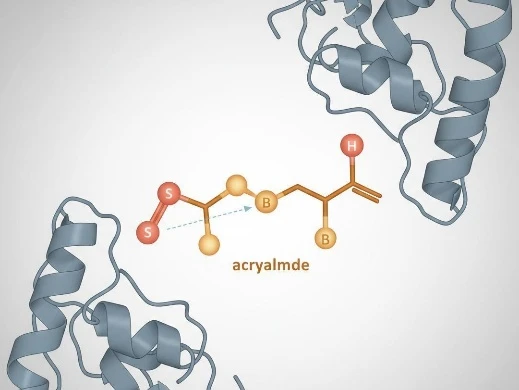
Michael Acceptor Docking
Acrylamide and Vinyl Sulfone Inhibitor Design
Key Features:
- Conjugate Addition Scoring — Explicit evaluation of thiolate attack geometry, β-carbon accessibility, and leaving group stabilization.
- Cysteine pKa Prediction — ML models estimate local cysteine reactivity based on microenvironment polarity and hydrogen-bonding network.
- Ideal For — Kinase Cys-targeting (EGFR, BTK, JAK3); E3 ligase ligase recruiters; Hit Identification for covalent kinase libraries.
For virtual biotechs targeting KRAS^G12C, our Michael acceptor protocol scores S-I-P pocket cysteine accessibility and GDP-state conformational bias using AlphaFold Protein Structure Prediction-derived ensembles. For pharma teams, acrylamide virtual screening identifies patent-clearable warheads with tunable reactivity—delivering irreversible inhibitors with controlled off-target profiles.
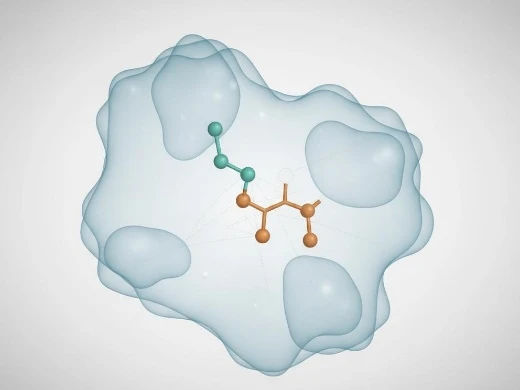
Electrophilic Warhead Docking
Serine, Lysine, and Non-Cys Nucleophile Targeting
Key Features:
- Nucleophilic Substitution Scoring — Evaluation of serine hydroxyl attack on chloroacetamides, lysine ε-amino addition to aldehydes, or thiol exchange with disulfides.
- Warhead Reactivity Tuning — Correlation of electrophilic index with plasma stability and target residence time.
- Ideal For — Protease serine traps; lysine-targeting covalent probes; antibody-drug conjugate linker design.
Most covalent docking platforms default to cysteine. For biotechs developing serine protease inhibitors or lysine-targeting covalent probes, our electrophilic warhead protocol models non-Cys nucleophilicity with quantum mechanical parameterization. When combined with ADMET Prediction & Modeling, warhead reactivity scores predict plasma half-life and hepatic stability.
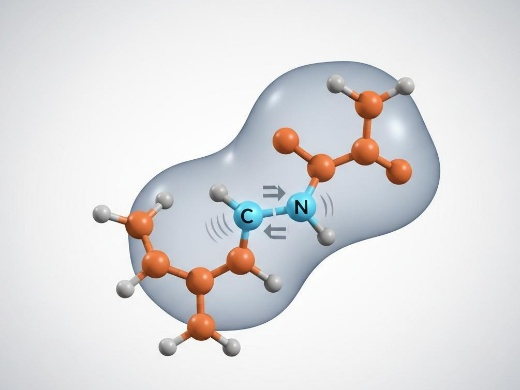
Reversible Covalent Docking
Dynamic Covalent and Cyanoacrylamide Chemistry
Key Features:
- Hemiacetal and Imine Equilibrium Scoring — Evaluation of reversible bond formation/breakdown kinetics.
- Cyanoacrylamide Optimization — Tuning electron-withdrawing groups for tunable reversibility and target residence time.
- Ideal For — Reversible covalent kinase inhibitors; dynamic covalent fragment screening; controlled residence time programs.
For targets where irreversible inhibition risks toxicity or resistance, reversible covalent binding offers the durability of covalent chemistry with the safety of dissociation. Our protocol scores equilibrium constants and residence times using Binding Free Energy Calculation (FEP/TI, MM/PBSA), guiding medicinal chemistry toward tunable covalency.
Platform Instrumentation
| Software / System | Core Capability |
|---|---|
| AutoDock Covalent | Flexible side-chain method for covalent docking with customizable bond formation constraints and reactive atom mapping. |
| CovDock (Schrödinger) | Quantum mechanics-based covalent docking with reaction mechanism parameterization and warhead reactivity scoring. |
| GOLD Covalent | Genetic algorithm covalent docking with explicit reactive site constraints and multiple covalent bond types. |
| DOCKovalent | Virtual screening-optimized covalent docking with reactive protomer enumeration and hit-rate benchmarking. |
| CarsiDock-Cov | Deep learning-guided automated covalent docking and screening with CNN-based pose prediction. |
| GROMACS 2023 + AMBER 22 | QM/MM and all-atom MD for covalent bond stability and post-docking reaction coordinate validation. |
| NVIDIA A100 GPU Cluster | Parallelized covalent virtual screening and warhead library enumeration. |
| PyMOL + Maestro | Covalent bond visualization, electron density inspection, and warhead-residue interaction analysis. |
Standardized Workflow
Project Workflow
A standardized, milestone-driven execution system. From target nucleophile identification to validated covalent adduct—managed by a single computational project team, tracked in real time.


01 Target Review & Nucleophile Mapping
- Target structure review: PDB, AlphaFold, or Homology Modeling & Threading assessment.
- Reactive residue identification: sequence alignment and conservation analysis.
- Protonation and microenvironment assignment at pH 7.4.
Deliverable: Target nucleophile map + reactivity assessment report.
02 Warhead Library Design & Reactivity Scoring
- Nucleophile reactivity profiling: Cys, Ser, Lys pKa and solvent accessibility.
- Warhead library enumeration: acrylamide, vinyl sulfone, chloroacetamide, cyanoacrylamide.
- Plasma stability and off-target reactivity scoring.
Deliverable: Warhead library + reactivity profile report.
03 Covalent Docking Execution
- Mechanism selection: Michael acceptor, nucleophilic substitution, or disulfide exchange.
- Reactive protomer docking and pose refinement.
- AI-enhanced covalent scoring and consensus ranking.
Deliverable: Ranked covalent poses with mechanism confidence scores.
04 Adduct Validation & Kinetics
- Covalent adduct mass shift prediction and electron density simulation.
- Time-dependent binding kinetics prediction.
- Intact-protein MS validation planning.
Deliverable: Adduct stability metrics + validation recommendations.
05 Report & Handoff
- Comprehensive covalent docking report with ranked warhead list.
- Structural rationale: reaction mechanism, residue specificity, selectivity profile.
- Direct handoff to Hit Biophysical Characterization or Co-crystallization if contracted.
Deliverable: Final report + data package + transition plan to Hit to Lead or Lead Optimization.
Sample Requirements
| Requirement | Details |
|---|---|
| Target structure | PDB ID, AlphaFold model, or Homology Modeling & Threading; specify reactive residue (Cys, Ser, Lys) number and chain |
| Covalent compound library | SMILES or SDF with warhead annotations; acrylamide, vinyl sulfone, chloroacetamide, etc. |
| Known covalent actives | Reference covalent inhibitors with confirmed residue and mechanism for scoring calibration |
| Project scope | Irreversible kinase inhibitor, reversible covalent probe, or ADC linker design |
| Prior reactivity data | Any mass spectrometry or label-free kinetics data to guide warhead selection |
Standard Deliverables
- Prepared target structure with nucleophile microenvironment documentation
- Ranked covalent poses (top 100–500) with warhead-residue geometry and mechanism assignment
- AI-enhanced covalent scoring table with reactivity confidence intervals
- Covalent adduct stability validation via Molecular Dynamics (MD) Simulations (if contracted)
- Warhead selectivity profile against human proteome cysteome
- Reaction kinetics prediction report (kinact/KI)
- Electronic data package formatted for Structure-Based Virtual Screening or Hit to Lead handoff
Frequently Asked Questions
Case Study
Case Study: Allosteric Covalent Inhibitors of STAT3 from Virtual Screening
Published Evidence:
Szalai B, et al. Allosteric Covalent Inhibitors of the STAT3 Transcription Factor from Virtual Screening. ACS Med Chem Lett. 2025 May 6;16(6):991-997.
Key Findings:
- Covalent Virtual Screening: Structure-based screening of a large acrylamide library against the allosteric site at the coiled-coil and DNA-binding domain interface of STAT3, using covalent docking to target Cys259.
- Hit Validation: Mass spectrometry confirmed the covalent mode of action and exact binding site. Fluorescence polarization assay validated sub-micromolar to low-micromolar activity.
- Hit Expansion: Combinatorial library design around the initial hit K2, followed by a second round of virtual screening, yielded a low-micromolar allosteric covalent inhibitor with improved potency.
Industrial Translation:
For seed-stage biotechs targeting transcription factors, this paradigm demonstrates that covalent virtual screening can access sparsely studied allosteric pockets invisible to traditional SH2-domain inhibitors. For pharma teams, the workflow—covalent docking, MS confirmation, and combinatorial expansion—delivers tool compounds against historically undruggable targets. Our platform operationalizes this peer-reviewed approach within an audit-ready workflow, pairing covalent docking with ADMET Prediction & Modeling for plasma stability assessment and Hit Biophysical Characterization for covalent kinetics validation.
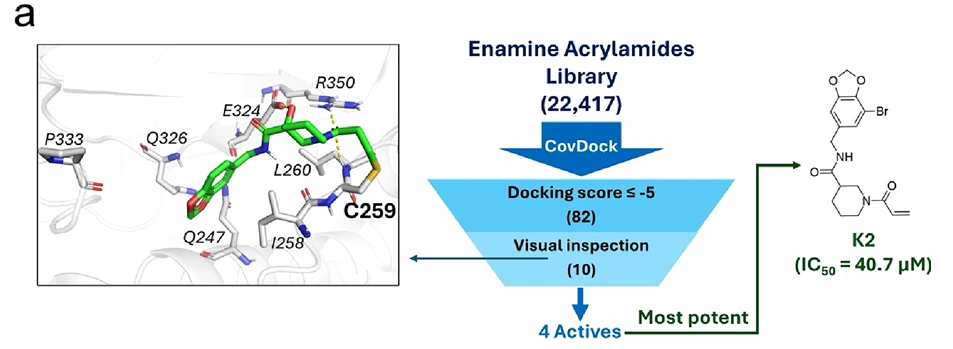
Figure 1. Overview of the covalent docking virtual screening workflow, including representation of the key residues inside the binding site and highlighting the C259 residue. Remaining molecules after each step are included in parentheses. (Szalai B, et al. 2025)
Reference
- Szalai B, et al. Allosteric Covalent Inhibitors of the STAT3 Transcription Factor from Virtual Screening. ACS Med Chem Lett. 2025 May 6;16(6):991-997.
Need validated covalent docking data to advance your irreversible kinase or targeted covalent inhibitor pipeline? Our team can design a covalent campaign tailored to your nucleophile, warhead chemistry, and selectivity requirements. Contact our scientific team today to start your project.