Homology Modeling & Threading
 Low-Identity Modeling
  AI Threading
  MD + Experimental Validation
 Standard homology modeling collapses below 30% identity. We deploy threading, co-evolutionary constraints, and MD refinement — validated by X-ray and Cryo-EM — to build accurate models where templates are distant or absent.
Why Homology Modeling Is the Critical Foundation
Structure-based drug design requires a reliable starting model, but standard homology tools collapse when templates share <30% identity, leaving seed-stage biotechs without structural starting points and pharma teams chasing orphan receptors in the dark. Our platform combines threading, co-evolutionary constraints, and MD refinement to build accurate models at low identity — then validates them through integrated X-ray and Cryo-EM, delivering coordinates you can trust for docking and virtual screening.
What Sets the Platform Apart
Threading + Co-evolution
Standard tools rely on sequence alignment alone. We deploy threading and co-evolutionary contacts to capture structural relationships invisible to BLAST.
MD-Refined Loop Reconstruction
Loop regions are rebuilt using ab initio protocols guided by evolutionary constraints, then refined with all-atom MD for physiologically realistic conformations.
Experimentally Validated
Every model can advance to gene-to-protein production and experimental structure determination. You receive validated coordinates, not theoretical guesses.
Technology Suite
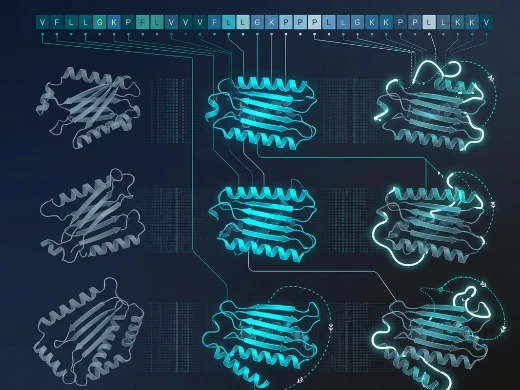
Advanced Threading & Fold Recognition
Structure Prediction Beyond Sequence Identity
Key Features:
- HHpred/HHblits Threading — Searches structural databases at <20% sequence identity where BLAST fails.
- I-TASSER Fragment Assembly — Reconstructs models from multiple templates, improving accuracy 15–25% over single-template approaches.
- Template Quality Scoring — ML classifiers assess coverage, resolution, and ligand-bound state to select the most drug-relevant starting point.
Ideal For: Orphan proteins; novel fold families; membrane proteins; PPI interfaces.
What We Offer:
Virtual biotechs access accurate models without hiring bioinformatics teams. Pharma teams receive parallel-path modeling ready for SBDD.
Co-Evolutionary Constraint Modeling
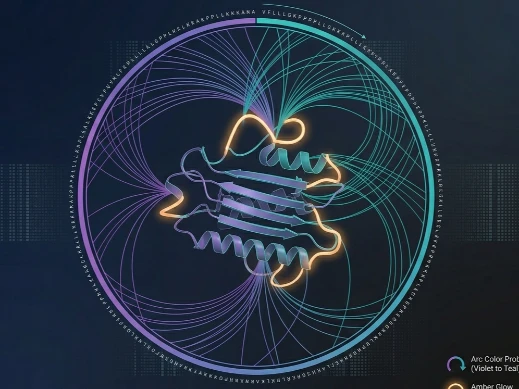
Evolutionary Covariance as Structural GPS
Key Features:
- GREMLIN/EVfold Contact Prediction — Analyzes MSAs to predict residue-residue contacts with >80% accuracy for large protein families.
- Constraint-Guided Loop Rebuilding — Co-evolutionary contacts guide ab initio loop reconstruction, replacing template loops with physically plausible conformations.
- Deep Learning Refinement — Transformer-based models refine contact maps for improved long-range accuracy.
Ideal For: Targets with large MSAs but low template identity; allosteric sites; antibody frameworks.
What We Offer:
Evolutionary covariance transforms modeling from guessing into constrained optimization. For GPCRs, contacts predict transmembrane packing at 25% identity.
MD Refinement & Experimental Validation
From Prediction to Proof
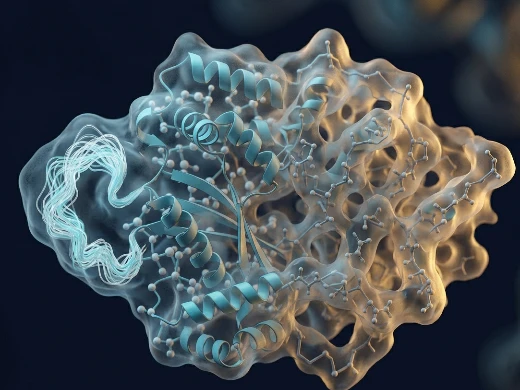
Key Features:
- All-Atom MD Equilibration — GROMACS/AMBER simulations resolve clashes and optimize side-chain rotamers, improving MolProbity scores by 20–40%.
- Restrained MD Protocols — Harmonic restraints on core secondary structure preserve template fidelity while allowing loop relaxation.
- Model-Guided Construct Design — Predictions inform truncation boundaries and solubility tags, increasing crystallization success rates.
Ideal For: Models requiring stability validation; cryptic pocket programs; programs needing IND-grade evidence.
What We Offer:
We do not just predict; we prove. Our structural biology pipeline validates models through X-ray, Cryo-EM, or NMR.
Platform Instrumentation
Core Instruments
| Instrument | Capability |
|---|---|
| NVIDIA DGX A100 | HHpred threading, I-TASSER assembly, co-evolutionary prediction |
| NVIDIA RTX A6000 Cluster | Real-time MD refinement and ensemble analysis |
| GROMACS/AMBER HPC | Microsecond-scale all-atom MD; restrained equilibration |
| Bruker AVANCE NEO 600 MHz | NMR validation of loop conformations |
| Rigaku XtaLAB Synergy | X-ray diffraction for model validation |
| Thermo Fisher Krios G4 | Cryo-EM SPA for large complex and membrane protein validation |
Standardized Workflow
Project Workflow
A milestone-driven execution system from sequence to validated model.


01 Target Review
- Sequence analysis and domain annotation
- Threading against PDB/SCOP with profile-profile alignment
- Template selection with ML quality scoring
- Deliverable: Template report + threading confidence scores
02 Threading & Modeling
- TASSER fragment assembly with multiple templates
- GREMLIN co-evolutionary contact prediction + constraint integration
- Loop rebuilding with ab initio protocols
- Deliverable: Initial model + contact map + loop confidence
03 MD Refinement
- All-atom MD equilibration + clash resolution
- Restrained MD preserving high-confidence core regions
- Ensemble clustering (50–200 conformers)
- Deliverable: Refined ensemble + quality metrics
04 Pocket Analysis
- Pocket detection across all ensemble members
- ML druggability scoring and cryptic site ranking
- Selectivity indexing against human structural proteome
- Deliverable: Pocket prioritization report + druggability scores
05 Validation
- Gene-to-protein production for validation (optional)
- Co-crystal soaking or Cryo-EM SPA
- Model-to-experiment deviation analysis
- Deliverable: Validated model + experimental data + final report
Sample Requirements
- Target Sequence: Amino acid sequence in FASTA format; UniProt ID acceptable
- Known Homologs: Any identified homologous sequences or prior modeling attempts
- Prior Structural Data: Existing PDB entries or literature structures (for template identification)
- Ligand Information: Known binders or cofactors (for pocket validation)
- Project Background: Target class, disease relevance, known challenges (low identity, flexibility, membrane association)
Standard Deliverables
- Homology model with threading confidence scores and coverage map (PDB)
- Co-evolutionary contact map and constraint analysis
- MD-refined conformational ensemble (50–200 representative PDBs)
- Pocket analysis report with druggability scores and cryptic site maps
- Experimental validation data (if selected): X-ray or Cryo-EM coordinates
- Final technical report with model quality metrics and SBDD recommendations
- Electronic data package (raw models, MD trajectories, analysis scripts)
Frequently Asked Questions
Case Study
Case Study: Deep-Learning-Based Single-Domain and Multidomain Protein Structure Prediction with D-I-TASSER
Goal: Validate D-I-TASSER's accuracy on low-template and multidomain targets, establishing precedent for deep learning + physics-based hybrid modeling.
Key Data:
- Hybrid architecture: Deep learning potentials (DeepPotential, AttentionPotential, AlphaFold2 distance maps) + iterative threading fragment assembly.
- CASP15 blind test: Outperforms AlphaFold2 by 29.2% on difficult targets; inter-domain orientation error reduced by 17%.
- Proteome-scale coverage: Folds 81% of human protein domains and 73% of full-chain sequences, adding 3,020 unique models absent from AlphaFold DB.
- Ultra-large proteins: Resolves proteins >3,000 residues (e.g., SARS-CoV-2 spike protein dual conformations).
Why it matters: For drug developers relying on distant-homology modeling, D-I-TASSER establishes that hybrid "deep learning + physics-based assembly" outperforms pure end-to-end models when templates are remote or targets contain multidomain architectures. For virtual biotechs and pharma teams, this means access to more accurate orphan protein and multidomain target structures — directly supporting SBDD and virtual screening for targets previously considered structurally invisible.
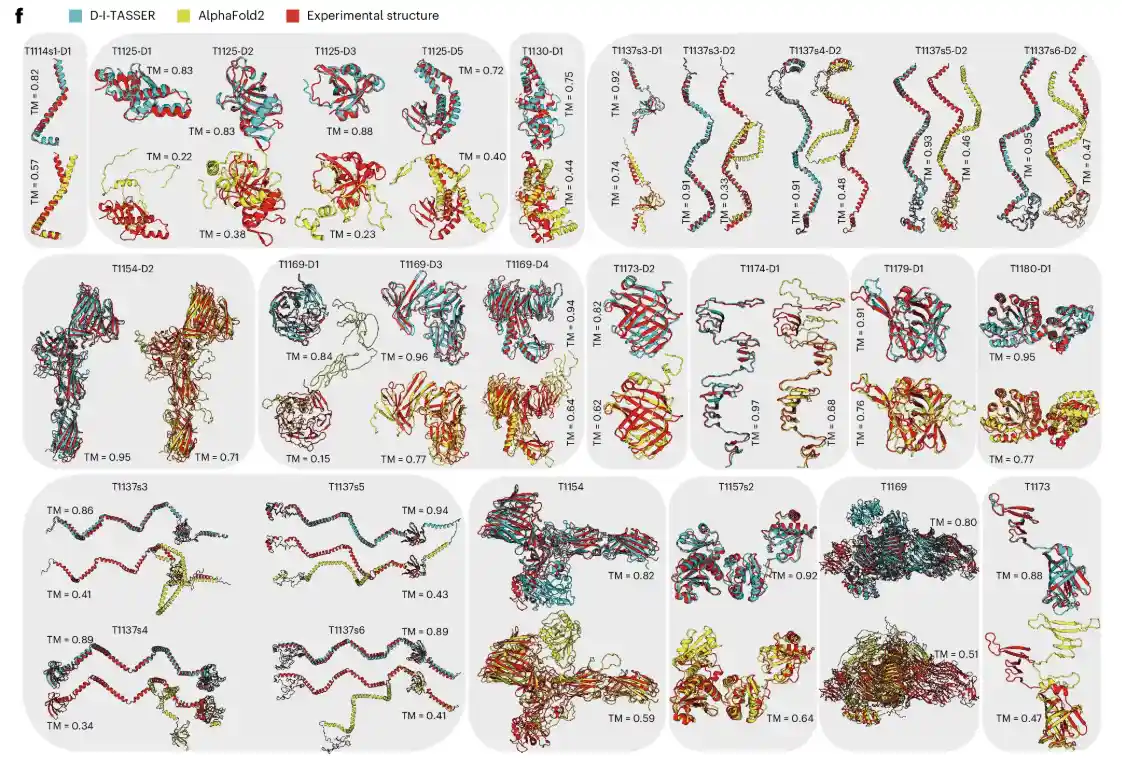
Figure 1. Structural superposition of D-I-TASSER (cyan), AlphaFold2 (yellow), and native (red) models for 19 domains and 8 multidomain targets where D-I-TASSER achieves >0.15 TM-score improvement over AlphaFold2. (Zheng W, et al., 2025)
Reference
Zheng W, et al. Deep-learning-based single-domain and multidomain protein structure prediction with D-I-TASSER. Nat Biotechnol. 2026 Apr;44(4):641-653.
Our technical team responds within 24 hours. All inquiries protected under NDA.