Drug Design & Library Analysis
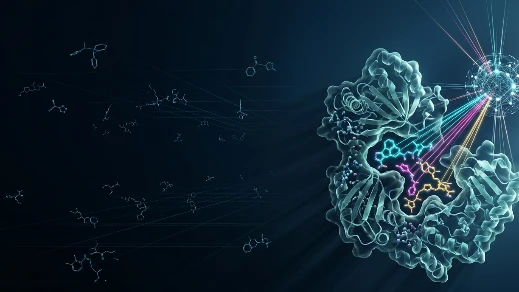
 De Novo Design
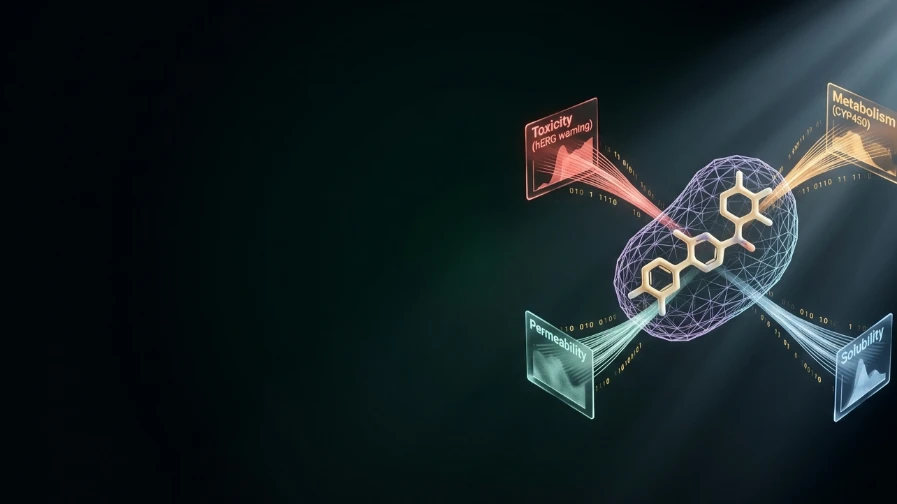
  Library Analytics
  Target Fishing
 AI-generated scaffolds, proteome-scale target fishing, and DEL/HTS data mining --- delivered as a screening-ready library with validated binding hypotheses.
Why Drug Design & Library Analysis Is the Critical Foundation
Seed-stage biotechs lack medicinal chemistry bandwidth to explore millions of virtual compounds. Pharma teams pursuing undruggable targets need novel scaffolds that escape patent cliffs. We close this gap with AI-generated molecules, target fishing for phenotypic hits, and HTS/DEL data mining --- delivering screening-ready libraries that feed directly into virtual screening and lead optimization.
What Sets the Platform Apart
AI-Generated Scaffolds
Generative models invent novel chemotypes beyond existing patent space, filtered by synthesizability and ADMET rules.
Wet-Lab Validation Loop
Every AI-designed series advances directly into gene-to-protein production and biophysical confirmation.
Mechanism Discovery
Reverse docking and chemogenomic mapping reveal off-target liabilities and repurposing opportunities for known actives and natural products.
Technology Suite
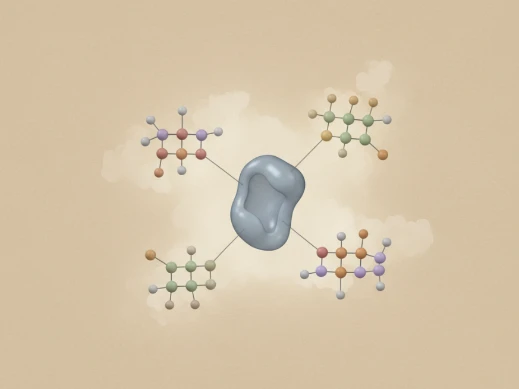
De Novo Drug Design
Structure-Conditioned Generative AI for Novel Scaffold Invention
Key Features:
- Structure-Conditioned Generative Models — Graph and diffusion-based AI generates 3D-aware scaffolds tailored to binding pocket pharmacophores, escaping template bias of traditional fragment growing.
- Multi-Objective Optimization — Simultaneous optimization of affinity, selectivity, synthesizability (SA score), and ADMET properties via Pareto-frontier algorithms.
- Patent & Chemical Space Navigation — Real-time novelty scoring against SureChEMBL and internal libraries ensures freedom-to-operate before synthesis commitment.
Ideal For: Seed-stage biotechs needing proprietary lead series without a medicinal chemistry department; programs targeting shallow or allosteric pockets where traditional SBVS returns no viable hits; fast-follower programs requiring scaffold hops around competitor patents.
What We Offer:
Virtual biotechs receive 50–200 novel scaffolds with predicted binding modes, synthetic routes, and ADMET risk profiles within weeks. Pharma teams access parallel-path design for backup series and fragment-to-lead opportunities.
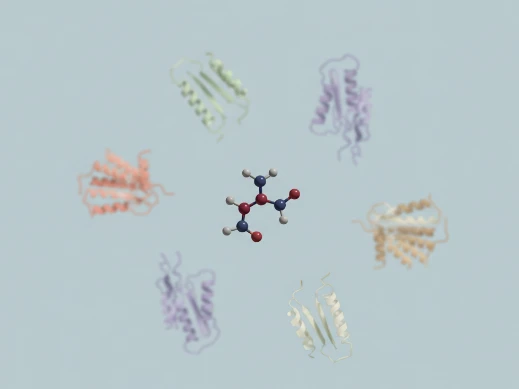
Reverse Docking & Target Fishing
Proteome-Scale Target Deconvolution for Phenotypic Hits
Key Features:
- Proteome-Scale Reverse Docking — Screening against 10,000+ human protein structures (AlphaFold-derived and experimental) to identify high-probability targets for small-molecule or natural product libraries.
- Chemogenomic Signature Matching — ML classifiers compare compound profiles against annotated bioactivity matrices (ChEMBL, PubChem) to predict polypharmacology.
- Pathway & Network Enrichment — Hit targets mapped onto KEGG/Reactome pathways to generate mechanistic hypotheses for phenotypic screening hits.
Ideal For: Natural product mechanism-of-action studies; drug repurposing campaigns; phenotypic screening hit deconvolution; safety pharmacology early warning.
What We Offer:
Seed-stage biotechs with a phenotypic hit but no target hypothesis receive a ranked target list with docking scores and pathway context. Pharma teams use target fishing to flag off-target risks early, reducing late-stage attrition.
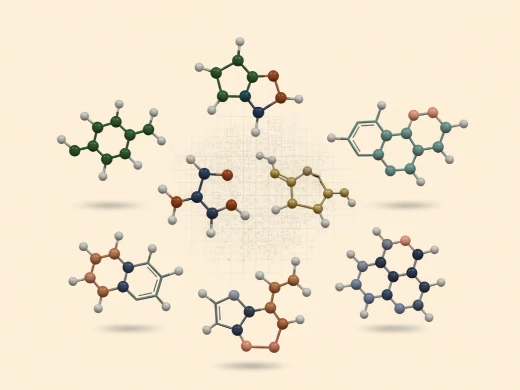
HTS/DEL Library Screening Results Analysis
Statistical Hit Calling and SAR Extraction from Screening Campaigns
Key Features:
- Hit Calling & Enrichment Analysis — Statistical models (Z-score, B-score, Bayesian) separate true binders from assay artifacts in HTS and DEL datasets, accounting for compound promiscuity.
- SAR/QSAR Model Building — Automated extraction of structure-activity relationships from screening campaigns, delivering predictive models for lead optimization prioritization.
- Multi-Database Integration — Unified querying across ChEMBL, PubChem, and DrugBank to contextualize hits against known chemical space.
Ideal For: DEL screening follow-up campaigns; HTS triage for resource-constrained teams; data-driven scaffold prioritization.
What We Offer:
Clean, annotated hit lists with SAR trends and synthesis recommendations. Pharma teams integrate outputs with in-house ADMET data and crystallography results for comprehensive project dashboards.
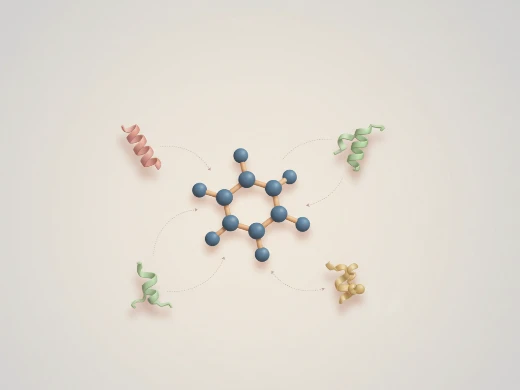
Drug-related Database Query & Data Integration
Unified Data Architecture for Chemical, Biological, and Competitive Intelligence
Key Features:
- Unified Data Architecture — Integration of commercial, public, and proprietary databases into a single queryable framework with standardized chemical identifiers.
- Competitive Intelligence Mining — Automated patent and literature surveillance for target-class landscapes, clinical trial mappings, and competitor compound tracking.
- Custom API & Dashboard Deployment — Client-specific data pipelines connecting internal ELN/LIMS data with external bioactivity and pharmacology databases.
Ideal For: Portfolio strategy teams; target validation groups requiring comprehensive chemical probe mapping; CMC teams tracking competitor formulation and salt-form data.
What We Offer:
A single source of truth for chemical, biological, and competitive data. Seed-stage biotechs gain pharma-grade data infrastructure without building internal IT. Pharma teams accelerate target assessment and IND-enabling documentation.
Platform Instrumentation
Core Instruments
| Instrument | Capability |
|---|---|
| NVIDIA DGX H100 | Generative AI model training and billion-scale molecular library inference |
| Bruker AVANCE NEO 800 MHz | NMR validation of AI-designed ligand conformations and binding modes |
| Thermo Scientific Q Exactive HF-X | High-resolution MS for HTS hit confirmation and DEL decoding |
| PerkinElmer EnVision Nexus | Multimode plate reading for biochemical and cell-based assay validation |
| Sartorius Octet SF8 | High-throughput BLI for rapid affinity ranking of designed compounds |
| Waters ACQUITY UPLC H-Class | Analytical purity and solubility profiling of synthesized AI scaffolds |
| Schrödinger LiveDesign | Collaborative de novo design workspace with real-time ADMET scoring |
| Tecan Fluent 780 | Automated liquid handling for parallel synthesis validation |
| GROMACS/AMBER HPC Cluster | MD validation of AI-generated ligand-target complexes at scale |
Standardized Workflow
Project Workflow
A standardized, milestone-driven execution system. From molecular concept to screening-ready library — managed by a single project team, tracked in real time, with AI embedded at every decision gate.


01 Target Review
- Scope definition (de novo, reverse docking, or data analysis). Target structure assessment or compound library inventory.
- Deliverable: Design strategy report.
02 AI Generation
- De novo: AI scaffold generation (10,000+ virtual compounds).
- Reverse docking: Proteome-wide target screening. Data analysis: HTS/DEL statistical modeling and hit calling.
- Deliverable: Raw virtual library + target ranking / annotated dataset.
03 Physical Filtering
- Docking-based affinity filtering. ADMET risk assessment (hERG, solubility, metabolic stability).
- Synthesizability and patent novelty scoring.
- Deliverable: Prioritized hit list (50–200 compounds) with risk profiles.
04 Hit Prioritization
- SAR trend analysis and cluster visualization. Expert review and client consultation.
- Selection of 5–20 compounds for experimental validation.
- Deliverable: Final recommendation report + procurement/synthesis plan.
05 Validation
- Gene-to-protein production for target confirmation.
- Biophysical assay validation (SPR, ITC, thermal shift).
- Co-crystal soaking for binding mode confirmation.
- Deliverable: Validated hits + experimental data + final report.
Sample Requirements
- De Novo Design: Target structure (PDB/AF model) or pharmacophore hypothesis; known actives (if any); target class and disease indication; IP constraints.
- Reverse Docking: Compound structures (SDF/SMILES); known bioactivity context; desired target class or pathway focus.
- Data Analysis: Raw screening data (plate maps, compound IDs, activity readouts); assay protocol; compound library metadata; prior hit criteria.
Standard Deliverables
- AI-generated virtual library (SDF/SMILES) with predicted properties
- Docking poses and affinity scores for prioritized hits
- ADMET risk assessment report
- SAR/QSAR model files and performance metrics
- Target fishing report with ranked targets and pathway enrichment
- Database integration dashboard (if applicable)
- Final technical report with synthesis recommendations
- Electronic data package (raw predictions, analysis scripts)
Frequently Asked Questions
Case Study
Case Study: VAE-Driven De Novo Design with Physics-Based Active Learning
Goal:
Validate whether a VAE embedded in nested active-learning cycles can deliver novel, synthesizable, and target-engaged hits across data-rich (CDK2) and data-scarce (KRAS G12D) targets.
Key Data:
- Self-improving pipeline: Inner cycles filter for drug-likeness (QED > 0.6), synthetic accessibility (SA < 7.0), and novelty (Tanimoto < 0.6); outer cycles refine the VAE using physics-based docking scores.
- CDK2 experimental hit: Nine synthesized candidates yielded eight active inhibitors (IC₅₀ < 50 µM), with one reaching 71 nM potency—escaping known patent scaffolds while retaining activity.
- KRAS low-data proof: From only 73 known inhibitors, the workflow generated 23,488 high-scoring molecules; ABFE predicted four candidates with Kd < 15 µM, confirming sparse-space robustness.
Why it matters:
This independent study offers third-party validation that generative AI coupled with physics-based active learning resolves the de novo trilemma—engagement, synthesizability, and novelty. The confirmed experimental hit rate and low-data generalization, backed by open-source benchmarks, provide an authoritative reference for AI-driven library design and target fishing.
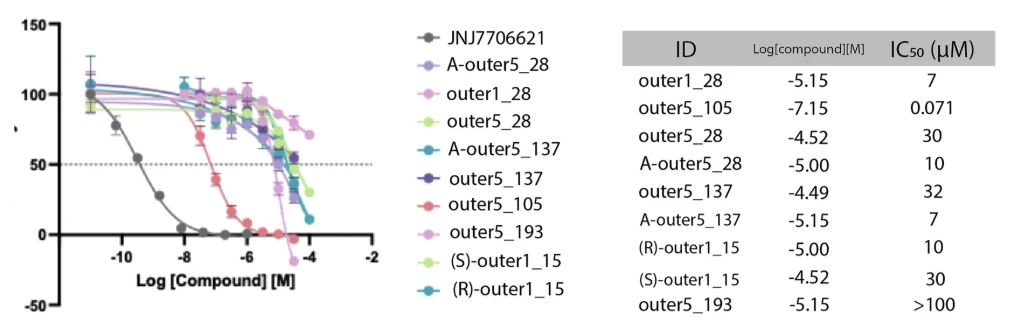
Figure 1. In vitro CDK2 activity of nine synthesized candidates from the VAE–active learning workflow. (Filella-Merce I.; et al. 2025)
Reference
Filella-Merce I, et al. Optimizing drug design by merging generative AI with a physics-based active learning framework. Commun Chem. 2025 Aug 8;8(1):238.
Our technical team responds within 24 hours. All inquiries protected under NDA.