Replica Exchange Molecular Dynamics (REMD)
 Temperature REMD
  Hamiltonian REMD
  Kinetic Network Analysis
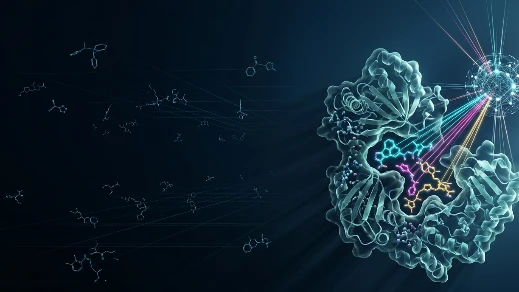
 Replica exchange simulations that cross high energy barriers, revealing hidden states and folding pathways standard MD cannot reach.
Why Replica Exchange Molecular Dynamics Is the Critical Foundation
Standard MD traps in local minima. Seed-stage biotechs designing against single-structure models miss cryptic pockets that open only after crossing kilocalorie barriers. Pharma teams studying protein folding, allosteric activation, or peptide binding need complete free energy landscapes, not single trajectories. We deploy temperature and Hamiltonian replica exchange to sample rare events, map state populations, and deliver ensemble conformers for docking and FEP.
What Sets the Platform Apart
Barrier Crossing
24–48 replicas spanning 300–600 K or Hamiltonian ladders ensure efficient crossing of high energy barriers invisible to standard MD.
State Population Quantification
Markov state models built from replica trajectories quantify state populations and transition rates, feeding kinetic-based drug design.
Direct FEP/Docking Handoff
Representative conformers from all discovered states feed directly into ensemble docking and FEP calculations, improving hit rates.
Technology Suite
Temperature & Hamiltonian REMD
Key Features:

- Temperature REMD (T-REMD) — 24–48 replicas spanning 300–600 K with exponential spacing; optimized exchange acceptance ratios (20–30%) for protein and membrane systems.
- Hamiltonian REMD (H-REMD) — Soft-core or scaled-potential replicas that flatten specific energy terms (dihedrals, electrostatics) to accelerate folding or ligand unbinding.
- pH-REMD — Constant-pH replica exchange capturing protonation-state coupled conformational changes for enzyme and ion-channel programs.
- Exchange Optimization — Automated replica spacing and exchange frequency tuning based on system size and barrier height.
Ideal For: Protein folding landscapes; allosteric activation mechanisms; peptide and antibody CDR conformational sampling; ligand residence time estimation.
What We Offer:
Converged replica exchange trajectories with validated exchange acceptance rates and replica diffusion. Seed-stage biotechs receive state population histograms and ensemble PDBs without managing HPC queues. Pharma teams get raw replica trajectories and MSM models for internal integration.
Free Energy Landscape & Kinetic Network Analysis
Key Features:

- Markov State Models (MSM) — Automated conformational clustering and kinetic network reconstruction to quantify state populations, transition rates, and mean first-passage times.
- Free Energy Projection — PCA, tICA, and UMAP projections of replica data onto low-dimensional landscapes with kcal/mol contouring.
- Pathway Analysis — Committor analysis and transition path theory to identify optimal conformational routes between inactive and active states.
- Metastable State Detection — Hidden Markov models and Bayesian clustering to identify sparsely populated but pharmacologically relevant states.
Ideal For: GPCR activation mechanism studies; kinase DFG-flip and activation loop dynamics; protein-protein interaction interface opening/closing; cryptic pocket discovery.
What We Offer:
A kinetic landscape report with state populations, transition rates, and druggability scores for each metastable state. For lead optimization, we identify which states are most ligandable and how compounds shift the equilibrium.
REMD-Driven Drug Design Integration
Key Features:
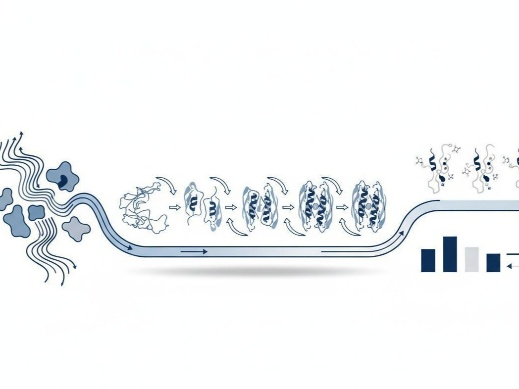
- Ensemble Generation for Docking — 50–200 representative conformers extracted from all metastable states for ensemble docking and virtual screening.
- FEP Input from Rare States — High-affinity conformers from sparsely populated states formatted for FEP/TI calculations.
- Kinetic Selectivity Prediction — Residence time estimation from unbinding free energy profiles to guide slow-off binder optimization.
- Cryo-EM State Matching — Simulation state populations compared against Cryo-EM class averages to validate and assign experimental structures.
Ideal For: Structure-based campaigns against flexible targets; virtual screening requiring conformational diversity; hit-to-lead programs optimizing residence time.
What We Offer:
A downstream-ready package: docking grids, FEP inputs, kinetic parameter tables, and Cryo-EM correlation reports. Zero handoff friction.
Platform Instrumentation
Core Instruments
| Instrument | Capability |
|---|---|
| NVIDIA DGX H100 | Parallel replica exchange with 48+ replicas and GPU-optimized exchange |
| GROMACS/AMBER HPC Cluster | T-REMD, H-REMD, and pH-REMD at scale with automated scheduling |
| NVIDIA RTX A6000 Cluster | Real-time trajectory projection and MSM construction |
| Bruker AVANCE NEO 800 MHz | NMR validation of rare-state conformations |
| Thermo Fisher Krios G4 | Cryo-EM state matching and validation |
| PerkinElmer EnVision Nexus | Kinetic assay readout for residence time correlation |
Standardized Workflow
Project Workflow
A milestone-driven execution system from structure to kinetic landscape.


01 Target Review
- Structure assessment and barrier hypothesis
- REMD type selection (T-REMD, H-REMD, pH-REMD)
- Deliverable: REMD plan + replica design
02 Replica Setup
- Replica spacing and exchange frequency optimization
- System preparation and solvation per replica
- Deliverable: Equilibrated replica systems
03 REMD Production
- Equilibration and production exchange
- Acceptance ratio monitoring
- Deliverable: Raw replica trajectories + exchange logs
04 Analysis & Modeling
- State clustering and MSM construction
- Free energy landscape projection
- Deliverable: MSM + landscape report + representative PDBs
05 Downstream Handoff
- Ensemble docking grid generation
- FEP input preparation
- Deliverable: Downstream package + final report
Sample Requirements
- Target Structure: PDB/AF model or experimental structure
- Ligands: Known binders or fragments for unbinding/residence time studies (optional)
- Hypothesis: Target states (active/inactive) or cryptic pocket locations
- Experimental Data: Cryo-EM class averages or NMR data for validation (optional)
Standard Deliverables
- Raw replica trajectories and exchange logs
- Markov state model with state populations and transition rates
- Free energy landscape projections (PCA, tICA, UMAP)
- Representative conformational ensemble (50–200 PDBs)
- Ensemble docking and FEP-ready input files
- Final technical report with SAR recommendations
Frequently Asked Questions
Case Study
Case Study: T-REMD Mapping of Hidden Conformational States in an Intrinsically Disordered Photoreceptor
Goal: Benchmark temperature replica exchange MD (T-REMD) coupled with deep-learning dimensionality reduction for resolving the conformational landscape of pigeon cryptochrome 4 (ClCRY4), targeting its intrinsically disordered C-terminal extension (CCE) and phosphate-binding loop (PBL).
Key Data:
- Enhanced sampling breakthrough: T-REMD (32 replicas, 300–500 K) delivered 1.28 μs aggregate sampling, producing a conformational distribution that fully envelopes conventional MD trajectories and overcomes local-minima trapping.
- IDR state discovery: Autoencoder and t-ICA analyses resolved ~10 distinct conformational attraction basins in ClCRY4, revealing CCE orientations from docked to fully extended—states invisible to static crystallography.
- Allosteric coupling quantified: Dynamic cross-correlation mapping showed the CCE–PBL inter-domain correlation in ClCRY4 (mean |Cij| = 0.15) is substantially stronger than in reference dCRY (0.06), indicating functionally relevant cooperative dynamics.
Why it matters: This independent study provides third-party validation that T-REMD unlocks conformational space inaccessible to conventional MD, particularly for proteins with extensive intrinsically disordered regions. The demonstrated ability to resolve multiple functional basins and quantify allosteric coupling offers a rigorous benchmark for exploring cryptochrome signaling and IDR-targeted therapeutic design—supporting the enhanced sampling depth of our simulation platform.
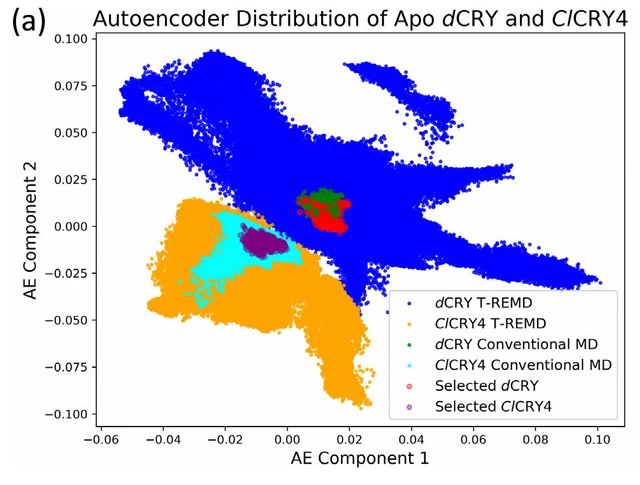
Figure 1. Autoencoder latent-space distribution of apo dCRY and ClCRY4 simulations. (Xiong C, et al. 2025)
Reference
Xiong C.; et al. Structural Plasticity and Functional Dynamics of Pigeon Cryptochrome 4 as Avian Magnetoreceptor. J Mol Biol. 2025 Oct 15;437(20):169233.
Our technical team responds within 24 hours. All inquiries protected under NDA.