MagHelix™ FBDD Platform
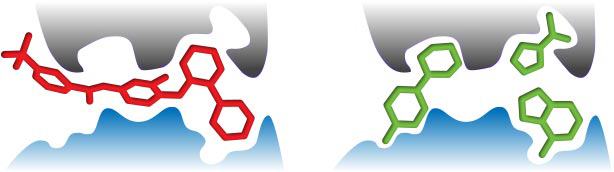
 Rule-of-Three Library Design
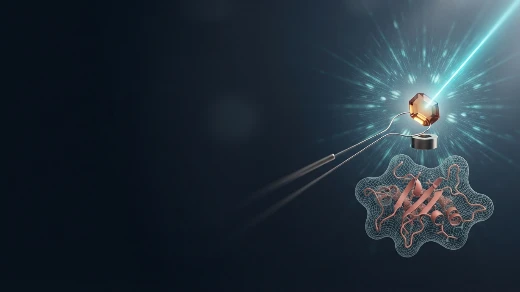
  Orthogonal Biophysical Screening
  AI-Guided Fragment-to-Lead
Fragments sample chemical space more efficiently than drug-sized molecules. Our platform integrates Rule-of-Three library curation, multi-modal biophysical validation (X-ray, NMR, SPR, Cryo-EM), and AI-driven fragment growing — delivering leads with higher selectivity and fewer optimization cycles, with direct handoff to Lead Optimization.
Creative Biostructure at a Glance
Over a decade of trusted expertise powering biotech, pharma, and research institutions worldwide to advance therapeutic innovation.






Why Partner With Us
Most HTS campaigns screen millions of compounds at 0.01% hit rates, then struggle to optimize flat, featureless hits. Fragments bind weakly but efficiently — yet detecting millimolar affinities requires specialized biophysical infrastructure that virtual biotechs cannot afford. Pharma teams often split fragment screening, structural validation, and medicinal chemistry across separate vendors, losing the structural continuity that makes FBDD work. We built this platform to eliminate that friction: one team where Rule-of-Three library design, orthogonal biophysical validation, and AI-guided fragment optimization share the same structural database.
Your CapEx is in chemistry and biology. Ours is in biophysical infrastructure and structural expertise.
| Stage | What We Deliver | What You Don't Need to Build |
|---|---|---|
| Library Design | Rule-of-Three (RO3) curated fragment library; customizable by target class and screening method | Fragment procurement and curation team |
| Biophysical Screening | STD-NMR, SPR, TSA, ITC, BLI, MST — method selected by target properties | NMR magnet, SPR biosensor, calorimeter |
| Structural Validation | X-ray co-crystallization, Cryo-EM, NMR structure of fragment-bound complexes | Synchrotron access, Krios facility |
| Fragment-to-Lead | AI-guided growing, linking, merging; FEP affinity ranking; SAR-by-catalog | CADD software licenses, GPU cluster |
| Data Handoff | Series of fragment-bound structures + optimized lead compounds with binding mode rationale | — |
Production-Ready Deliverables: Every campaign ships with validated fragment hits, co-crystal structures, biophysical binding data, and lead-optimized compound series — ready for patent filing and Lead Optimization.
- ✓ Milestone-based pricing aligned with your fundraising cycles
- ✓ No biophysical infrastructure overhead — NMR, SPR, X-ray, and Cryo-EM under a single project manager
PPI targets. Flat binding pockets. Allosteric sites. "Undruggable" is our starting point.
Proven track record where others fail
Protein-protein interactions, flexible kinases, and epigenetic readers — targets where HTS fails because pockets are shallow or dynamic. FBDD's small fragments access sub-cavities that drug-sized molecules cannot reach.
IP firewall & encrypted data infrastructure
Full audit trails, GLP-ready documentation, client retains 100% ownership of all fragment designs and structural data.
Core Service Modules
Service Module At-a-Glance
| Service | Core Capability | Platform Integration | Typical Timeline |
|---|---|---|---|
| Fragment Library Design & Screening | Rule-of-Three curation; target-customizable libraries; high-throughput biophysical screening (NMR, SPR, TSA, MST) | Direct link to Hit Biophysical Characterization and Structural Biology | 2–4 weeks |
| Fragment Hit Validation | Orthogonal biophysical confirmation; X-ray/Cryo-EM/NMR co-structure determination; binding mode elucidation | AlphaFold3-guided construct design; direct handoff to CADD for optimization | 4–8 weeks |
| Fragment-to-Lead Optimization | AI-guided growing, linking, merging; SAR-by-catalog; FEP affinity ranking; quantum mechanics refinement | Integration with CADD Platform and Lead Optimization | 3–6 months |
Fragment Library Design & Screening
Rule-of-Three Curation for Efficient Chemical Space Sampling
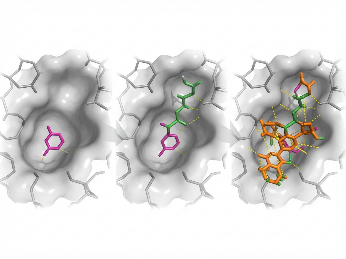
Key Features:
- Rule-of-Three (RO3) Compliance — MW <300 Da, clogP ≤3, H-bond donors/acceptors ≤3. Fragment libraries explore chemical space more efficiently than million-compound HTS libraries, with higher binding efficiency per atom.
- Target-Customizable Libraries — Library size and composition tailored to screening method: NMR-optimized (solubility-focused), crystallography-optimized (diversity-focused), or SPR-optimized (stability-focused).
- High-Throughput Biophysical Screening — STD-NMR for weak-affinity detection (mM); SPR for kinetic profiling; TSA for thermal stabilization; MST for micro-scale affinity — method selected by target properties.
What We Offer: For virtual biotechs, this eliminates the need to procure fragment libraries and biophysical instrumentation. For pharma, our orthogonal screening approach reduces false positives by 60–70% compared to single-method screens, conserving chemistry resources for validated hits.
Fragment Hit Validation
Structural Confirmation Before Chemistry Investment
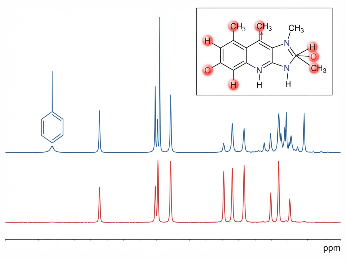
Key Features:
- X-ray Crystallography — Co-crystallization and soaking of fragment hits; atomic-resolution binding mode visualization; identification of sub-cavities and water networks invisible to docking.
- Cryo-EM for Membrane Proteins — Single-particle analysis resolves fragment binding to GPCRs and ion channels that resist crystallization; local resolution in binding pockets reaches 2.5–3.5 Å.
- NMR Solution Structures — STD-NMR and HSQC titrations confirm binding epitopes and detect conformational changes; essential for flexible targets and allosteric sites.
- Orthogonal Cross-Validation — Every hit confirmed by ≥2 independent methods before progression; eliminates artifacts from single-technique screens.
What We Offer: For PPI targets with flat, featureless pockets, structural validation is non-negotiable. Our platform delivers co-crystal structures within 4–8 weeks, providing medicinal chemists with atomic-resolution SAR before the first synthesis cycle.
Fragment-to-Lead Optimization
AI-Guided Growing, Linking, and Merging
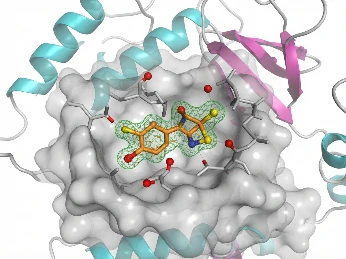
Key Features:
- Fragment Growing — AI generative models (VAE, reinforcement learning, SE(3)-equivariant networks) extend fragments into adjacent sub-cavities while preserving synthetically accessible exit vectors.
- Fragment Linking & Merging — Computational linker design connects two proximal fragments into a single high-affinity compound; FEP validates affinity gains before synthesis.
- SAR-by-Catalog — Rapid analog exploration using commercially available building blocks; QSAR models predict activity for untested combinations.
- Quantum Mechanics Refinement — QM/MM calculations refine binding mechanisms for covalent fragments and metal-coordinating ligands.
What We Offer: For hit-to-lead programs, our AI-guided F2L pipeline compresses traditional 12-month optimization timelines to 3–6 months. For difficult targets, fragment merging accesses binding modes impossible for single-scaffold approaches.
Technology Platform
Integrated FBDD Infrastructure: Library Design + Biophysical Screening + Structural Validation + AI Optimization, Zero Handoffs
Traditional FBDD splits fragment procurement, biophysical screening, and structural validation across separate vendors. Our platform unifies all stages under one project team, with structural data feeding directly into AI optimization models.
Computational Platform — Dry Lab
| Capability | Details |
|---|---|
| AI Fragment Design | VAE and reinforcement learning for fragment growing; SE(3)-equivariant models for linker design; pharmacophore-constrained de novo generation |
| FEP & Affinity Ranking | FEP/TI and MM/PBSA for fragment-to-lead affinity prediction and selectivity profiling |
| QSAR & SAR Modeling | CoMFA, CoMSIA, and machine learning classifiers for structure-activity relationship extraction from fragment elaboration data |
| Data Fusion | Multi-algorithm consensus scoring combining biophysical data (SPR, ITC, NMR) with computational predictions for robust hit prioritization |
Experimental Platform — Wet Lab
| Capability | Details |
|---|---|
| Fragment Library | Rule-of-Three curated; 1,000–5,000 fragments; customizable by target class and screening modality |
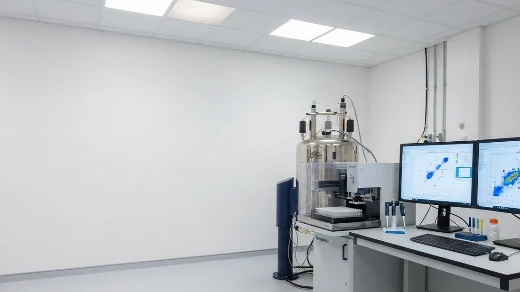
| NMR Screening | Bruker Avance NEO 600/800 MHz; STD-NMR for weak-affinity detection; ¹H-¹⁵N HSQC titrations for binding epitope mapping |
| SPR & BLI | Biacore 8K+ for kinetic profiling; Octet RED96e for high-throughput fragment screening |
| Thermal Shift & Calorimetry | NanoDSF/DSC for thermal stabilization; ITC for thermodynamic characterization |
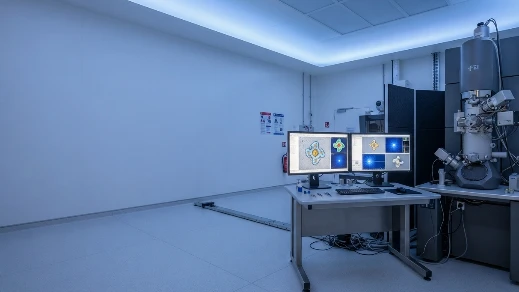
| Structural Biology | Rigaku XtaLAB Synergy-R for in-house X-ray screening; synchrotron partnerships; Thermo Fisher Krios G4i for Cryo-EM; Bruker NEO for NMR structure determination |
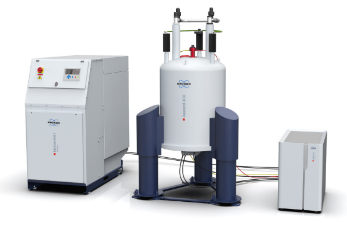
Bruker Avance NEO 800 MHz
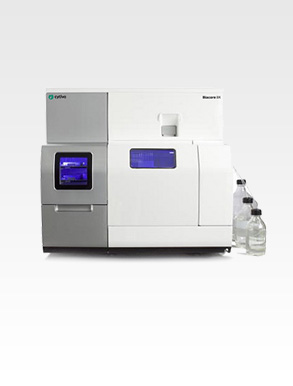
Biacore 8K+ SPR
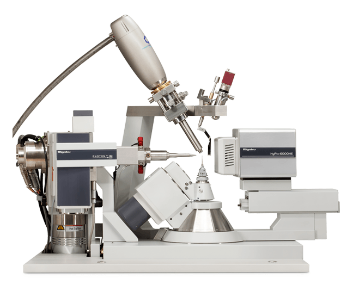
Rigaku XtaLAB Synergy-R
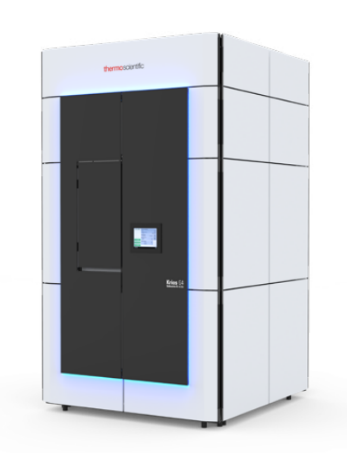
Thermo Fisher Krios G4i
Platform Edge: The ability to screen a fragment library by STD-NMR on Monday, confirm hits by SPR on Tuesday, deliver co-crystal structures by Thursday, and rank elaboration strategies by FEP on Friday — all under one project team — compresses traditional 6-month FBDD startup phases into 4-week iterations.
Platform specifications are subject to continuous upgrade. Contact our team for instrument availability and project-specific capability assessment.
Closed-Loop Discovery Engine
When Weak Binding Meets Structural Truth
Static docking scores miss the subtle interactions that make fragments bind. Experimental biophysics and crystallography reveal the reality — ordered waters, induced-fit changes, and entropic penalties. Our platform feeds every structural result back into the design cycle.
Fragment Library Design
Rule-of-Three curation and AlphaFold3-guided pocket analysis inform library composition for target-specific screening
→ Feeds into Biophysical Screening
Orthogonal Hit Validation
STD-NMR, SPR, X-ray, and Cryo-EM confirm weak binding and elucidate atomic-level binding modes
→ Feeds into F2L Design
AI Fragment-to-Lead
Generative AI grows, links, and merges fragments; FEP validates affinity gains before synthesis; CADD models predict ADMET compliance
→ Feeds into Lead Optimization
Structural Feedback
Co-crystal structures of elaborated fragments validate AI predictions and retrain generative models for next-target design
→ Feeds back into AI
Industrial Value:
For Biotechs
Your first fragment campaign's structural data trains the AI models for your second target. Biophysical validation from Phase 0 becomes training data for Phase 1 — a compounding learning partnership.
For Pharma
Every structural prediction is linked to an experimental outcome with project ID, timestamp, and model version — fully audit-ready for regulatory submissions and internal portfolio reviews.
Project Management & Execution
Project Workflow
A standardized, milestone-driven execution system. From library selection to lead-optimized compounds.


01 Library Design
- Target pocket analysis; AlphaFold3 druggability assessment; Rule-of-Three library customization
Deliverable: Custom fragment library + screening protocol
02 Biophysical Screening
Deliverable: Ranked hit list with biophysical data
03 Hit Validation
Deliverable: Co-crystal structures + binding mode report
04 Fragment-to-Lead
- AI-guided growing/linking/merging; FEP affinity ranking; SAR-by-catalog; QM refinement
Deliverable: Optimized lead series with FEP estimates
05 Deliverables & Handoff
- Lead compound series; fragment-bound structures; biophysical data package; handoff to Lead Optimization
Deliverable: Final report + patent-supporting structural data + transition plan
Sample Requirements
| Sample Type | Specification |
|---|---|
| Target Protein | >95% purity; >0.5 mg/mL; NanoDSF Tm >45°C; DLS PDI <1.2 |
| Prior Structural Data | PDB ID; AlphaFold3 model; or FASTA sequence for homology modeling |
| Screening Method Preference | NMR (weak affinity, solution state); SPR (kinetics); X-ray (structural); Cryo-EM (membrane proteins) |
| Fragment Library Scope | Standard RO3 library (1,000–2,000 fragments); expanded diversity library (5,000+); custom target-focused set |
Standard Deliverables
Upon project completion, clients receive comprehensive experimental reports including:
- Validated fragment hits with orthogonal biophysical data (SPR, ITC, NMR, TSA)
- Co-crystal or Cryo-EM structures of fragment-bound complexes
- AI-guided fragment-to-lead compound series with binding mode rationale
- FEP-validated affinity estimates and selectivity profiles
- SAR documentation for patent filing
- Direct handoff to Lead Optimization, CADD, or ADMET
Our technical team responds within 24 hours. All inquiries protected under NDA.
Frequently Asked Questions
Case Study
Case: AI-Driven Progress in Fragment-Based Drug Discovery — From Growing to Merging
Goal: Demonstrate the industrial application of AI-integrated fragment-to-lead methodologies — core capabilities deployed on our MagHelix™ FBDD Platform.
Published Evidence:
Yoo J, Jang W, Shin W-H. From part to whole: AI-driven progress in fragment-based drug discovery. Curr Opin Struct Biol. 2025;91:102995.
Key Findings (from literature):
- AI Fragment Growing: VAE and reinforcement learning models significantly improved the accuracy and efficiency of fragment growing by exploring chemical space beyond traditional medicinal chemistry intuition.
- Fragment Merging & Linking: SE(3)-equivariant models and diffusion models enabled precise 3D molecular structure exploration for merging proximal fragments into single potent compounds.
- Linker Optimization: Deep learning-based linker design methods (including RL and language models) accelerated the connection of fragment pairs with synthetically feasible tethers.
Industrial Translation:
We deploy these AI-driven fragment growing, merging, and linking methodologies on our MagHelix™ FBDD Platform, integrated with FEP affinity validation and orthogonal biophysical screening. For biotechs targeting PPIs or other "undruggable" targets, this means accessing industrial-grade FBDD without the $2M+ biophysics infrastructure investment. For pharma, our unified platform — combining STD-NMR, SPR, X-ray, and generative AI — compresses traditional fragment-to-lead timelines by 40–50% while delivering structurally validated leads with higher selectivity.
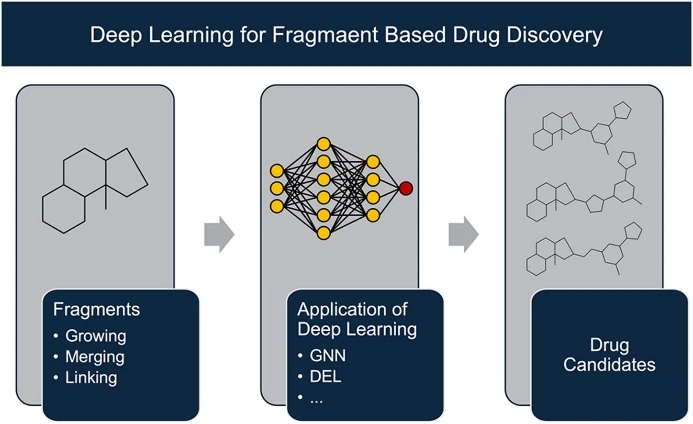
Figure 1. A schematic overview of how deep learning, including graph neural networks and DNA-encoded libraries, transforms molecular fragments into drug candidates in fragment-based drug discovery.
Need AI-integrated FBDD to tackle your challenging targets? Our team can design a customized fragment-based discovery pipeline tailored to your target class, pocket architecture, and regulatory milestones. Contact our scientific team today.