Zebrafish Services
 CRISPR Disease Models
  AI-Powered Phenotypic Screening
  Multi-Organ Toxicity
  Efficacy-to-Lead
 Cell-based assays miss whole-organism pharmacokinetics. Mammalian studies burn budget and timeline. The Creative Biostructure zebrafish platform bridges the gap: 71% human gene homology, 82% disease-gene conservation, and optical transparency enabling multi-organ readouts in a single vertebrate system—at a fraction of rodent cost. Whether you are a seed-stage biotech without an animal facility or a pharma team seeking early in vivo liability flags, we deliver regulatory-aligned vertebrate data under one project team and one milestone clock.
Why Zebrafish Is the Critical Bridge Between Cell-Based Assays and Mammalian Studies?
Cell-based assays deliver mechanism, but they cannot predict whole-organism distribution, metabolism, or off-target organ toxicity. Mammalian studies provide that context—but at $500K+ and 6–12 months per program. Seed-stage biotechs lack vivarium infrastructure and IACUC capacity. Pharma teams watch late-stage attrition erase portfolio value because liabilities emerge only after expensive rodent work.
The Creative Biostructure platform eliminates that binary choice. We integrate CRISPR precision genome editing, AI-driven phenotypic image analysis, and transcriptomic pathway deconvolution into a standardized zebrafish pipeline. Computed ADMET risk flags from our in silico platform inform dose-range selection before a single embryo is exposed. Post-study, AI-quantified phenotypes and RNA-seq pathway maps feed directly into your lead optimization or IND-enabling ADMET package—creating a closed loop between prediction, in vivo validation, and regulatory documentation.
Vertebrate-Grade Data at Cell-Assay Cost
Zebrafish embryos enable simultaneous cardiotoxicity, hepatotoxicity, neurotoxicity, and developmental toxicity assessment in a single 96-well format—delivering multi-organ liability data with <10 mg compound per assay arm. For virtual biotechs, this is mammalian-caliber validation without vivarium CapEx or IACUC overhead.
AI-Augmented Phenotypic Intelligence
Automated behavioral tracking and deep-learning morphometric segmentation eliminate observer bias. Transcriptomic AI (KEGG/GO enrichment, pathway anomaly detection) identifies off-target mechanisms invisible to visual inspection—transforming qualitative phenotypes into quantitative, mechanistic hypotheses.
Regulatory-Ready Single-Vendor Continuity
From CRISPR model design and phenotypic validation to AI image analysis and regulatory-formatted reporting, one project team manages the entire chain. No handoff friction between a transgenic CRO, an imaging facility, and a bioinformatics shop. Your data package arrives audit-ready for IND submission or investor diligence.
Zebrafish Technology Suite
Zebrafish Disease Model Generation
CRISPR Precision Genome Editing for Target Validation
Key Features:
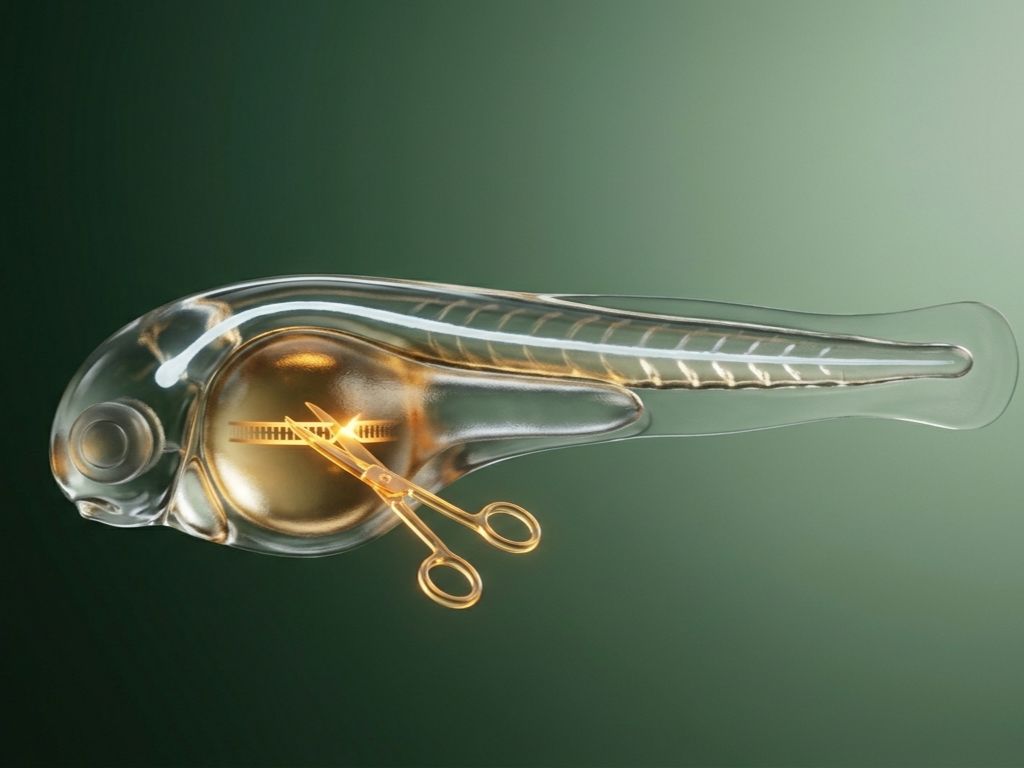
- CRISPR/Cas9 knock-in/knock-out and transgenic line generation with >90% targeting efficiency for standard loci; precision editing mimicking human disease polymorphisms.
- AI-driven phenotypic scoring algorithms quantify subtle morphological and behavioral deviations across generations, replacing subjective visual inspection with statistical rigor.
- Transcriptomic pathway mapping (bulk and single-cell RNA-seq) validates that engineered mutations recapitulate human disease pathways before compound testing begins.
Ideal For: Target validation in oncology, cardiovascular, neurodegeneration, and rare disease; chemical suppressor/enhancer screening; gene-drug interaction studies.
What We Offer:
For seed-stage biotechs, this means accessing vertebrate disease modeling without building a genome editing core facility or hiring zebrafish husbandry FTEs. For pharma teams, our CRISPR platform generates bespoke models for targets lacking commercial assay kits—delivering genotyping reports, phenotypic validation data, and breeding protocols under full contractual exclusivity.
Zebrafish Toxicity and Safety Assays
Multi-Organ Liability Detection in a Single Vertebrate System
Key Features:
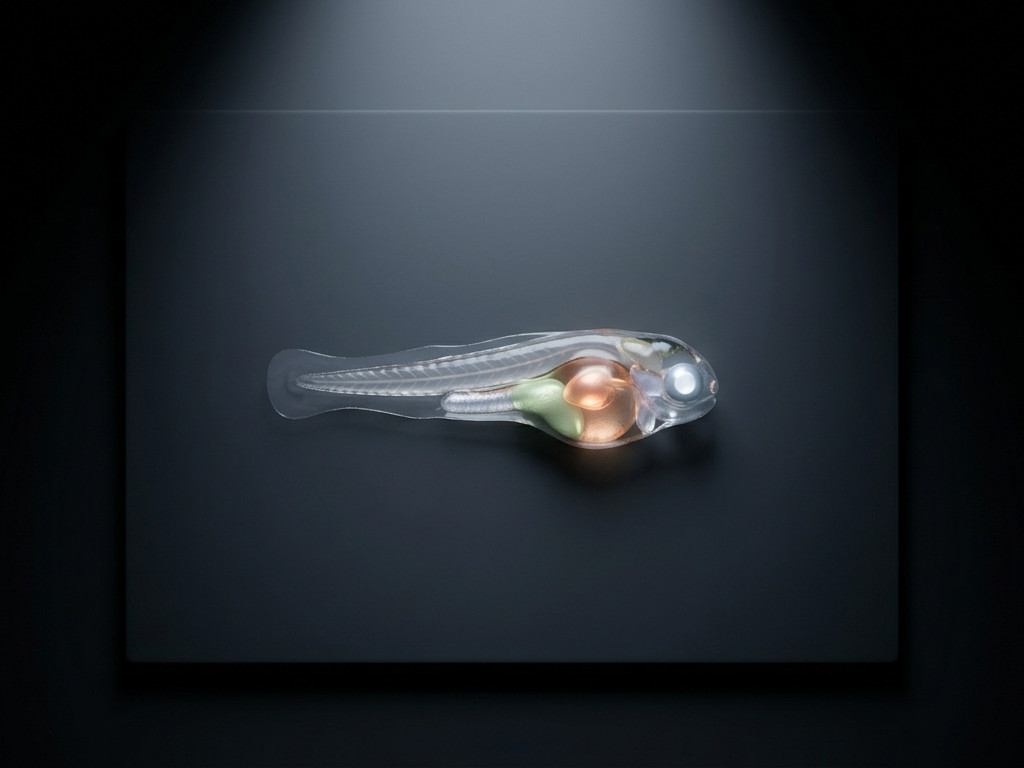
- Comprehensive toxicity panel: Acute lethality, developmental/teratogenicity, cardiotoxicity (QT prolongation via automated heart-rate imaging), hepatotoxicity (liver fluorescence transgenics), and neurotoxicity (behavioral tracking).
- ML-based anomaly detection: Noldus DanioVision behavioral tracking combined with deep-learning locomotor pattern analysis flags sub-lethal neurotoxicity that survival curves miss.
- Morphometric AI quantification: Automated image segmentation measures eye diameter, body length, and organ fluorescence intensity with micron-level precision across thousands of larvae.
Ideal For: Early liability detection before mammalian studies; IND-enabling safety pharmacology; mechanism-of-toxicity (MoT) deconvolution via transcriptomics.
What We Offer:
For virtual biotechs with limited compound supply, our 96-well format requires only milligrams of material to generate mammalian-predictive toxicity data—conserving precious API for downstream lead optimization. For pharma outsourcing teams, the multi-organ readout replaces three separate rodent pilot studies, compressing timeline and budget while delivering IACUC-aligned documentation suitable for regulatory submission.
Zebrafish Efficacy Testing
In Vivo Proof-of-Mechanism and Lead Validation
Key Features:
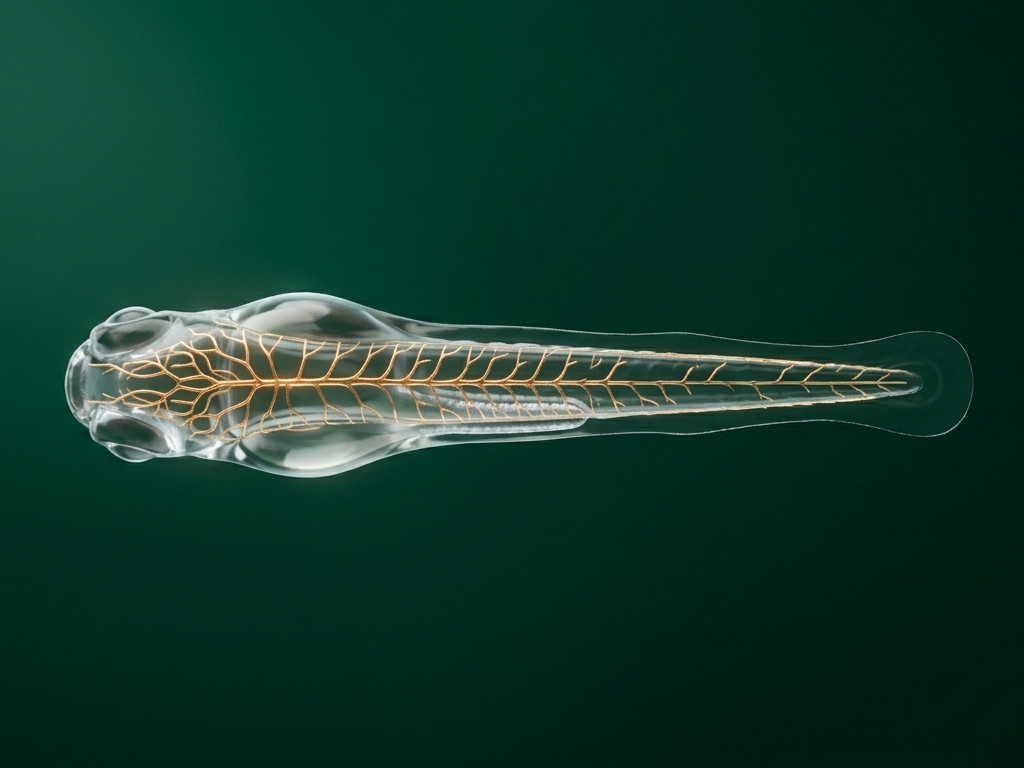
- Disease-relevant efficacy models: Angiogenesis inhibition (intersegmental vessel assay), cardioprotection (doxorubicin challenge), neuroprotection (MPP+ Parkinson's model), infection and inflammation assays.
- High-content imaging with deep learning feature extraction: Automated quantification of therapeutic response across organ systems, enabling dose-response modeling with Bayesian curve fitting.
- Combination therapy screening: Matrix dose-response designs evaluating synergistic or antagonistic effects in vivo—impossible to replicate in cell-based monoculture.
Ideal For: Lead optimization validation, mechanism-of-action confirmation, combination therapy prioritization, and competitive benchmarking.
What We Offer:
When your Hit-to-Lead biophysical data needs in vivo confirmation, our efficacy platform provides vertebrate proof-of-mechanism in 6–8 weeks rather than 6 months for rodent pilot studies. For difficult targets like PPI modulators or allosteric inhibitors, zebrafish whole-organism pharmacokinetics reveal efficacy liabilities that cell-based docking scores cannot predict.
Platform Instrumentation
| Instrument | Throughput / Sensitivity |
|---|---|
| Zeiss Axio Observer Z1 | Automated high-resolution fluorescence microscopy; multi-channel time-lapse imaging for organ-specific phenotypes across 96-well plates |
| Noldus DanioVision | High-throughput behavioral tracking system; automated locomotor and oculomotor phenotyping across 96 larvae simultaneously |
| Tecan Fluent Liquid Handler | Automated compound dispensing and media exchange; 384-well compatible for dose-response matrix and combination screening |
| 10x Genomics Chromium | Single-cell and bulk RNA-seq for transcriptomic profiling; KEGG/GO pathway enrichment and GSEA for mechanism deconvolution |
| Sutter CRISPR Microinjection System | Precision genome editing for custom mutant generation; >90% targeting efficiency for standard disease loci |
Platform specifications are subject to continuous upgrade. Contact our team for instrument availability and project-specific capability assessment.
Standardized Workflow
Project Workflow
A standardized, milestone-driven execution system. From target review to regulatory-ready vertebrate data package—managed by a single project team, tracked in real time.


01 Strategy & Model Design
- Target review and disease model selection (CRISPR vs. transgenic vs. wild-type)
- Compound format confirmation and dose-range prediction via ADMET modeling
- Endpoint definition: toxicity panel or efficacy readout selection aligned with lead optimization strategy
Deliverable: Study protocol + Gantt-chart milestones + risk assessment
02 Generation / Line QC
- CRISPR/Cas9 guide RNA design and microinjection (for custom models)
- Genotyping and phenotypic validation of F1/F2 generations
- Wild-type line quality confirmation for standard assays
Deliverable: Validated zebrafish model with genotyping report + QC documentation
03 In Vivo Exposure & Phenotyping
- Dose-response compound administration via waterborne or microinjection
- Multi-parameter readouts: survival, morphology, organ fluorescence, behavioral phenotypes
- Real-time cardiotoxicity and neurotoxicity monitoring
Deliverable: Raw phenotypic dataset + interim QC report
04 AI Analysis & Transcriptomics
- Automated morphometric quantification via deep-learning image segmentation
- Behavioral pattern recognition and anomaly flagging by ML classifiers
- RNA-seq and pathway enrichment (KEGG/GO) for mechanism-of-action deconvolution
Deliverable: AI-processed phenotypic report + transcriptomic analysis + pathway maps
05 Regulatory Reporting & Transition
- Cross-endpoint statistical integration and dose-response modeling
- Regulatory-formatted study report (ICH-aligned where applicable)
- Lead Optimization or ADMET-Tox transition plan with risk flags
Deliverable: Final technical report + raw data package + regulatory documentation
Sample Requirements
| Requirement | Specification |
|---|---|
| Compound Format | Powder or DMSO stock; minimum 10 mg per assay arm |
| Solubility | Water-soluble or formulatable compounds preferred; custom formulation (DMSO, ethanol, methylcellulose) available upon consultation |
| Compound Characteristics | MW, solubility, and stability data recommended for dose-range prediction |
| Data Input | Preliminary in vitro ADMET or biophysical data welcome for targeted endpoint selection |
Standard Deliverables
- Validated disease model or toxicity/efficacy dataset with full QC traceability
- AI-quantified phenotypic analysis (morphometrics, behavioral metrics, organ-specific fluorescence)
- Transcriptomic profiling report with KEGG/GO pathway enrichment and mechanism hypotheses
- Statistical analysis with dose-response curves and confidence intervals
- Regulatory-formatted study report suitable for IND-enabling documentation or publication
- Full electronic data package (raw images, sequencing files, analysis scripts)
Frequently Asked Questions
Case Study
Case Study: Non-Canonical Neurosensory Toxicity in Zebrafish: A CRISPR-Transcriptomic Template for Early CNS Liability Detection
Goal: Establish a non-canonical neurosensory toxicity pathway using CRISPR zebrafish and transcriptomic AI, creating a mechanistic template for early CNS liability detection that standard cell-based screens and visual inspection alone would miss.
Key Data:
- CRISPR pathway deconvolution: ahr2 mutant zebrafish and morpholino knockdowns confirmed Aroclor 1254-induced tremors and microphthalmia occur independently of the classical AhR pathway—revealing a novel non-canonical mechanism invisible to standard receptor-binding assays.
- Transcriptomic evidence: RNA-seq identified downregulation of visual perception (opn1mw1) and dopamine/GABA transport genes (slc6a3, slc18a2), with KEGG enrichment linking toxicity to Parkinson's disease and neuroactive ligand-receptor pathways.
- Behavioral quantification: Automated tracking demonstrated dose-dependent oculomotor dysfunction across five concentration tiers, providing quantitative dose-response data for regulatory risk assessment.
- Cross-validation: Morphometric analysis (eye diameter/body length) correlated with behavioral deficits and transcriptomic signatures, creating a three-layer validation chain (phenotype → behavior → mechanism).
Why it matters:
For drug developers, this peer-reviewed case demonstrates that zebrafish CRISPR models combined with transcriptomic AI deconvolve complex, non-traditional toxicity mechanisms that mammalian histopathology and cell-viability assays miss. The ability to differentiate receptor-specific from receptor-independent toxicity transforms safety assessment from reactive observation into predictive, pathway-aware risk management.
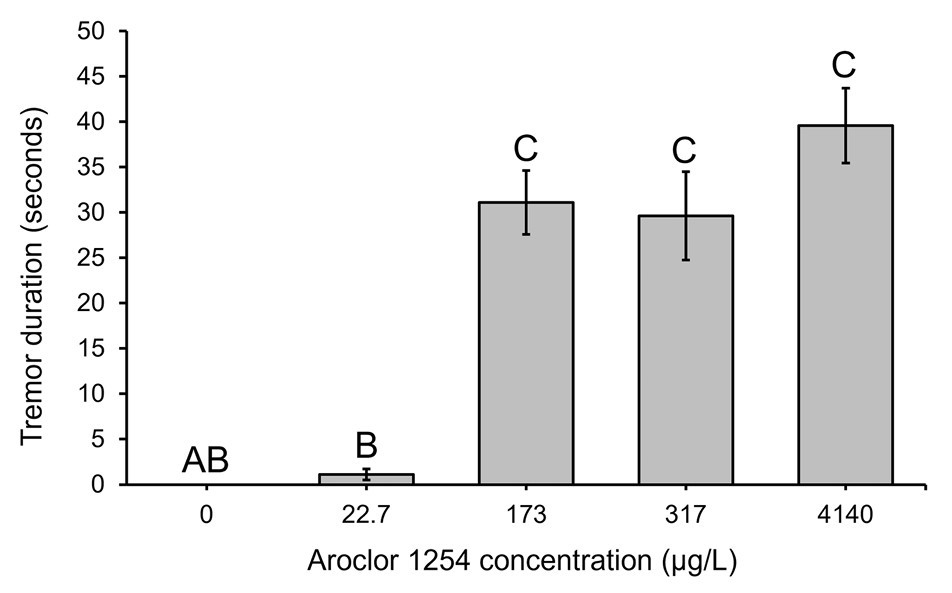
Figure 1. Mean tremor duration (± SD) in 7 dpf zebrafish larvae exposed to Aroclor 1254 (0–4140 µg/L). (Magnuson JT, et al., 2026)
Reference:
- Magnuson JT, Green CS, Morris JM, et al. Aroclor 1254 impairs visual and neurosensory signaling pathways independent of the aryl hydrocarbon receptor in larval zebrafish. Aquat Toxicol. 2026 Feb;291:107695.
Our technical team responds within 24 hours. All inquiries protected under NDA.