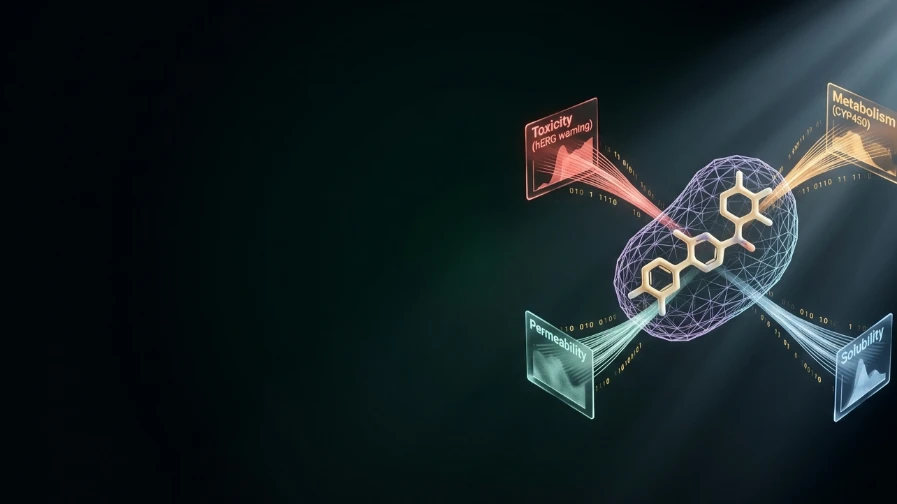
Virtual Screening Services
 Structure-Based Screening
  Ligand-Based Matching
  AI Rescoring
 We screen billion-scale libraries with AI-driven docking and ML rescoring, then validate top hits through MD simulation and experimental confirmation — delivering enriched hit lists with higher true-positive rates than generic docking alone.
Why Virtual Screening Is the Critical Foundation
Hit identification without validated virtual screening is exploration without a map. Seed-stage biotechs need to triage millions of compounds overnight; pharma teams require enrichment factors that survive FEP and medicinal chemistry scrutiny. Our platform combines AI-powered docking, target-specific ML rescoring, and physics-based refinement — then validates top hits through co-crystallization or bioassay to eliminate the false positives that plague pure-AI workflows.
What Sets the Platform Apart
AI + Physics Hybrid
AI docking generates poses in seconds; force-field relaxation resolves steric clashes and chirality errors. Physics ensures chemical realism.
Target-Specific ML
PLEC and Grid descriptors encode 3D protein-ligand interactions; target-specific ML models (SVM, RF, XGB) outperform generic CNN scores by 3–5x in EF1%.
Validation-First
Top-ranked hits advance to MD simulation and experimental validation, not just docking scores.
Technology Suite
AI-Enhanced Virtual Screening
Key Features:
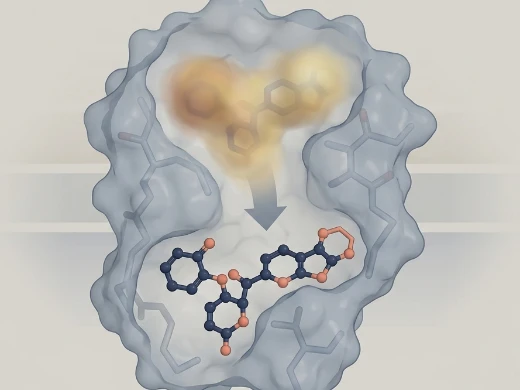
- Diffusion-Based Docking (DiffDock) — Generative AI predicts ligand poses without traditional search algorithms, achieving superior enrichment on benchmark sets.
- GNINA Deep Learning Scoring — CNN-enhanced affinity prediction trained on PDBbind data, outperforming classical force-field scores in correlation with measured binding.
- Hierarchical Post-Processing — Tier-1 AI docking for speed → Tier-2 physics relaxation (FF/Align) for pose validity → Tier-3 ML rescoring (RTMScore/EquiScore) for enrichment.
Ideal For: Ultra-large library screens (millions of compounds); targets with limited experimental structural data; seed-stage biotechs needing maximum throughput per dollar.
What We Offer:
A tiered screening strategy that combines AI speed with physics-based rigor. We deliver enriched hit sets with validated poses, not just high scores — addressing the physical implausibility risk of pure-AI docking.
Structure-Based Virtual Screening (SBVS)
Key Features:
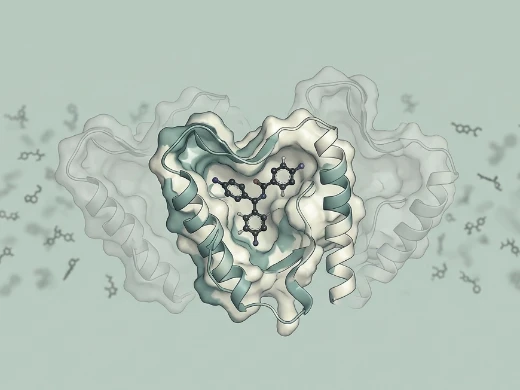
- High-Throughput Docking — Rigid and flexible docking of million-compound libraries against AlphaFold-derived or experimental structures.
- Ensemble Docking — Screening against MD-derived conformational ensembles (50–200 conformers) to capture induced-fit and pocket dynamics.
- Binding Site Druggability Filtering — Pre-screening of target pockets using ML classifiers to prioritize sites with highest ligandability before library investment.
Ideal For: Targets with reliable structural models; programs requiring atomic-level binding mode hypotheses; kinase and protease campaigns with well-defined active sites.
What We Offer:
Ranked compound lists with docking scores, interaction fingerprints, and ADMET pre-filters. For pharma teams, we integrate with your internal scoring workflows and deliver compatible SDF/data packages.
Ligand-Based Virtual Screening (LBVS)
Key Features:
- 2D Fingerprint Similarity — Morgan, ECFP, and path-based fingerprints for rapid analog searching and chemical space exploration.
- 3D Shape & Electrostatic Matching — ROCS-based shape overlay and field-point comparison for scaffold-independent active recognition.
- ML Similarity Models — Siamese neural networks and graph autoencoders trained on bioactivity data to detect non-obvious structural analogs.
Ideal For: Programs with known actives but no target structure; natural product analog discovery; patent-bypass campaigns requiring topological novelty.
What We Offer:
From a single active compound or a small training set, we generate a ranked virtual library with similarity scores and predicted activity. Results feed directly into docking and FEP workflows for affinity refinement.
Platform Instrumentation
| Instrument / Software | Capability |
|---|---|
| NVIDIA DGX A100 | AI docking inference (DiffDock, GNINA) and ML model training |
| Schrödinger Glide / IFD-MD | Induced-fit docking and Prime refinement |
| OpenEye / RDKit | Fingerprint generation, shape matching, and pharmacophore search |
| GROMACS/AMBER HPC | Post-docking MD relaxation and FEP validation |
| Bruker AVANCE NEO 600 MHz | NMR validation of hit binding modes |
| Thermo Fisher Krios G4 | Cryo-EM confirmation of target-ligand complexes |
Standardized Workflow
Project Workflow
A milestone-driven execution system from library to validated hits.


01 Target Review
- Pocket analysis and druggability assessment
- Library curation (corporate / commercial)
- Deliverable: Target assessment report + screening protocol
02 Library Prep
- Conformer generation
- Tautomer/protonation enumeration
- Deliverable: Prepared library + quality metrics
03 AI Screening
- AI docking (DiffDock/GNINA)
- Ensemble docking across MD conformers
- Deliverable: Raw pose ensemble + confidence scores
04 ML Rescore
- Target-specific ML rescoring (PLEC-SVM/RF/XGB)
- AUC-PRC evaluation
- Deliverable: Prioritized hit list + enrichment metrics
05 Validation
- MD stability confirmation (top 20–50)
- Bioassay validation (optional)
- Deliverable: Validated hits + binding data + final report
Sample Requirements
- Target structure: PDB file, AlphaFold model, or homology model
- Library source: Corporate collection, commercial vendor (Enamine REAL, ZINC, ChemDiv), or focused subset
- Known actives: Reference compounds for ML training and benchmarking
- Project scope: Target class, desired selectivity, and covalent vs. non-covalent requirement
- Assay availability: Existing biochemical or cell-based assay, or assay development needed
Standard Deliverables
- Docked pose ensemble with AI confidence and ML scores (PDB/SDF)
- Enrichment metrics (EF1%, AUC-PRC, NEF1%) vs. generic scoring functions
- Top 20–50 hits with MD stability assessment and interaction fingerprints
- Experimental validation data (if selected): IC50, binding affinity, or Cryo-EM coordinates
- Final technical report with hit prioritization and SAR recommendations
Frequently Asked Questions
Case Study
Case Study: Benchmarking AI-Powered Docking from the Virtual Screening Perspective — A Hierarchical Strategy for Large-Scale Drug Discovery
Goal: Evaluate AI docking methods (DiffDock, GNINA, Vina) against physics-based methods on a comprehensive virtual screening benchmark, establishing a hierarchical strategy that balances speed and accuracy for industrial-scale screening.
Key Data:
- Benchmark scale: VSDS-vd dataset spanning diverse protein families and ligand chemistries for cross-docking evaluation.
- AI superiority: AI-driven docking methods (DiffDock, GNINA) show significant advantages in virtual screening enrichment compared to traditional physics-based methods.
- Physical deficiency: AI methods generate poses with steric clashes and chirality errors; hierarchical strategy combines AI speed with physics-based refinement for optimal performance.
- Hierarchical strategy: Tier-1 AI docking for speed → Tier-2 physics relaxation for validity → Tier-3 target-specific ML rescoring for enrichment — achieving dynamic balance between screening speed and accuracy.
Why it matters: For drug developers running large-scale virtual screens, this study validates that pure-AI docking risks physical implausibility while pure-physics methods miss optimal poses. By combining AI speed with physics-based refinement and target-specific ML rescoring, our platform delivers both throughput and accuracy — directly supporting hit identification for targets where traditional docking fails.
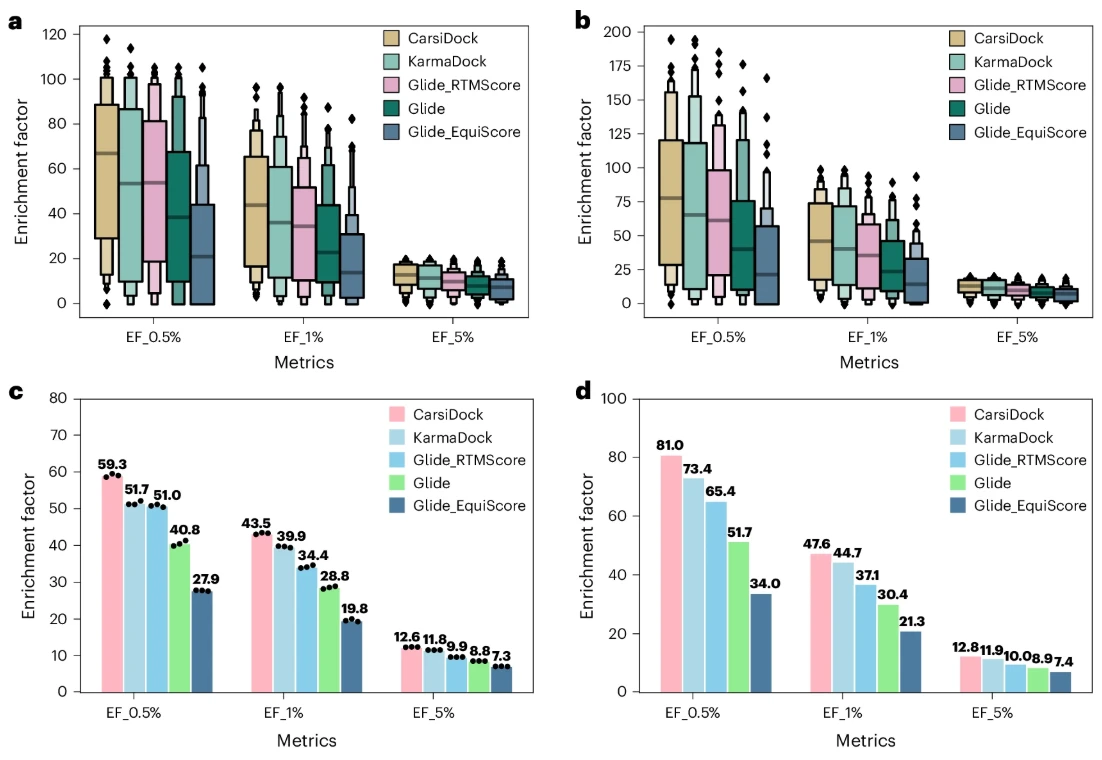
Figure 1. Distribution (a, b; n = 68) and average (c, d; n = 3) of EF_0.5%, EF_1%, and EF_5% for VS protocols on RandomDecoy at 1:100 (a, c) and 1:300 (b, d) active-to-decoy ratios. (Gu S.; et al. 2025)
Reference
Gu S, Zhang X, Shen C, et al. Benchmarking AI-powered docking methods from the perspective of virtual screening. Nat Mach Intell. 7, 509–520 (2025).
Our technical team responds within 24 hours. All inquiries protected under NDA.