Crystal Grade Protein Preparation
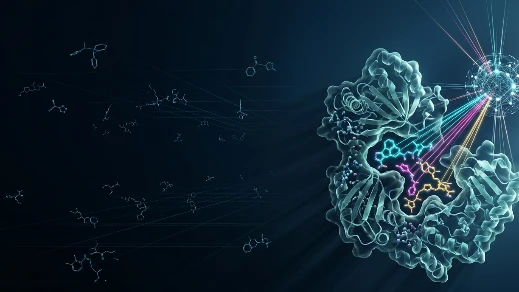
 AI Crystallizability Screening
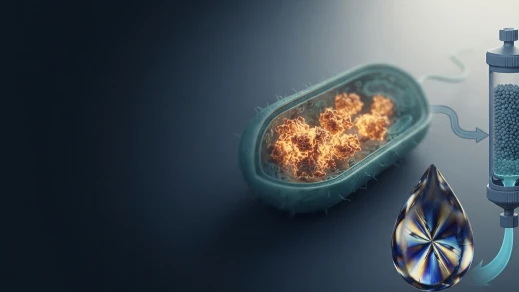
 Detergent & Nanodisc Optimization
 Thermal & Aggregation Validation
Purified protein that aggregates at 4°C will never yield a structure. We bridge the gap between purification and AI-Assisted X-ray Crystallography Services with AI-guided crystallizability prediction, systematic detergent screening, and nanodisc stabilization — ensuring your target arrives at the crystal drop or Cryo-EM grid in its most ordered state.
Why Crystal Grade Protein Preparation Is the Critical Foundation
A purified protein is not a crystallizable protein. Seed-stage biotechs shipping crude eluates to CROs face batch-to-batch heterogeneity that kills crystal hits; big-pharma teams pursuing membrane proteins know that the wrong detergent or a missed aggregation peak wastes months of Gene-to-Protein Production. Our platform integrates AlphaFold Protein Structure Prediction-guided surface engineering with biophysical validation (NanoDSF, DLS, SEC) and detergent-free nanodisc assembly, delivering proteins that advance directly into MagHelix™ Co-crystallization and Soaking or Single Particle Analysis (SPA) workflows.
What Sets the Platform Apart
AI-Guided Crystallizability Engineering
AlphaFold Protein Structure Prediction pLDDT maps and protein language models flag surface entropy hotspots and flexible termini for rational mutagenesis or truncation, improving crystallization propensity by up to 40%.
Systematic Detergent & Additive Screening
A 96-condition detergent panel (DDM, LMNG, GDN, Fos-Choline, CHAPS) plus lipid additive matrix identifies the optimal solubilization environment for each membrane protein within 1 week.
Detergent-Free Nanodisc Stabilization
Designer membrane scaffold peptides enable direct extraction from native membranes into homogeneous nanodiscs — preserving lipid asymmetry and eliminating detergent-induced denaturation prior to AI-Enhanced Cryo-EM Services.
Technology Suite
AI-Assisted Crystallizability Screening & Construct Refinement
Protein Language Model Scoring and AlphaFold-Guided Surface Engineering
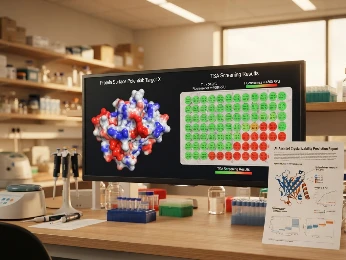
Key Features:
- Protein Language Model Scoring — ESM2-based classifiers benchmarked on 500+ structures predict crystallization propensity from sequence, flagging low-complexity regions and surface lysine/glutamate clusters that impede lattice packing.
- AlphaFold-Guided Surface Entropy Reduction — pLDDT confidence maps guide rational mutation of surface residues (K→A, E→A) to promote crystal contacts, a strategy validated across dehydrogenases and ene reductases.
- Thermal Stability Fingerprinting — NanoDSF and DSF screen 96 buffer/pH/additive combinations to identify conditions that maximize Tm and monodispersity before crystallization trials begin.
- Proteolytic Trimming & Domain Mapping — Limited proteolysis coupled with mass spectrometry identifies stable core domains for Crystal Grade Protein Preparation when full-length constructs fail.
Ideal For: Virtual biotechs with no in-house crystallization infrastructure; difficult targets (GPCRs, kinases, PPI complexes); programs requiring rapid progression from Gene-to-Protein Production to AI-Assisted X-ray Crystallography Services.
What We Offer:
A pre-crystallization quality gate. Before a single drop is set, we deliver a construct optimization report, thermal stability profile, and buffer formulation recommendation. AI-guided surface engineering compresses months of trial-and-error into days, while biophysical validation ensures only monodisperse, high-Tm protein advances to screening.
Membrane Protein Stabilization & Nanodisc Assembly
Detergent Screening, LCP Preparation, and Designer MSP Nanodiscs
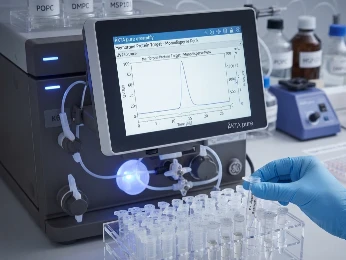
Key Features:
- Detergent Screening & Composition Analysis — Systematic evaluation of 6–10 detergents (DDM, LMNG, Digitonin, GDN, Cymal-5) by SEC and DLS; solubilization efficiency, micelle homogeneity, and 1-week stability at 4°C are scored to select the optimal extraction condition.
- Lipidic Cubic Phase (LCP) Preparation — Monoolein-based LCP mixing for membrane protein crystallization, optimized by in-situ light microscopy and birefringence checks.
- Designer Membrane Scaffold Protein (MSP) Nanodiscs — DeFrND-style detergent-free reconstitution using engineered amphipathic peptides directly from native membranes, preserving endogenous lipid composition and asymmetry for Single Particle Analysis (SPA).
- Proteoliposome & Amphipol Wrapping — Alternative stabilization strategies for targets incompatible with detergent or traditional nanodiscs, validated by All-Atom Protein MD Simulation prior to structural studies.
Ideal For: Membrane Protein & Lipid MD Simulation input generation; antibody-antigen complex stabilization; fragment-based screening campaigns requiring native-conformation Hit Biophysical Characterization.
What We Offer:
Membrane proteins delivered as monodisperse nanodiscs or proteoliposomes with a full detergent composition analysis and stability report. Each batch is qualified by SEC-HPLC (monodispersity >95%), NanoDSF (Tm ± 2°C reproducibility), and functional binding validation (BLI/SPR) before handoff to
MagHelix™ Co-crystallization and Soaking or AI-Enhanced Cryo-EM Services.
Platform Instrumentation
Core Instruments
| Instrument | Capability |
|---|---|
| NanoTemper Prometheus NT.48 | NanoDSF thermal stability and Tm profiling for crystallizability prediction |
| Malvern Zetasizer Nano | DLS aggregation state and polydispersity index (PDI) assessment |
| Thermo Fisher Vanquish Neo UHPLC | SEC-HPLC for monodispersity and homogeneity validation |
| Formulatrix Rock Imager 1000 | Automated crystallization screening and drop imaging at 4°C and 20°C |
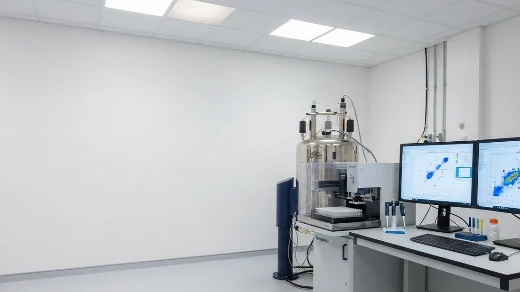
| Bruker AVANCE NEO 600 MHz | NMR validation of construct folding and dynamics in solution |
| Sartorius Octet SF3 | BLI binding validation to confirm native activity post-purification |
| Thermo Fisher Krios G4 | Downstream Cryo-EM grid screening and particle validation |
| NVIDIA DGX A100 | ESM2 inference and crystallization propensity ML model deployment |
Standardized Workflow
Project Workflow
A milestone-driven system from purified protein to diffraction-ready sample.


01 Target Review
- Sequence and AlphaFold Protein Structure Prediction re-assessment
- Aggregation and thermal stability audit
- Deliverable: Pre-crystallization audit report
02 AI-Guided Refinement
- Surface entropy reduction design
- Proteolytic domain mapping (if needed)
- Buffer/pH additive panel design
- Deliverable: Construct refinement proposal + stability forecast
03 Stabilization & Screening
- Detergent or nanodisc condition screening
- Lipid additive / LCP formulation
- Deliverable: Optimal stabilization condition summary
04 Quality Validation
- SEC-HPLC monodispersity check
- NanoDSF Tm confirmation
- BLI activity validation
- Deliverable: COA + crystallization readiness report
05 Downstream Handoff
- Handoff to AI-Assisted X-ray Crystallography Services or AI-Enhanced Cryo-Electron Microscopy (Cryo-EM) Services
- Co-crystal soaking or vitrification grid preparation
- Deliverable: Downstream project starter pack
Sample Requirements
- Purified Protein: Concentration ≥ 5 mg/mL; volume ≥ 500 µL; solubility history and detergent identity (for MPs)
- Target Class: Soluble, membrane protein, or multi-subunit complex; known oligomeric state
- Prior Data: Existing SEC chromatogram, DLS profile, or AlphaFold Protein Structure Prediction model
- Stability Concerns: Known aggregation tendency, protease sensitivity, or ligand requirements
- Downstream Goal: AI-Assisted X-ray Crystallography Services, AI-Enhanced Cryo-EM Services, or Hit Biophysical Characterization
Standard Deliverables
- Crystallization-ready protein with COA (concentration, purity, endotoxin, Tm, PDI)
- AI-assisted crystallizability assessment and construct refinement rationale
- Detergent composition analysis or nanodisc assembly report (for membrane proteins)
- SEC-HPLC and NanoDSF validation data
- Electronic data package (raw analytical files, plasmid maps if construct modified)
Frequently Asked Questions
Case Study
Case Study: Detergent-Free Native Nanodisc Reconstitution for Membrane Protein Structural Biology
Goal: Evaluate a designer membrane scaffold peptide platform that enables direct, detergent-free extraction of membrane proteins from native cell membranes into nanodiscs, bypassing traditional detergent-mediated solubilization that compromises protein stability and native lipid environments.
Key Findings:
- Detergent-free extraction: Engineered DeFrMSPs directly solubilized membrane proteins from crude membranes without prior detergent extraction, preserving native lipid composition and asymmetry.
- Structural validation: Nanodisc-reconstituted MalFGK2 and mGluR7 complexes remained monodisperse and structurally intact, suitable for high-resolution Single Particle Analysis (SPA).
- Broad applicability: The platform successfully extracted diverse membrane signaling proteins — including transporters, channels, and receptors — directly into homogeneous nanodiscs with endogenous lipids.
Industrial Translation: This independent study validates that detergent-free nanodisc reconstitution eliminates a major failure point in membrane protein structural pipelines. For biotechs and pharma teams, adopting this approach reduces aggregation-induced attrition and preserves pharmacologically relevant conformations — directly supporting our Crystal Grade Protein Preparation workflow for difficult targets.
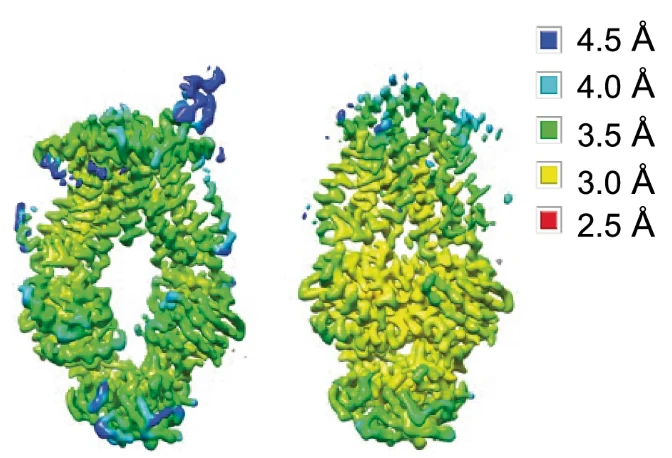
Figure 1. Local resolution maps of the inward- and outward-facing states of MalFGK2 in native DeFrNDs.
Reference
Ren Q, et al. DeFrND: detergent-free reconstitution into native nanodiscs with designer membrane scaffold peptides. Nat Commun. 2025;16:7806.
Our technical team responds within 24 hours. All inquiries protected under NDA.