Antibody Structure Prediction (IgFold/DeepAb)
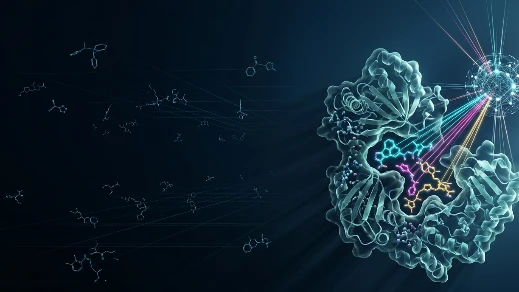
 Antibody Fv Modeling
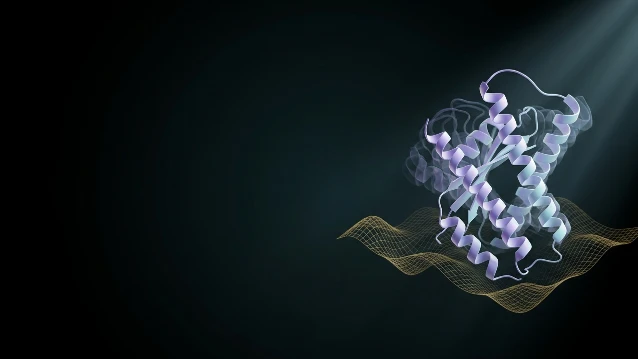
  CDR Loop Prediction
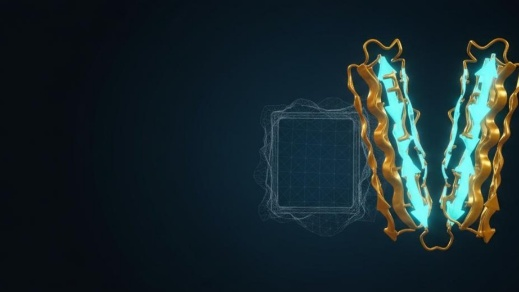
  Experimental Validation
 Antibody drug discovery stalls when CDR loops are mispredicted. We deliver IgFold/DeepAb-predicted, MD-refined, experimentally validated structures in hours --- capturing CDR-H3 conformations that generic models miss.
Why Antibody Structure Prediction Is the Critical Foundation
Structure-guided antibody engineering without a reliable Fv model is optimization without a blueprint. Seed-stage biotechs lack the infrastructure to crystallize every clone; pharma teams need to triage hundreds of candidates for developability before lead selection. Our platform generates antibody-specific predictions, refines CDR loops with all-atom MD, scores developability liabilities, and validates through co-crystallization or Cryo-EM SPA --- delivering models you can trust for humanization, affinity maturation, and ADC design.
What Sets the Platform Apart
Antibody-Specific AI
Pre-trained language models trained on 558M natural antibody sequences predict backbone coordinates in under 25 s --- outperforming generalist models on CDR geometry.
CDR-H3 Refinement
CDR-H3 is the most structurally variable loop in biology. We run all-atom MD to refine low-confidence regions, improving loop RMSD by 30--50%.
Developability-Scored
Every model is screened for aggregation hotspots, charge asymmetry, and hydrophobic patches --- flagging risks before synthesis.
Technology Suite
AI-Driven Antibody Fv Prediction
Antibody-Specific Architecture for CDR Accuracy
Key Features:
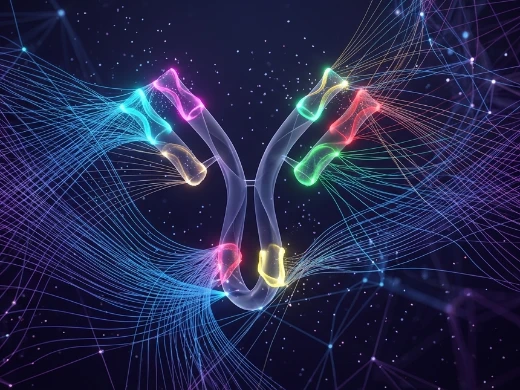
- IgFold + AntiBERTy --- Pre-trained on 558 million natural antibody sequences; graph networks predict Fv backbone coordinates in under 25 s with per-residue confidence.
- DeepAb + Rosetta Refinement --- ResNet predicts CDR loop distances and orientations; Rosetta energy optimization resolves side-chain rotamers and H-bond networks.
- AlphaFold3 Antibody Mode --- Pairformer architecture optimized for antibody-antigen complexes; captures CDR-induced-fit upon antigen binding.
Ideal For: Hybridoma sequencing campaigns; phage display libraries; nanobody discovery; scFv/Fab engineering.
What We Offer:
Virtual biotechs access pharma-grade antibody models without building a structural biology department. Pharma teams receive parallel-path prediction: while internal crystallography queues grow, we deliver CDR-refined ensembles ready for docking and affinity prediction within days.
CDR Loop MD Refinement & Ensemble Generation
From Static Prediction to Dynamic Paratope Landscape
Key Features:
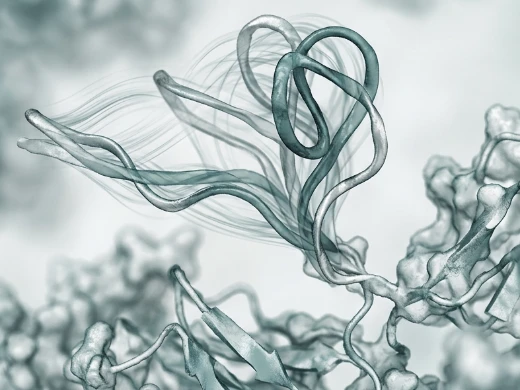
- All-Atom MD CDR Sampling --- GROMACS/AMBER simulations sample CDR-H3 flexibility and induced-fit motions, producing 50--200 conformers for ensemble antigen docking.
- CDR Canonical Form Classification --- ML classifiers assign CDR loops to known canonical classes; non-canonical loops trigger extended MD sampling.
- Paratope Hotspot Mapping --- Computational alanine scanning identifies CDR residues driving antigen binding, guiding affinity maturation campaigns.
Ideal For: CDR-H3 non-canonical loops; cross-reactivity assessment; antibody-antigen complex modeling; developability triage.
What We Offer:
Generic AI gives one frozen snapshot; biology gives an ensemble. Our refinement generates representative CDR conformers for virtual screening against the full paratope landscape. For seed-stage biotechs, this finds non-obvious binding modes without cryo-EM budgets. For pharma, ensemble data feeds directly into FEP calculations to predict affinity changes from CDR mutations.
Experimental Validation (X-ray / Cryo-EM / NMR)
Closing the Computational-Experimental Loop
Key Features:
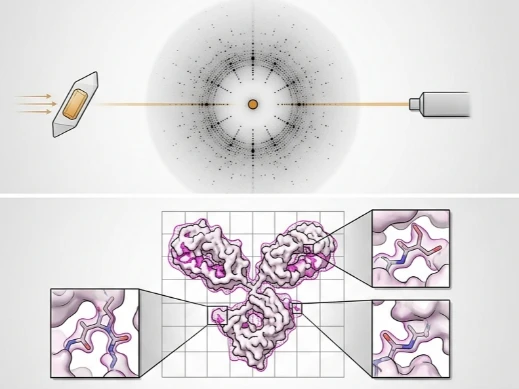
- Gene-to-Structure Integration --- Predicted models guide construct design: constant region truncation, solubility tags, and glycosylation site selection based on CDR confidence.
- Co-crystal Soaking --- Models inform soaking conditions and cryoprotectant selection, reducing crystal optimization from months to weeks.
- Cryo-EM Model Building --- Predictions serve as initial models for single-particle analysis, accelerating map-to-model fitting for large antibody-antigen complexes.
Ideal For: IND-grade antibody programs; bispecifics; ADCs; antibody-antigen complexes requiring validation.
What We Offer:
When programs advance to CMC, experimental validation is required --- not a confidence score. Our structural biology team produces the antibody, validates the Fv model, and delivers PDB coordinates with electron density maps. Zero handoffs.
Platform Instrumentation
Core Instruments
| Instrument | Capability |
|---|---|
| NVIDIA DGX A100 | IgFold/DeepAb inference + MD simulation at scale |
| NVIDIA RTX A6000 Cluster | Real-time CDR loop visualization and ensemble analysis |
| GROMACS/AMBER HPC | Microsecond-scale all-atom MD; ensemble docking processing |
| Bruker AVANCE NEO 600 MHz | NMR validation of CDR loop conformations |
| Rigaku XtaLAB Synergy | X-ray diffraction for Fv co-crystal validation |
| Thermo Fisher Krios G4 | Cryo-EM single-particle analysis for antibody-antigen complex validation |
Standardized Workflow
Project Workflow
A milestone-driven execution system from sequence to validated antibody model.


01 Target Review
- Sequence analysis and CDR annotation
- Framework assessment
- Deliverable: Target assessment report + construct proposal
02 AI Prediction
- IgFold/DeepAb prediction with per-residue confidence
- CDR canonical classification
- Deliverable: Raw prediction + confidence map + quality report
03 MD Refinement
- All-atom MD for CDR loop refinement
- Ensemble clustering (50–200 conformers)
- Deliverable: Refined ensemble + trajectory analysis
04 CDR Score
- Paratope detection across all ensemble members
- Developability scoring (aggregation, charge, hydrophobicity)
- Deliverable: CDR prioritization report + developability scores
05 Validation
- Gene-to-protein production for validation (optional)
- Co-crystal soaking or Cryo-EM SPA
- Deliverable: Validated model + experimental data + final report
Sample Requirements
- Antibody Sequence: Heavy and light chain sequences in FASTA format; IMGT numbering preferred
- Format: Full IgG, Fab, scFv, or nanobody (VHH)
- Prior Structural Data: Existing PDB entries or homology models (for comparative validation)
- Antigen Information: Known epitope or antigen structure (for paratope validation)
- Project Background: Target class, disease relevance, known challenges (e.g., CDR-H3 length, non-canonical loops)
Standard Deliverables
- IgFold/DeepAb prediction with per-residue confidence coloring (PDB)
- MD-refined conformational ensemble (50–200 representative PDBs)
- CDR analysis report with canonical classification and paratope maps
- Developability assessment (aggregation, charge, hydrophobic patches)
- Experimental validation data (if selected): X-ray or Cryo-EM coordinates
- Final technical report with quality metrics and engineering recommendations
- Electronic data package (raw predictions, MD trajectories, analysis scripts)
Frequently Asked Questions
Case Study
Case Study: HeavyBuilder — High-Throughput Structural Analysis of Antibody Heavy Chain Repertoires
Goal: Validate a deep learning pipeline that enables rapid, accurate structure prediction of antibody heavy chains at repertoire scale, establishing precedent for AI-driven antibody discovery from massive sequencing datasets.
Key Data:
- Architecture: Based on ImmuneBuilder; predicts up to 1 million structures in 3.13 days using a single GPU.
- Speed vs. accuracy: Outperforms AlphaFold2 and IgFold in throughput while maintaining comparable structural accuracy.
- Repertoire-scale coverage: Applied to 11 million sequences from 73 immune repertoires, enabling structural interrogation previously impossible with experimental methods.
- Convergent structures: Identified widespread structural convergence — genetically distinct clones adopting identical CDR conformations.
- Divergent clonotypes: Discovered similar sequences folding into multiple distinct structures, highlighting sequence-structure decoupling in antibody evolution.
Why it matters: For drug developers mining immune repertoires for lead antibodies, this study demonstrates that AI-driven high-throughput structure prediction compresses annotation timelines from months to days. By pairing sequence-derived structural similarity with physics-based refinement, teams gain access to structural insights for millions of clones — directly supporting antibody discovery, developability triage, and epitope prioritization for targets previously constrained by experimental throughput.
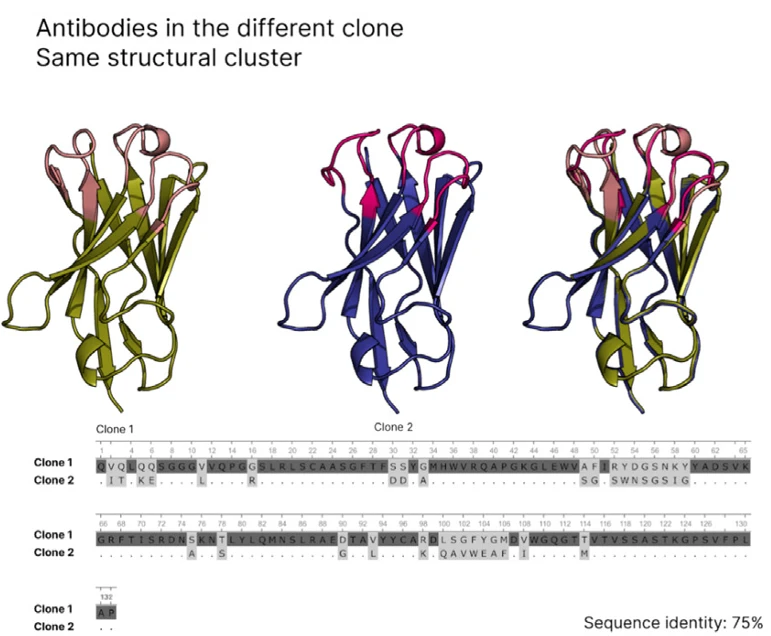
Figure 1. Structural and sequence alignment of two structurally similar antibody models from different clonotypes, with CDRs highlighted. (Gervasio JD.; et al. 2025)
Reference
Gervasio JD, et al. HeavyBuilder: Analysis of High-Throughput of Antibody Heavy Chain Repertoires in the Structural Space. J Mol Biol. 2025 Oct 24:169509.
Our technical team responds within 24 hours. All inquiries protected under NDA.