AI-Assisted X-ray Crystallography Services
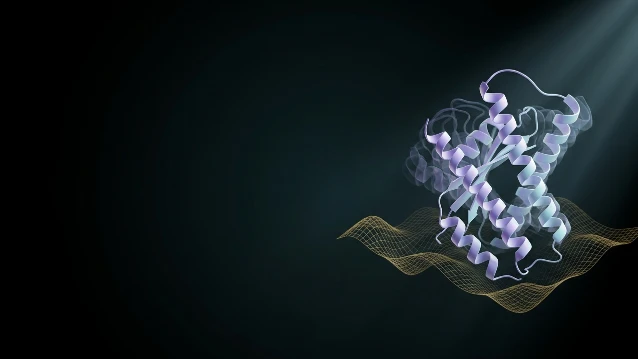
 AlphaFold-Guided Phasing
  Automated Model Building
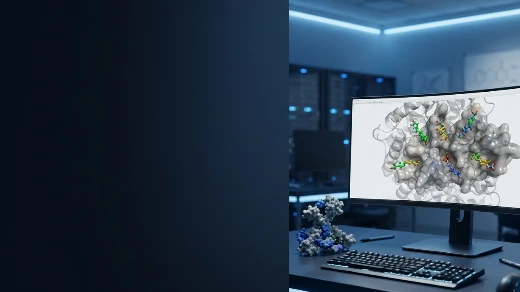
  Co-Crystal & Soaking
X-ray crystallography remains the gold standard for atomic-resolution structures. Our platform deploys AlphaFold-guided molecular replacement and deep learning-based model building — compressing structure determination from months to weeks, with direct handoff to Molecular Docking and Lead Optimization.
Creative Biostructure at a Glance
Over a decade of trusted expertise powering biotech, pharma, and research institutions worldwide to advance therapeutic innovation.






Why Partner With Us
Most crystallography programs stall not because the crystal diffracts poorly — but because the pipeline is fragmented. Virtual biotechs lack the synchrotron access, phasing expertise, or model-building infrastructure to turn diffraction data into coordinates. Pharma teams lose months coordinating data collection, structure solution, and ligand fitting across separate vendors. We built this platform to eliminate that friction: one team where AI-driven phasing, automated model building, and co-crystal soaking share the same milestone clock.
Your CapEx is in compute and chemistry. Ours is in diffraction infrastructure and structure solution expertise.
| Stage | What We Deliver | What You Don't Need to Build |
|---|---|---|
| AI Phasing | AlphaFold-guided molecular replacement; iterative prediction refinement | Synchrotron beamline access, phasing software licenses |
| Data Processing | HKL2000/XDS integration, phenix.refine, auto-building with DeepTracer | Crystallography computing cluster |
| Co-Crystal Structure | Virtual screening-guided soaking, ligand density fitting, PDB deposition | Soaking robotics, ligand library |
| Data Handoff | Docking-ready coordinates + SBDD transition plan | — |
Production-Ready Deliverables: Every structure ships with PDB coordinates, validation statistics (R-free, MolProbity), ligand interaction maps, and direct handoff to Molecular Docking Services or Fragment-based Screening.
- ✓ Milestone-based pricing aligned with your fundraising cycles
- ✓ No vendor coordination overhead — data processing, phasing, and model building under a single project manager
Membrane proteins. Large complexes. Low-resolution data. "Undruggable" is our starting point.
Proven track record where others fail
GPCRs, ion channels, and nucleic acid-protein complexes — targets that crash standard phasing pipelines due to low sequence homology or anomalous scattering weakness.
IP firewall & encrypted data infrastructure
Full audit trails, GLP-ready documentation, client retains 100% ownership of all structural data and coordinates.
Core Service Modules
Service Module At-a-Glance
| Service | Core Capability | Structural + Computational Integration | Typical Timeline |
|---|---|---|---|
| Virtual Co-Crystal Screening Services | AI-predicted ligand binding poses guide crystallization condition and soaking strategy design | Molecular Docking and MD Simulation predict ligand-induced conformational changes before soaking | 1–2 weeks |
| Co-crystallization and Soaking | High-throughput crystallization screening, automated soaking, ligand density fitting and refinement | AlphaFold-guided construct design; FEP affinity ranking prioritizes soaking candidates | 4–12 weeks |
Virtual Co-Crystal Screening Services
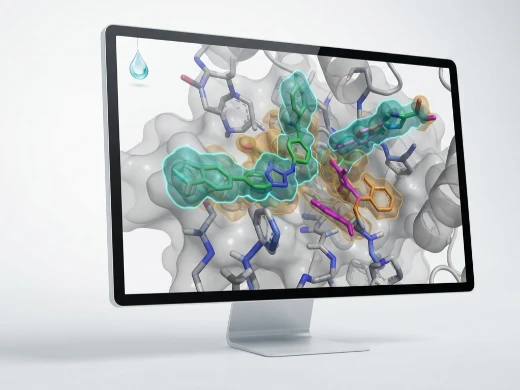
AI-Guided Soaking Strategy Before Bench Work
Key Features:
- Binding Pose Prediction — Molecular Docking and MD Simulation predict ligand-induced conformational changes, identifying whether induced-fit or rigid-body binding dominates.
- Crystallization Condition Guidance — AI analysis of ligand physicochemical properties (solubility, pKa, polarity) recommends compatible crystallization buffers and soaking solvents.
- Soaking Priority Ranking — FEP/TI affinity calculations rank compounds by predicted binding strength, prioritizing high-confidence candidates for limited crystal stocks.
What We Offer: For virtual biotechs with scarce crystal material, virtual screening eliminates wasted soaking experiments on compounds unlikely to bind. For pharma, the AI-guided soaking strategy maximizes hit rate per crystal plate, reducing synchrotron beamtime requirements.
Co-crystallization and Soaking
From Apo Structure to Ligand-Bound Coordinates
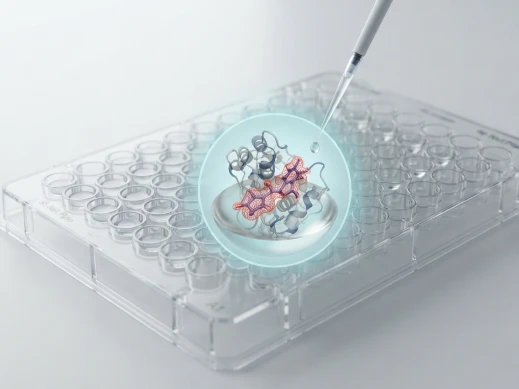
Key Features:
- High-Throughput Crystallization Screening — Automated robotics screen 96–384 crystallization conditions per protein, with AI image analysis classifying crystal hits and morphologies.
- Soaking and Cryo-Cooling — Ligand soaking under controlled DMSO concentration and cryo-protectant conditions; loop mounting and flash-cooling optimized for data collection.
- Ligand Density Fitting — CheckMyBlob ML-based ligand identification in electron density; manual curation and Phenix refinement to final R-free.
What We Offer: For Fragment-based Screening programs, co-crystal structures provide atomic-resolution binding mode validation — the exact data medicinal chemists need for Fragment-to-Lead optimization. For Lead Optimization, series of ligand-bound structures reveal SAR at the atomic level.
Technology Platform
Integrated Crystallography Infrastructure: AI Phasing + Data Processing + Co-Crystal, Zero Handoffs
Traditional crystallography separates data collection from phasing from model building — creating information loss at every handoff. Our platform unifies all stages under one project team, with AI predictions informing phasing strategies and experimental structures feeding back into prediction models.
Computational Platform — Dry Lab
| Capability | Details |
|---|---|
| AI Phasing Engine | AlphaFold/RoseTTAFold models for molecular replacement; iterative prediction refinement with Phenix PredictAndBuild |
| Crystallization Prediction | DeepCrystal CNN and PLM Crystallization Prediction (ESM2 + LightGBM) for crystallizability screening |
| Automated Model Building | DeepTracer, Phenix AutoBuild, ARP/wARP for map-to-model conversion |
| Ligand Validation | ML-based ligand identification in electron density; structure quality enhancement and validation |
Experimental Crystallography Platform — Wet Lab
| Capability | Details |
|---|---|
| X-ray Diffraction | Rigaku XtaLAB Synergy-R home source; synchrotron partnerships (APS, SSRL, ESRF) for remote data collection |
| Crystallization Robotics | Automated dispensing systems for 96-well sitting-drop and hanging-drop screening |
| Crystal Imaging | RT-PCMS multi-focus composite imaging with Inception-V3 crystal classification |
| Soaking Infrastructure | Automated liquid handling for ligand soaking; cryo-protectant optimization |
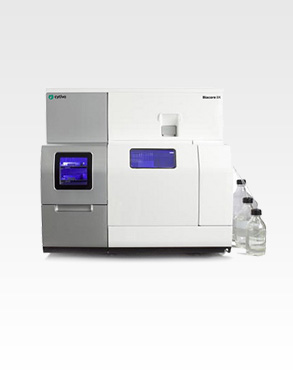
Biacore 8K+
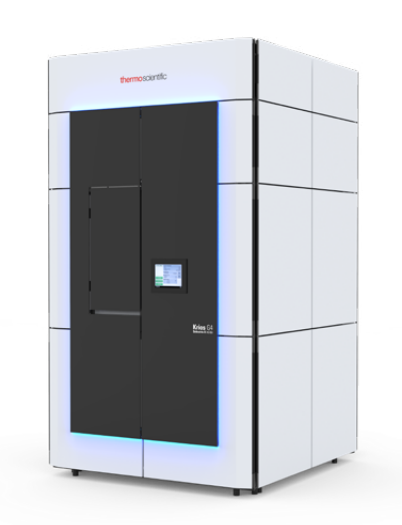
Thermo Fisher Krios G4
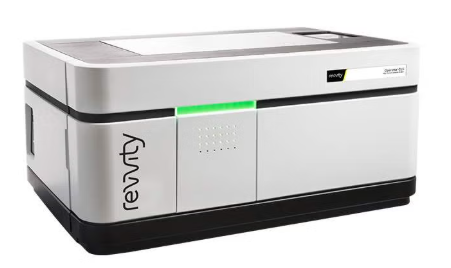
PerkinElmer Operetta CLS
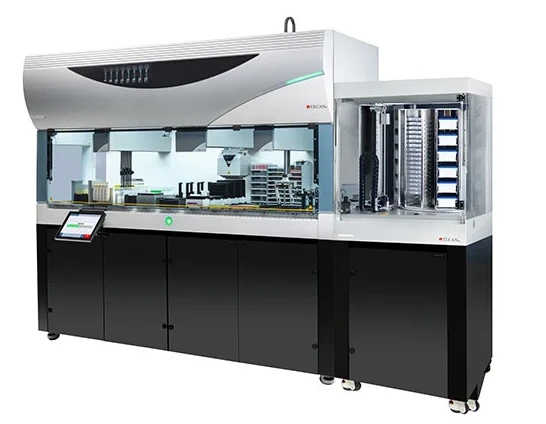
Tecan Fluent
Platform Edge: The ability to collect data on Monday, solve the structure with AI phasing on Tuesday, and deliver ligand-bound coordinates by Friday — all under one project team — compresses traditional 3-month structure determination into 2-week iterations.
Platform specifications are subject to continuous upgrade. Contact our team for instrument availability and project-specific capability assessment.
Closed-Loop Discovery Engine
When AI Prediction Meets Diffraction Truth
Static AI models predict protein structures from sequence. Experimental crystallography reveals the conformational reality that models miss — ligand-induced changes, domain rotations, and ordered water networks. Our platform feeds every experimental structure back into the design cycle.
AI Structure Prediction
AlphaFold generates initial models; low-confidence regions flagged for experimental focus
→ Feeds into Phasing
Molecular Replacement
AI models solve the phase problem for novel targets; iterative refinement improves model accuracy against experimental data
→ Feeds into Model Building
Co-Crystal Validation
Ligand-bound structures reveal binding modes, updating docking and virtual screening protocols
→ Feeds into CADD
Structural Feedback
Experimental coordinates retrain target-specific AlphaFold parameters for next design cycle
→ Feeds back into AI
Industrial Value:
For Biotechs
Your first crystal structure calibrates the AI models for your second target. Experimental data from Phase 0 becomes training data for Phase 1 — a compounding learning partnership.
For Pharma
Every computational prediction is linked to an experimental outcome with project ID, timestamp, and model version — fully audit-ready for regulatory submissions and internal portfolio reviews.
Project Management & Execution
Project Workflow
A standardized, milestone-driven execution system. From diffraction data to deposition-ready coordinates.


01 Data Processing
- HKL2000/XDS integration, scaling, space group determination
Deliverable: Integrated, scaled reflection file
02 AI Phasing
- AlphaFold MR; iterative prediction refinement; SAD/MAD backup if needed
Deliverable: Phased electron density map
03 Model Building
- DeepTracer/AutoBuild map-to-model; manual curation in Coot
Deliverable: Initial model with R-free/R-work
04 Co-Crystal/Refinement
- Ligand soaking; density fitting; phenix.refine; MolProbity validation
Deliverable: Ligand-bound refined coordinates
05 Validation & Handoff
- PDB deposition; docking-ready coordinates; handoff to SBDD or Lead Optimization
Deliverable: Deposited structure + validation report + transition plan
Sample Requirements
| Sample Type | Specification |
|---|---|
| Protein | Purified protein (>95% purity, >5 mg/mL); NanoDSF Tm >50°C recommended |
| Diffraction Data | (Optional) Raw images from in-house or synchrotron collection; or send purified protein for in-house screening |
| Ligands | For co-crystal: 10 mM in DMSO; for soaking: solubility data and stock concentrations |
| Prior Structures | Any known homologs or previous models for MR template identification |
Standard Deliverables
Upon project completion, clients receive comprehensive experimental reports including:
- PDB-format coordinates with full validation statistics (R-free, R-work, MolProbity score)
- Electron density maps (2Fo-Fc, Fo-Fc) for ligand validation
- Ligand interaction diagrams and binding mode analysis
- Molecular Docking-ready coordinate files
- PDB deposition support and validation reports
- Direct handoff to Molecular Docking Services, Fragment-based Screening, or Lead Optimization
Our technical team responds within 24 hours. All inquiries protected under NDA.
Frequently Asked Questions
Case Study
Case Study: AlphaFold-Guided Molecular Replacement for Solving Challenging Crystal Structures
Published Evidence:
Wang W, Gong Z, Hendrickson WA. AlphaFold-guided molecular replacement for solving challenging crystal structures. Acta Cryst D Struct Biol. 2025;81(Pt 1):4-21.
Key Findings:
- 92–93% Success Rate on Challenging Targets: Validated MR solutions achieved for 146/158 (92%) AlphaFold-distant structures and 201/215 (93%) SAD-phased post-training structures, using stringent map-model correlation criteria (CC > 0.5).
- pLDDT-Guided Model Trimming: Optimal pLDDT cutoffs (40–70) balance MR search success with model-building continuity; pLDDT > 42 enabled complete connectivity for the Ceα2β5 heterodimer case where higher cutoffs failed.
- Sub-MSA Clustering for Alternative Conformations: AF_cluster mode solved adenylate kinase open-state structure (PDB 4x8h) and other conformationally diverse targets where default AlphaFold predictions mismatched the crystal state.
Industrial Translation:
This peer-reviewed research validates the core principles underlying our crystallography pipeline: AlphaFold models can solve challenging MR problems at >90% success rates. We apply these principles — alongside Virtual Co-Crystal Screening and automated soaking — to deliver ligand-bound structures from diffraction data to docking-ready coordinates.
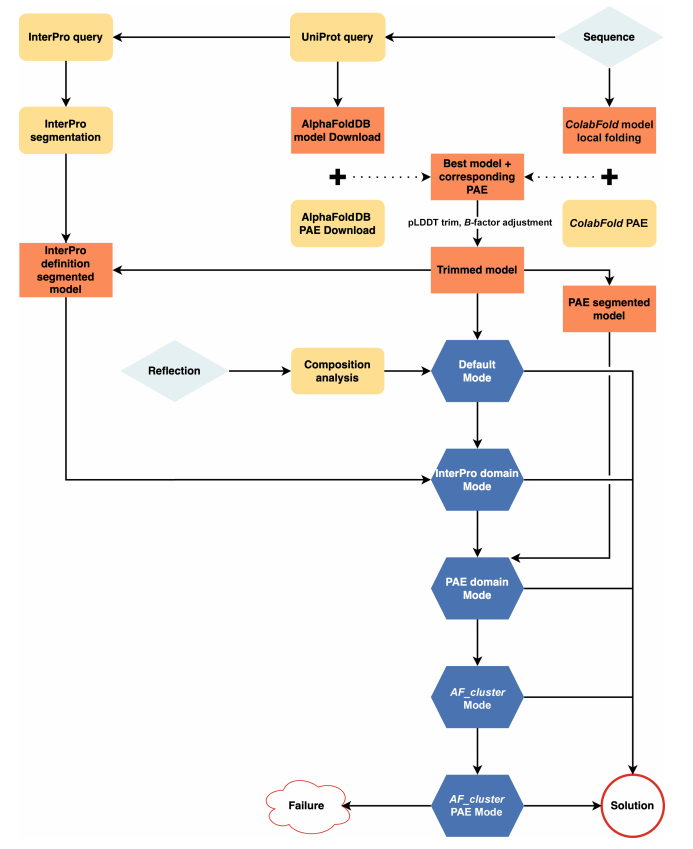
Figure 1. Flowchart for AlphaFold-guided molecular replacement, showing automated progression from sequence input through model generation, pLDDT trimming, and successive MR modes until structure solution. (Wang W, et al., 2025)
Need AI-assisted X-ray crystallography to accelerate your structure-based drug discovery? Our team can design a customized crystallography pipeline tailored to your target class, ligand series, and regulatory milestones. Contact our scientific team today.