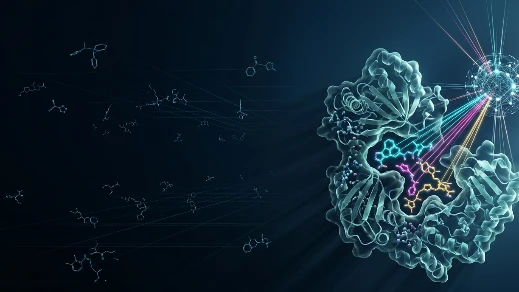
AlphaFold Protein Structure Prediction
 AI Structure Prediction
  MD Refinement
  Experimental Validation
 Structural biology pipelines take 6–12 months and millions in CapEx. We deliver AlphaFold2/3-predicted, MD-refined, experimentally validated structures in 2–4 weeks.
Why AlphaFold Prediction Is the Critical Foundation
Structure-based drug design without a reliable 3D model is navigation without a map: seed-stage biotechs lack protein infrastructure to validate hits internally, and pharma teams pursuing membrane proteins or PPIs need models that survive experimental scrutiny. Our platform eliminates that uncertainty by generating AlphaFold predictions, refining them with microsecond-scale MD, scoring pockets with AI druggability classifiers, and validating critical regions through co-crystallization or Cryo-EM SPA — delivering a model you can trust for virtual screening, docking, and medicinal chemistry decisions.
What Sets the Platform Apart
MD-Refined, Not Raw
AlphaFold predicts global folds but often misplaces flexible loops. We run all-atom MD to refine loops and generate ensemble models that capture solution-state behavior.
Experimentally Validated
Priority predictions advance directly into gene-to-protein production and experimental structure determination, delivering validated coordinates.
Druggability-Scored
Every model is processed through binding pocket analysis: pocket volume and cryptic site druggability are scored by ML classifiers trained on 500+ co-crystal structures.
Technology Suite
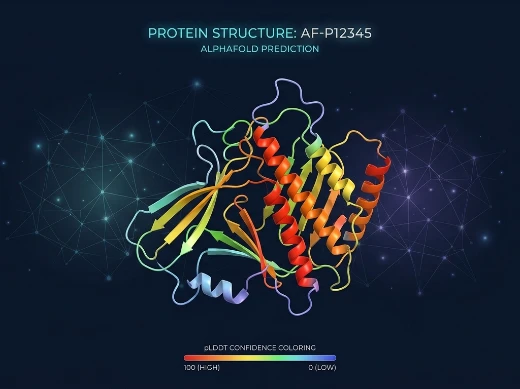
AlphaFold2/3 Prediction & Confidence Analysis
High-Accuracy Fold Prediction with Uncertainty Quantification
Key Features:
- AlphaFold2/3 Multimer — Predicts monomeric and multimeric structures with pLDDT/pAE confidence metrics; optimized for complexes up to 2,000 residues.
- Custom MSA Engineering — Augments standard databases with metagenomic sequences to improve alignment depth for orphan proteins.
- Disorder & Loop Annotation — Flags intrinsically disordered regions and low-confidence loops for ab initio refinement or experimental determination.
Ideal For: Targets without experimental structures; rapid SBDD startup; PPI and membrane protein complexes.
What We Offer:
Virtual biotechs access pharma-grade models without
building a structural biology department. Pharma teams receive parallel-path prediction:
while internal crystallography battles a stubborn GPCR, we deliver an
MD-refined model ready for docking and FEP within weeks.
MD Refinement & Druggability Scoring
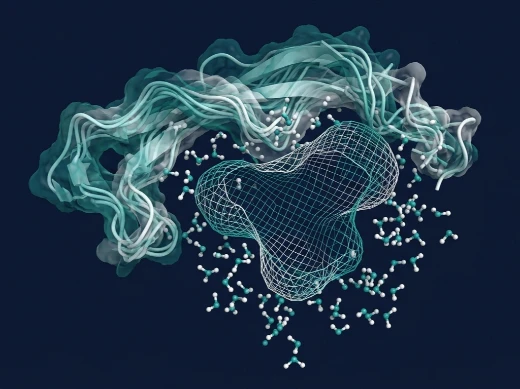
From Static Prediction to Dynamic Ensemble
Key Features:
- All-Atom MD Ensemble Generation — GROMACS/AMBER simulations sample loop flexibility and pocket breathing motions, producing 50–200 conformers for ensemble docking.
- Cryptic Pocket Discovery — Trajectory analysis identifies transient pockets invisible in static models — critical for allosteric modulators and PPI disruptors.
- ML Pocket Classifier — Random Forest/XGBoost models trained on 500+ co-crystal structures score pocket druggability and flag off-target liabilities before compound design.
Ideal For: Targets with flexible loops; cryptic pocket programs; undruggable target assessment.
What We Offer:
AlphaFold gives one conformation; biology gives an
ensemble. Our refinement generates representative conformers for virtual screening against the full pocket
landscape. For seed-stage biotechs, this finds non-obvious binding sites without cryo-EM
budgets. For pharma, ensemble data feeds directly into FEP calculations to improve affinity
correlation.
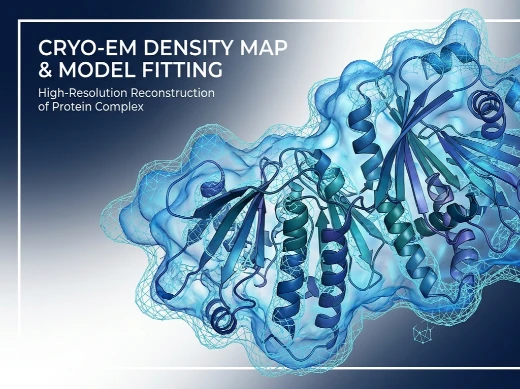
Experimental Validation (X-ray / Cryo-EM)
Closing the Computational-Experimental Loop
Key Features:
- Gene-to-Structure Integration — Predicted models guide construct design: truncation boundaries and solubility tags are selected based on AlphaFold confidence.
- Co-crystal Soaking — Models inform soaking conditions and cryoprotectant selection, reducing crystal optimization from months to weeks.
- Cryo-EM Model Building — Predictions serve as initial models for single-particle analysis, accelerating map-to-model fitting for large complexes.
Ideal For: Programs requiring IND-grade structural evidence; membrane proteins; large assemblies; antibody-antigen complexes.
What We Offer:
When programs advance to lead optimization, experimental
validation is required — not a confidence score. Our structural biology team
produces the protein, validates the model, and delivers PDB coordinates with electron
density maps. Zero handoffs.
Platform Instrumentation
Core Instruments
| Instrument | Capability |
|---|---|
| NVIDIA DGX A100 | AlphaFold2/3 inference + MD simulation at scale |
| NVIDIA RTX A6000 Cluster | Real-time MD visualization and ensemble analysis |
| GROMACS/AMBER HPC | Microsecond-scale all-atom MD; ensemble docking processing |
| Bruker AVANCE NEO 600 MHz | NMR validation of loop conformations |
| Rigaku XtaLAB Synergy | X-ray diffraction for co-crystal validation |
| Thermo Fisher Krios G4 | Cryo-EM single-particle analysis for complex validation |
Standardized Workflow
Project Workflow
A milestone-driven execution system from sequence to validated model.


01 Target Review
- Sequence analysis and domain annotation
- Custom MSA engineering with metagenomic augmentation
- Deliverable: MSA report + construct proposal
02 AI Prediction
- AlphaFold2/3 prediction with pLDDT/pAE confidence mapping
- Model quality assessment and low-confidence region flagging
- Deliverable: Raw prediction + confidence map + quality report
03 MD Refinement
- All-atom MD simulation for loop refinement and pocket dynamics
- Ensemble clustering (50–200 conformers)
- Deliverable: Refined ensemble + trajectory analysis
04 Pocket Score
- Pocket detection across all ensemble members
- ML druggability scoring and cryptic site ranking
- Deliverable: Pocket prioritization report + druggability scores
05 Validation
- Gene-to-protein production for validation (optional)
- Co-crystal soaking or Cryo-EM SPA
- Deliverable: Validated model + experimental data + final report
Sample Requirements
- Target Sequence: Amino acid sequence in FASTA format; UniProt ID acceptable
- Multimeric Assemblies: Subunit stoichiometry and known interaction partners
- Prior Structural Data: Existing PDB entries or homology models (for comparative validation)
- Ligand Information: Known binders or cofactors (for pocket validation)
- Project Background: Target class, disease relevance, known challenges
Standard Deliverables
- AlphaFold2/3 prediction with pLDDT/pAE confidence coloring (PDB)
- MD-refined conformational ensemble (50–200 representative PDBs)
- Pocket analysis report with druggability scores and cryptic site maps
- Experimental validation data (if selected): X-ray or Cryo-EM coordinates
- Final technical report with quality metrics and SBDD recommendations
- Electronic data package (raw predictions, MD trajectories, analysis scripts)
Frequently Asked Questions
Case Study
Case Study: Modeling the Different Conformations of the Human Mitochondrial ADP/ATP Carrier Using AlphaFold and Molecular Dynamics Simulations
Goal: Evaluate AlphaFold's conformational bias on the mitochondrial ADP/ATP carrier (AAC) and validate an AlphaFold + MD workflow that captures both c-state and m-state conformations for membrane protein drug design.
Key Data:
- Conformational bias: Both AF2 and AF3 default to c-state; only ColabFold captured the functionally essential m-state.
- Ligand mapping: MD simulations revealed substrate/cardiolipin binding residues and allosteric sites invisible in static predictions.
- Mutation profiling: MD quantified destabilization effects of pathogenic variants on conformational transitions.
- Model accuracy: AF3 outperformed AF2 in complex prediction, but both required MD refinement for dynamic sampling.
Why it matters: This peer-reviewed case demonstrates that a single static AlphaFold model risks missing pharmacologically critical states for conformationally dynamic targets. By pairing AlphaFold with MD-based ensemble analysis, teams can identify druggable pockets across multiple states rather than optimizing against a single frozen snapshot — establishing a blueprint for SLC25 family targets and other difficult membrane proteins.
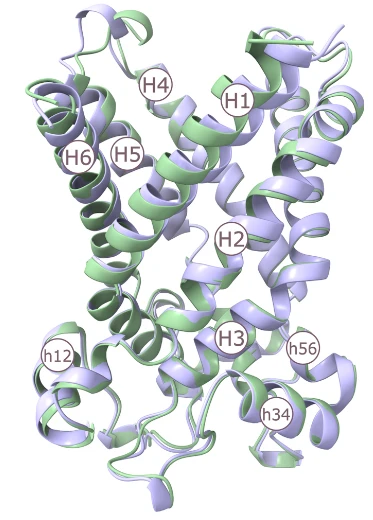
Figure 1. Overlay of AAC c-state models predicted by AlphaFold2 (green) and AlphaFold3 (lilac). (Quadrotta V, et al., 2025)
Reference
Quadrotta V, Polticelli F. Modeling the different conformations of the human mitochondrial ADP/ATP carrier using AlphaFold and molecular dynamics simulations of the protein-ligand complexes. Comput Struct Biotechnol J. 2025;27:1265–1277.
Our technical team responds within 24 hours. All inquiries protected under NDA.