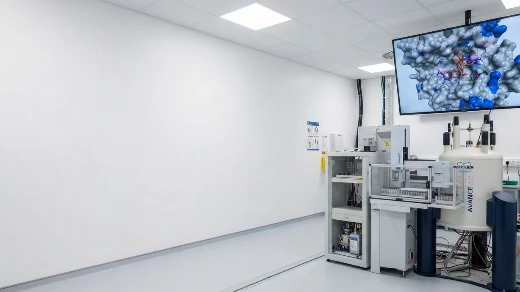
AI for Antibody & Biologics
Antibody programs fail not because the target is wrong, but because the molecule is immunogenic, unstable, or impossible to manufacture. We deliver humanized, affinity-matured, developability-optimized antibodies — from sequence to validated lead — under one roof.
Creative Biostructure at a Glance
Over a decade of trusted expertise powering biotech, pharma, and research institutions worldwide to advance therapeutic innovation.






Why Partner With Us
Most antibody programs stall in preclinical development because the lead was selected for binding affinity alone — ignoring immunogenicity, aggregation propensity, and viscosity. A humanized sequence that scores well in silico can still trigger anti-drug antibodies in vivo. A high-affinity binder can crash in formulation due to reversible self-association. Virtual biotechs burn runway expressing and testing variants one by one. Pharma teams lose quarters coordinating a computational design contractor, a mammalian expression shop, and a biophysical analytics CRO. We built this platform to close those gaps: AI design, mammalian expression, and biophysical characterization share the same project team, the same data architecture, and the same milestone clock.
Your CapEx is in disease biology and target validation. Ours is in antibody engineering and biophysical analytics.
| Stage | What We Deliver | What You Don't Need to Build |
|---|---|---|
| Sequence-to-Design | AI humanization scoring; CDR grafting; germline framework selection; immunogenicity prediction | Bioinformatics and protein engineering team |
| Affinity Optimization | AI-assisted CDR mutation libraries; FEP-guided affinity maturation; MD-based binding stability assessment | Yeast display or phage display infrastructure |
| Developability Screening | AI aggregation prediction; viscosity profiling; solubility scoring; colloidal stability flags | High-throughput formulation lab |
| Experimental Validation | Mammalian expression; SPR/BLI affinity ranking; DSC/DSF thermal stability; SEC aggregation analysis | Transient expression suite, biophysics instrumentation |
Production-Ready Deliverables: Every antibody candidate ships with humanization score reports, affinity and kinetic data, thermal stability profiles, and developability risk assessments — formatted for CMC, regulatory pre-submission, or direct transition to Lead Optimization.
- ✓ Milestone-based pricing aligned with your fundraising cycles
- ✓ No display technology or manufacturing overhead — design, expression, and validation under a single project manager
Immunogenicity. Aggregation. Low solubility. High viscosity. These are the developability cliffs that kill antibody programs in Phase I.
Proven track record on challenging biologics
Multi-specific antibodies, nanobodies, and Fc-fusion proteins where standard humanization templates fail. Our AI models account for non-canonical CDR lengths, unusual frameworks, and species-specific germline divergence.
Multi-parameter optimization
We do not optimize affinity in isolation. Every AI-designed variant is simultaneously scored for immunogenicity, aggregation propensity, viscosity, and thermal stability — ensuring the lead that enters the lab is developable, not just bindable.
Core Service Modules
Service Module At-a-Glance
| Service | Core Capability | Structural + Computational Integration | Typical Timeline |
|---|---|---|---|
| In Silico Antibody Humanization | Germline framework matching; CDR grafting; back-mutation design; immunogenicity scoring | IgFold/DeepAb structural models guide grafting geometry; MD simulations validate CDR loop conformational stability post-graft | 3–5 weeks |
| Antibody Affinity Maturation (AI-Assisted) | AI mutation library design; CDR/HFR combinatorial exploration; FEP affinity prediction; off-target filtering | MD and docking validate mutant-antigen interface stability before expression | 4–8 weeks |
| Antibody Aggregation & Solubility Prediction | AI aggregation propensity scoring; viscosity prediction; solubility engineering; colloidal stability assessment | MD simulations identify self-association interfaces; DSC/DSF experimentally validate predicted thermal stability | 2–4 weeks |
| Epitope Mapping & Paratope Prediction | AI-driven epitope prediction from sequence; paratope residue identification; antigen-antibody complementarity analysis; cross-reactivity assessment | Complex structure prediction and MD refine epitope-paratope geometry; SPR alanine scanning validates computationally mapped hotspots | 3–5 weeks |
In Silico Antibody Humanization
From Murine to Clinic-Ready in Weeks
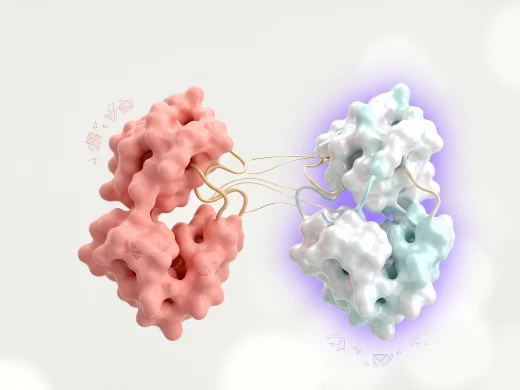
Key Features:
- Germline Framework Matching — AI algorithms match donor CDRs to recipient human germline frameworks with optimal VH/VL packing scores, minimizing immunogenicity while preserving affinity.
- CDR Grafting & Back-Mutation Design — Structural modeling with IgFold and DeepAb ensures grafted CDRs adopt native conformations; back-mutations are suggested only where framework residues critically support CDR geometry.
- Immunogenicity Scoring — T-cell epitope prediction, MHC class II binding scores, and germline divergence metrics flag regulatory risks before expression.
What We Offer: For biotechs with a single hybridoma clone, we deliver a ranked panel of humanized variants with predicted immunogenicity scores, ready for mammalian expression and SPR validation. For pharma, we provide humanization reports formatted for IND-enabling immunogenicity risk assessments.
Explore Humanization →Antibody Affinity Maturation (AI-Assisted)
10–100× Affinity Gains Without Random Mutagenesis
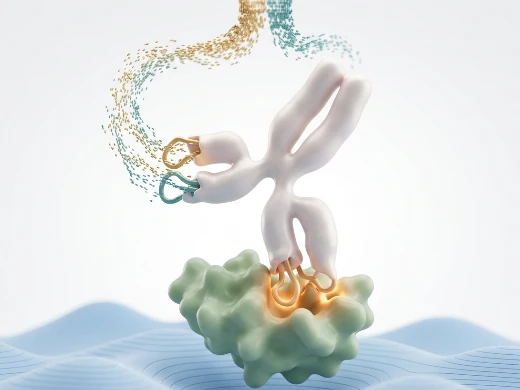
Key Features:
- AI Mutation Library Design — Transformer and GNN models trained on therapeutic antibody databases suggest CDR mutations with highest probability of affinity gain and lowest probability of immunogenicity or aggregation.
- FEP-Guided Prioritization — Free energy calculations predict ΔΔG for each AI-suggested mutation, eliminating dead-end variants before bench work.
- Off-Target & Liability Filtering — Every mutant is screened for polyreactivity, self-association, and developability flags in parallel with affinity scoring.
What We Offer: For seed-stage biotechs, a focused library of 10–20 high-confidence mutants instead of 10,000 random variants. For pharma, affinity maturation with full developability profiling — no late-stage surprises.
Explore Affinity Maturation →Antibody Aggregation & Solubility Prediction
Developability-by-Design, Not Developability-by-Accident
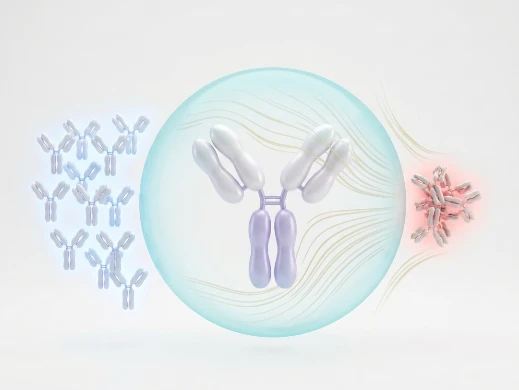
Key Features:
- AI Aggregation Propensity Scoring — Deep learning models trained on clinical-stage antibody datasets predict reversible self-association, irreversible aggregation, and phase separation risks from sequence alone.
- Viscosity & Solubility Engineering — Structure-guided charge patch engineering and surface polarity optimization to reduce viscosity at high concentrations without compromising target binding.
- Colloidal Stability Assessment — MD simulations identify self-association interfaces; DSC/DSF and SEC experimentally validate predicted stability.
What We Offer: For biotechs advancing candidates toward CMC, front-loaded developability risk flags that prevent Phase I formulation failures. For pharma, batch-level consistency scoring and regulatory-ready developability documentation.
Explore Developability Prediction →Epitope Mapping & Paratope Prediction
Structural Certainty for Biologics IP and Regulatory Strategy
Key Features:
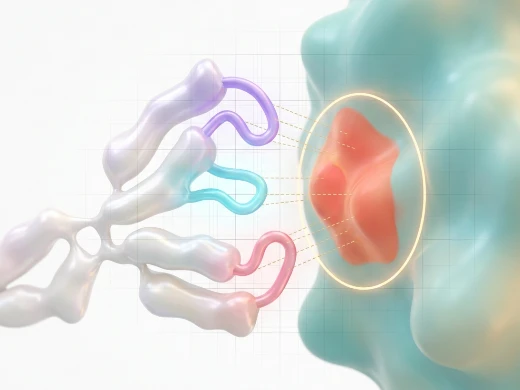
- AI-Driven Epitope Prediction — Sequence-based and structure-based algorithms map linear and conformational epitopes from antigen sequence, even in the absence of a co-crystal structure.
- Paratope Residue Identification — Antibody structure prediction pinpoints CDR residues responsible for antigen recognition, enabling rational affinity and selectivity engineering.
- Cross-Reactivity Assessment — Computational mapping of epitope conservation across species homologs and paralogs predicts preclinical translation risks and species selection for toxicology.
What We Offer: For biotechs filing patent applications, epitope-paratope maps that support composition-of-matter claims. For pharma, cross-reactivity profiles that de-risk preclinical species selection and biosimilar defense strategies.
Explore Epitope Mapping →Technology Platform
Integrated Biologics Infrastructure: AI Design + Mammalian Expression + Biophysical Validation
Computational Platform — Dry Lab
Powered by our MagHelix™ AIDD Platform
| Capability | Details |
|---|---|
| AI Antibody Design Engine | IgFold, DeepAb, and AbLang for VH/VL orientation and CDR loop prediction; proprietary humanization scoring pipelines |
| Affinity Prediction Models | GNN and Transformer models for CDR mutation impact; FEP for thermodynamic affinity ranking |
| Developability Prediction | Deep learning aggregation, viscosity, and solubility models trained on clinical-stage antibody datasets |
| Epitope Mapping Suite | Sequence-based B-cell epitope prediction; structure-based paratope mapping; complex docking for antibody-antigen geometry |
| Molecular Dynamics | GROMACS/AMBER for CDR loop flexibility and self-association interface analysis |
Experimental Validation Platform — Wet Lab
Powered by our MagHelix™ Structural Biology and SBDD Platform
| Capability | Details |
|---|---|
| Mammalian Expression | HEK293/CHO transient expression; IgG, Fab, scFv, and Fc-fusion formats; 5–50 mg scale for biophysical profiling |
| SPR/BLI | Biacore 8K+ / Octet RH16 for affinity and kinetic screening of humanized and matured variants |
| Thermal Stability | Prometheus NT.48 DSF / DSC for Tm, Tonset, and aggregation onset |
| Aggregation & Solubility | SEC-MALS for oligomeric state; DLS for polydispersity; high-concentration viscosity profiling |
| Cryo-EM/X-ray | Thermo Fisher Krios G4 / Rigaku Synergy-R for antibody-antigen complex structure validation |
Platform Edge: The ability to design a humanized variant on Monday, express it in HEK293 on Tuesday, and rank it by SPR on Wednesday — all under one project team — compresses traditional 3-month antibody engineering timelines into 3-week iterations.
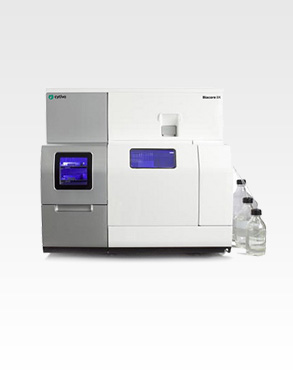
Cytiva Biacore 8K+
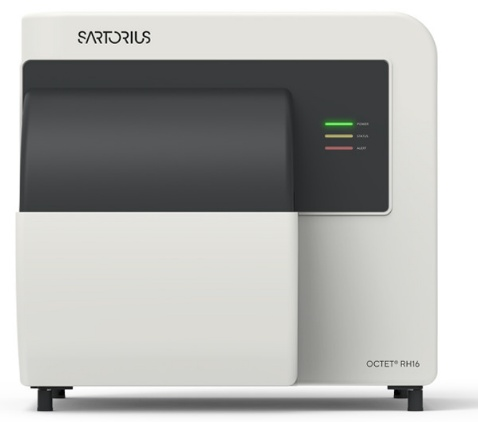
Sartorius Octet RH16
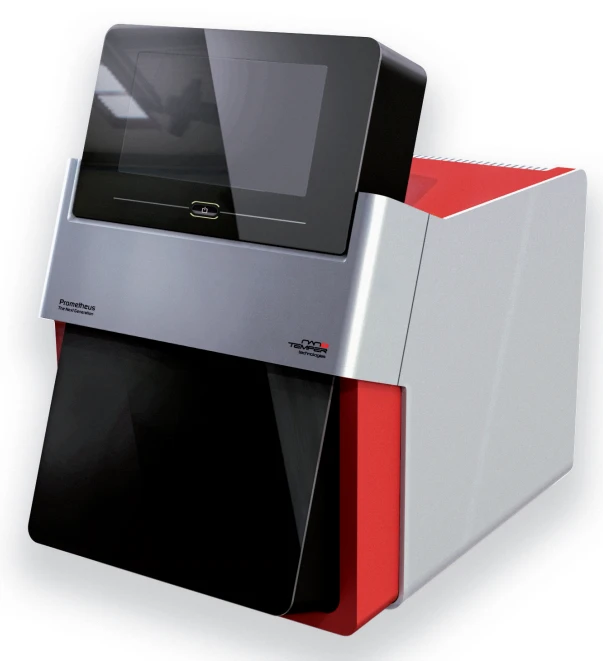
NanoTemper Prometheus NT.48
Platform specifications are subject to continuous upgrade. Contact our team for instrument availability and project-specific capability assessment.
Closed-Loop Discovery Engine
When AI Design Meets Biophysical Truth
Antibody AI models trained on public databases fail on proprietary scaffolds. Our platform feeds every experimental measurement back into the design algorithms — so your program trains the models.
AI Humanization & Design
IgFold/DeepAb predict VH/VL structures; AI models score humanization, affinity, and developability for variant selection.
→ Feeds into Expression
Mammalian Expression & Analytics
HEK293/CHO transient expression delivers purified variants for SPR/BLI affinity, DSC stability, and SEC aggregation screening.
→ Feeds into Validation
Biophysical Calibration
Experimental affinity, thermal stability, and viscosity data refine AI scoring functions for the next design cycle.
→ Feeds into Models
Developability Feedback
Aggregation and immunogenicity signals train multi-parameter optimization functions, enabling early elimination of liability-laden scaffolds.
→ Feeds back into AI
Industrial Value:
For Biotechs
Your first antibody campaign calibrates the AI models for your target class. Your second campaign inherits that accuracy — humanization scores improve, aggregation predictions sharpen, and your program benefits from a compounding learning partnership.
For Pharma
Every AI prediction is paired with an experimental outcome (kon/koff, Tm, viscosity, SEC profile) with project ID, timestamp, and model version — fully audit-ready for regulatory submissions, CMC filings, and biosimilar defense.
Project Management & Execution
Project Workflow
A standardized, milestone-driven execution system. From sequence intake to validated antibody candidate delivery.


01 Design
- Sequence analysis: VH/VL domain identification, germline family assignment, CDR definition
- AI humanization: framework matching, CDR grafting, back-mutation design, immunogenicity scoring
Deliverable: Design report with ranked variant panel, humanization scores, and risk matrix
02 Expression
- Mammalian expression: HEK293/CHO transient transfection; IgG, Fab, or scFv format
- Purification: Protein A/G affinity, SEC polishing, endotoxin removal
Deliverable: Purified protein yield and QC data (SDS-PAGE, SEC)
03 Screening
- SPR / BLI affinity and kinetic screening of designed variants
- SEC oligomeric state and aggregation screening; DLS polydispersity
Deliverable: Affinity ranking and kinetic characterization summary
04 Validation
- DSC / DSF thermal stability and unfolding profile
- Viscosity and solubility profiling at therapeutic concentrations
Deliverable: Thermal and colloidal stability validation report
05 Delivery
- Lead candidate package: humanization report, affinity data, stability profile, developability assessment
- ADMET risk flags and CMC transition plan
Deliverable: Final technical report + electronic data package + Lead Optimization transition plan
Sample Requirements
| Sample Type | Specification |
|---|---|
| Antibody Sequence | VH and VL amino acid sequences (FASTA or GenBank); preferred with known germline family |
| Antigen Information | Target sequence, known epitope data, or reference antibody for cross-competition |
| Reference Material | Hybridoma supernatant or purified IgG for affinity benchmarking (if available) |
Standard Deliverables
Upon project completion, clients receive comprehensive experimental reports including:
- Humanization score report with germline framework rationale and immunogenicity risk flags
- Ranked variant panel (5–15 designs) with AI-predicted affinity, stability, and developability scores
- Mammalian expression yield and QC data (SDS-PAGE, SEC, endotoxin)
- SPR/BLI affinity and kinetic characterization
- DSC/DSF thermal stability profiles and SEC aggregation analysis
- Developability risk assessment and CMC transition recommendations
Frequently Asked Questions
Case Study
X-ray Crystallography of Fab–Antigen Complex
Goal: Resolve the 3D architecture of an antibody Fab–antigen complex at atomic resolution to enable epitope mapping, paratope validation, and structure-guided antibody engineering.
Key Data:
- Resolution: 1.50 Å; Space group P 21 21 21; one molecule per asymmetric unit
- Preparation & screening: Papain digestion of full-IgG → Protein A affinity capture of Fab → 1:1 complex formation → SEC-HPLC purification to >92% purity → 1,696-condition high-throughput sitting-drop screen → hanging-drop optimization with PEG/pH gradients → final condition 0.2 M ammonium sulfate
- Structure solution & validation: Molecular replacement using antigen and Fab search models; refinement via PHENIX/Refmac5; validation by PROCHECK (100% residues in favored/allowed regions, none disallowed); structure completeness 93.53%
Why it matters: For antibody and biologics programs, the gap between predicted and actual paratope–epitope geometry kills developability. This validates our end-to-end structural biology pipeline for antibody–antigen complexes — from Fab generation and complex reconstitution to sub-Ångström structure determination. For biotechs building antibody pipelines without structural biology infrastructure, this means docking model validation and CDR optimization guidance from experimental electron density. For pharma, this means a single accountability chain delivering the atomic-resolution blueprint required for epitope mapping, patent filing, and regulatory pre-submission.
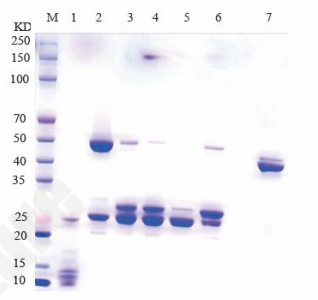
Figure 1. SDS-PAGE analysis of digested antibodies.
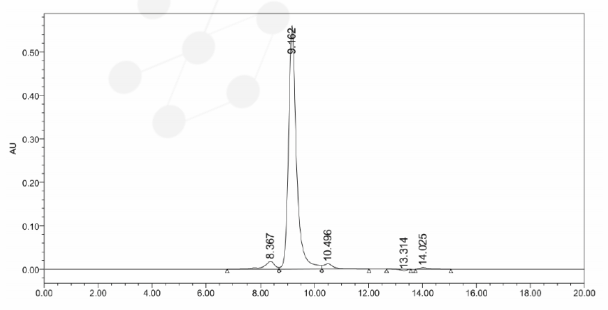
Figure 2. SEC-HPLC analysis of Fab-antigen complex after purification.
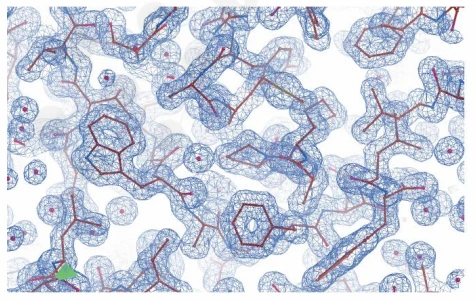
Figure 3. Density map of protein complex.