Coarse-Grained (CG) MD Simulation
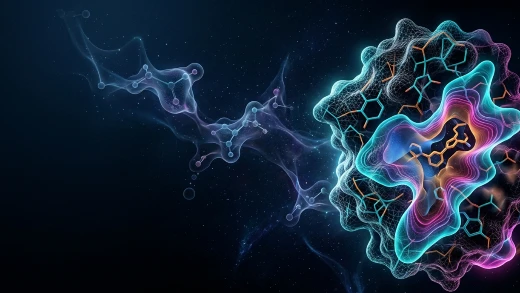
 Martini/SIRAH CG
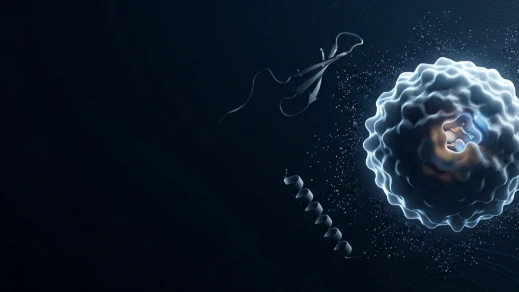
  Large-Scale Assembly
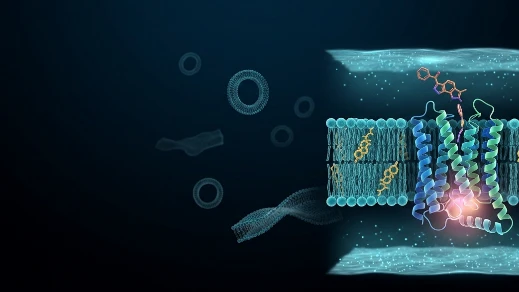
  Multiscale Bridging
 CG simulations that capture membrane remodeling, viral particle assembly, and protein complex formation at microsecond-millisecond scales impossible for all-atom methods.
Why Coarse-Grained MD Simulation Is the Critical Foundation
All-atom MD hits a wall at ~500k atoms and microseconds. Seed-stage biotechs studying membrane protein oligomerization or viral envelope dynamics cannot afford the compute or time. Pharma teams need to see large-scale protein-protein assembly, lipid raft formation, or nanoparticle interactions that atomistic methods cannot reach. We deploy Martini and SIRAH coarse-grained models to access milliseconds and millions of beads, then bridge to all-atom for binding site refinement.
What Sets the Platform Apart
Million-Bead Scale
CG resolution accesses systems of 10⁶–10⁷ beads (viral particles, organelle mimics) on standard HPC, reaching millisecond timescales.
Martini + SIRAH Dual Force Fields
Martini 3 for biomolecular self-assembly; SIRAH for water-explicit CG with ionization, enabling pH-dependent and membrane potential simulations.
Systematic Back-Mapping
Automated reverse-mapping from CG to all-atom followed by MD refinement delivers atomistic binding poses for docking and FEP.
Technology Suite
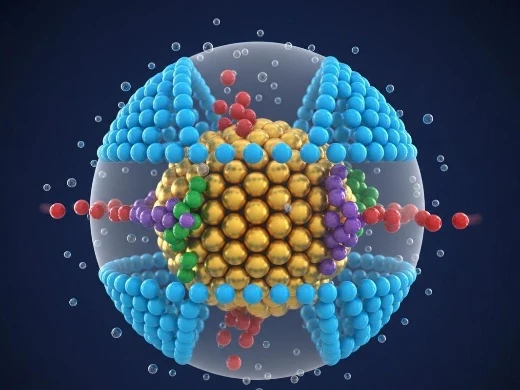
Coarse-Grained System Construction (Martini, SIRAH)
Key Features:
- Martini 3 Mapping — Four-to-one atom-to-bead mapping with optimized interaction matrices for proteins, lipids, nucleic acids, and carbohydrates; validated against thermodynamic data.
- SIRAH Water-Explicit CG — Coarse-grained model with explicit solvent and ionization, capturing electrostatics and pH effects absent in implicit-solvent Martini.
- Automated Back-Mapping — Systematic reconstruction of all-atom coordinates from CG trajectories using backward/inflateGRO protocols, followed by energy minimization.
- Membrane & Vesicle Builder — Automated generation of asymmetric bilayers, nanodiscs, and liposome systems with physiological lipid compositions.
Ideal For: Membrane protein oligomerization; viral particle assembly; lipid nanoparticle formulation; protein-membrane interaction studies.
What We Offer:
Stable, production-ready CG systems with validated mapping and back-mapping protocols. Seed-stage biotechs receive self-assembly trajectories and oligomerization reports without managing million-bead simulations. Pharma teams get back-mapped atomistic structures for binding site analysis.
Large-Scale Dynamics & Self-Assembly
Key Features:
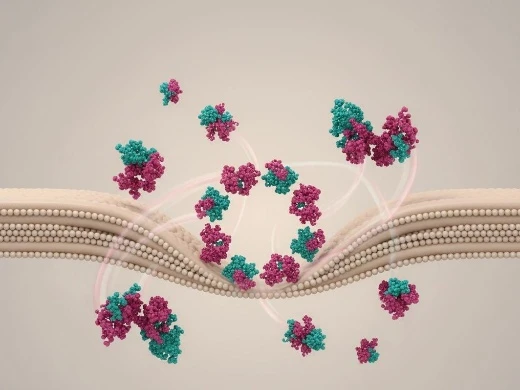
- Membrane Remodeling — Simulation of membrane fusion, fission, pore formation, and protein-induced curvature at millisecond scales.
- Protein Complex Assembly — Spontaneous oligomerization and PPI interface formation from separated subunits, validated against Cryo-EM class averages.
- Viral Envelope & Capsid Dynamics — Large-scale CG simulations of viral membrane proteins and capsid assembly for antiviral target assessment.
- Lipid Raft & Nanodomain Formation — Tracking cholesterol and saturated lipid clustering to understand membrane organization and drug partitioning.
Ideal For: Antiviral programs targeting envelope proteins; oncology programs studying receptor tyrosine kinase oligomerization; drug delivery nanoparticle optimization.
What We Offer:
Self-assembly trajectory movies, oligomerization kinetics, and Cryo-EM-correlated structural models. For lead optimization, we identify whether compounds stabilize or disrupt target oligomerization.
Multiscale Bridging (CG to All-Atom)
Key Features:
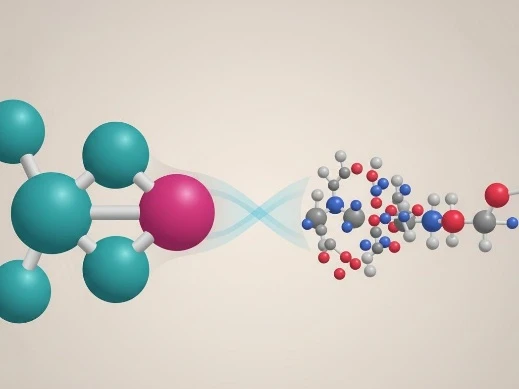
- Systematic Back-Mapping — Automated conversion of CG trajectories to all-atom resolution with side-chain reconstruction and energy minimization.
- All-Atom Refinement — GROMACS/AMBER microsecond-scale refinement of back-mapped structures to equilibrate atomistic details.
- Binding Site Reconstruction — Focused all-atom refinement around ligand binding pockets identified in CG simulations, delivering docking-ready and FEP-ready models.
- Resolution Exchange MD — Hybrid simulations where binding sites run all-atom while distal regions remain coarse-grained, optimizing cost and accuracy.
Ideal For: Membrane protein drug design where large-scale dynamics matter; protein-protein interface refinement; nanoparticle-protein interaction studies.
What We Offer:
A multiscale pipeline: CG for large-scale sampling, back-mapping for atomistic detail, and all-atom refinement for binding site accuracy. Deliverables include CG trajectories, back-mapped PDBs, and refined docking grids.
Platform Instrumentation
Core Instruments
| Instrument | Capability |
|---|---|
| NVIDIA DGX H100 | Million-bead CG simulations and back-mapping at scale |
| GROMACS/AMBER HPC Cluster | Martini 3 and SIRAH production runs with automated back-mapping |
| NVIDIA RTX A6000 Cluster | Real-time CG visualization and self-assembly monitoring |
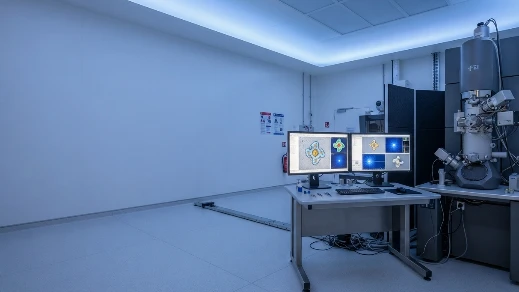
| Thermo Fisher Krios G4 | Cryo-EM validation of CG-predicted oligomeric states |
| Bruker AVANCE NEO 800 MHz | NMR of back-mapped structures for force-field validation |
| Waters ACQUITY UPLC H-Class | Lipid and ligand purity profiling for membrane systems |
Standardized Workflow
Project Workflow
A milestone-driven execution system from sequence to multiscale model.


01 Target Review
- Structure assessment and assembly hypothesis
- CG force-field selection (Martini 3 or SIRAH)
Deliverable: CG simulation plan + mapping rationale
02 CG System Setup
- CG mapping and system building (membrane, vesicle, or complex)
- Solvation and equilibration
Deliverable: Equilibrated CG system
03 CG Production
- Self-assembly or large-scale dynamics production
- Oligomerization or remodeling monitoring
Deliverable: Raw CG trajectory + assembly kinetics
04 Back-Mapping
- Systematic back-mapping to all-atom
- All-atom refinement of binding sites
Deliverable: Back-mapped + refined PDBs
05 Downstream Handoff
- Docking grid generation
- FEP input preparation
Deliverable: Downstream package + final report
Sample Requirements
- Protein/Complex Structure: PDB/AF model or Cryo-EM map
- Membrane/Lipid Context: Desired lipid composition, asymmetry, or curvature
- Assembly Goal: Oligomeric state, vesicle size, or nanoparticle formulation
- Experimental Data: Cryo-EM class averages or SAXS profiles for validation (optional)
Standard Deliverables
- CG production trajectory (Martini 3 or SIRAH)
- Self-assembly or oligomerization kinetics report
- Back-mapped all-atom structures (refined binding sites)
- Docking-ready and FEP-ready input files
- Final technical report with SAR recommendations
Frequently Asked Questions
Case Study
Case Study: Reparameterized Martini 3 for Predicting Protein Self-Interaction and Colloidal Stability
Goal: Benchmark a refined Martini 3 coarse-grained force field against experimental second virial coefficients (B22) and NMR diffusion data, validating improved accuracy in predicting protein self-interaction strength, aggregation propensity, and solubility for biopharmaceutical screening.
Key Data:
- Interaction rescaling: Systematic downscaling of Martini 3 bead parameters (α = 0.8 non-ionic; β = 0.85 ionic) corrected systematic overestimation of protein-protein attraction.
- Thermodynamic alignment: The reparameterized force field reproduced experimental B22 trends across varying salt concentrations for lysozyme and subtilisin, eliminating the non-physical attraction predicted by the original model.
- Dynamic validation: Concentration-dependent NMR diffusion coefficients (2–150 mg/mL) were accurately captured by the refined model, while the original force field produced artificial clustering and anomalous diffusion plateaus.
Why it matters: This independent study offers third-party validation that experimentally calibrated coarse-grained MD can reliably predict colloidal stability and self-association behavior—key developability parameters for antibodies and therapeutic proteins. The direct benchmarking against B22 and NMR diffusion metrics establishes a rigorous foundation for deploying CG-MD in early-stage biologics formulation and aggregation-risk screening.
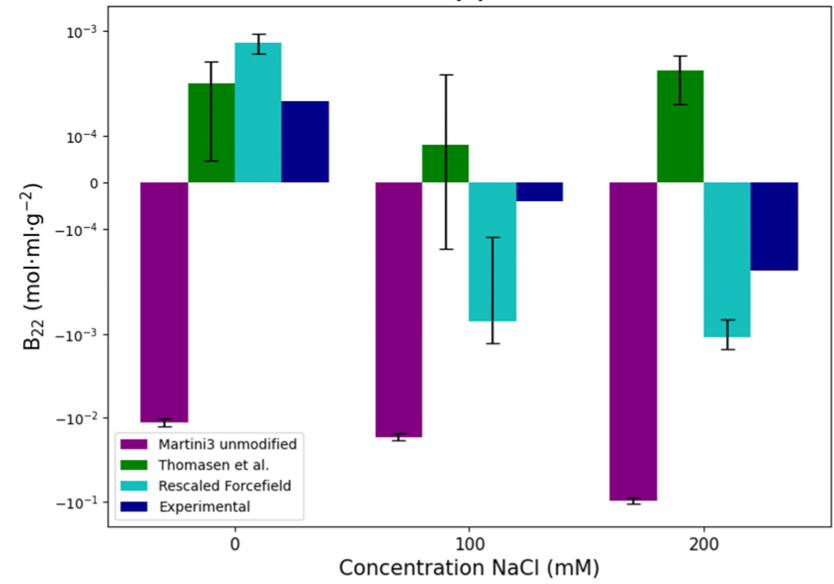
Figure 1. Second virial coefficients (B22) of lysozyme at 0, 100, and 200 mM NaCl. (Binder J.; et al. 2025)
Reference
Binder J.; et al. Enhancing Martini 3 for protein self-interaction simulations. Eur J Pharm Sci. 2025 Jun 1;209:107068.
Our technical team responds within 24 hours. All inquiries protected under NDA.