Membrane Protein & Lipid MD Simulation
 Membrane Embedding
  Gating Dynamics
  Ligand Entry Pathways
 Native lipid bilayer simulations that reveal ion channel gating, GPCR activation, and transporter conformational cycling invisible in detergent-bound crystal structures.
Why Membrane Protein & Lipid MD Simulation Is the Critical Foundation
Membrane proteins constitute 60% of drug targets yet account for the majority of structural biology bottlenecks. Detergent-solubilized crystals distort native conformations; seed-stage biotechs lack the Cryo-EM budgets to capture multiple states. We embed targets in physiologically accurate lipid bilayers to simulate gating, ligand entry, and allosteric modulation --- delivering mechanistic insights that guide hit identification and lead optimization for ion channels, GPCRs, and transporters.
What Sets the Platform Apart
Native Lipid Environment
Asymmetric bilayers with physiological cholesterol and lipid compositions (POPC, POPE, POPS, sphingomyelin) match native membrane biophysics.
Gating & Entry Pathways
Ligand entry trajectories and gating mechanism analysis reveal druggable allosteric sites outside the orthosteric pocket.
Cryo-EM Correlation
Simulation ensembles compared against Cryo-EM density maps to validate state populations and identify missing conformations.
Technology Suite
Membrane Protein MD Simulation
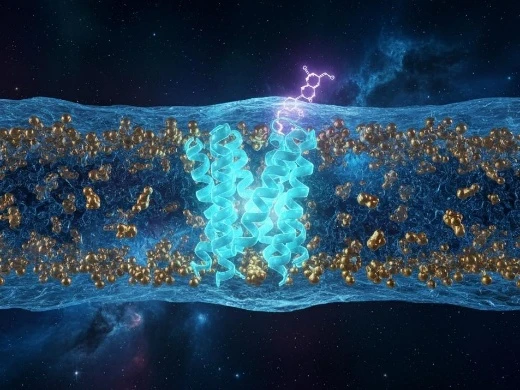
Self-Assembly & Embedding — Automated insertion into pre-equilibrated bilayers or self-assembly protocols with OPM orientation constraints.
Key Features:
- Self-Assembly & Embedding — Automated insertion into pre-equilibrated bilayers or self-assembly protocols with OPM orientation constraints.
- 7-TM & Beta-Barrel Expertise — Specialized protocols for GPCRs, ion channels, aquaporins, and ABC transporters with restrained transmembrane alignment.
- Voltage & Ligand Gating — External electric field application and ligand concentration gradients to simulate voltage-gated and ligand-gated conformational transitions.
- Force-Field Optimization — CHARMM36m with lipid-specific parameters; AMBER lipid17/21; compatibility with protein all-atom parameters.
Ideal For: GPCR allosteric modulator programs; ion channel blocker safety pharmacology; transporter substrate/inhibitor competition studies.
What We Offer:
Stable, production-ready membrane systems with validated lipid packing and protein tilt angles. Seed-stage biotechs receive gating trajectory movies and ensemble docking grids for extracellular and intracellular pockets. Pharma teams get state-specific conformers for FEP and SAR rationalization.
Lipid Bilayer & Membrane Environment Modeling
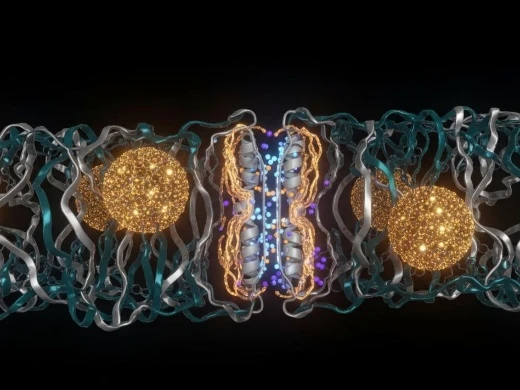
Mixed bilayers with cholesterol, saturated/unsaturated lipids, and lipid rafts to match tissue-specific environments.
Key Features:
- Heterogeneous Membrane Composition — Mixed bilayers with cholesterol, saturated/unsaturated lipids, and lipid rafts to match tissue-specific environments (brain, cardiac, cancer membranes).
- Membrane Curvature & Domains — Large-scale simulations capturing membrane curvature effects on protein function and oligomerization.
- Water & Ion Permeation — Calculation of water permeation rates and ion conductance through channel pores, validated against electrophysiology.
- Lipid-Protein Interaction Fingerprints — Identification of annular and non-annular lipid binding sites that modulate protein activity.
Ideal For: Programs requiring tissue-specific selectivity; ion channel programs where lipid composition modulates gating; antibody targeting of membrane-exposed epitopes.
What We Offer:
A membrane environment report with lipid density profiles, protein tilt angles, and annular lipid interaction maps. For lead optimization, we flag whether compounds partition into the bilayer vs. bind orthosterically.
Membrane Protein-Ligand Interaction Analysis
Steered MD and metadynamics to calculate ligand entry/exit pathways and residence times.
Key Features:
- Ligand Entry Pathway Mapping — Steered MD and metadynamics to calculate ligand entry/exit pathways and residence times from bulk solvent to binding site.
- Allosteric & Orthosteric Dynamics — Simultaneous monitoring of orthosteric and allosteric pocket volumes during activation/inactivation cycles.
- Membrane-Partitioning Analysis — Calculation of logD and membrane insertion depth for lipophilic ligands to predict off-target membrane effects.
- Cryo-EM Density Fitting — Simulation conformers fitted into Cryo-EM density maps to validate state assignments and identify missing intermediate states.
Ideal For: Structure-based drug design against GPCRs; ion channel safety profiling; fragment screening follow-up for membrane targets.
What We Offer:
A ligand interaction report with entry pathway movies, residence time distributions, and allosteric modulation hypotheses. For hit-to-lead, we recommend substitutions that stabilize desired activation states or block undesired entry routes.
Platform Instrumentation
Core Instruments
| Instrument | Capability |
|---|---|
| NVIDIA DGX H100 | Large-scale membrane protein systems (600k+ atoms) with long-timescale sampling |
| GROMACS/AMBER HPC Cluster | Membrane self-assembly, equilibration, and production runs |
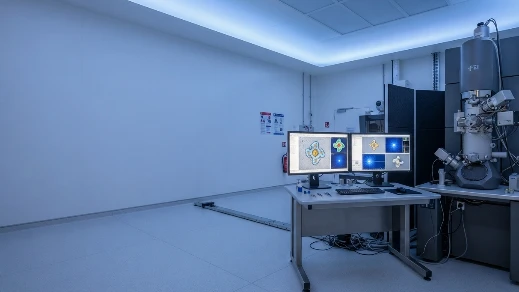
| Thermo Fisher Krios G4 | Cryo-EM validation of simulation state populations |
| Bruker AVANCE NEO 800 MHz | NMR of membrane mimetics for force-field validation |
| Sartorius Octet SF8 | BLI for ligand binding kinetics in detergent or nanodisc |
| Waters ACQUITY UPLC H-Class | Lipid and ligand purity profiling |
Standardized Workflow
Project Workflow
A milestone-driven execution system from sequence to membrane-validated model.


01 Target Review
- Structure assessment and target class (GPCR, channel, transporter)
- Lipid composition selection (tissue-specific)
- Deliverable: Membrane simulation plan + lipid rationale
02 Membrane Setup
- Bilayer self-assembly or insertion with OPM orientation
- Ionization and membrane alignment
- Deliverable: Equilibrated membrane system
03 Production MD
- Equilibration and production (2–10 μs)
- Ligand entry/steered MD (if required)
- Deliverable: Raw trajectory + entry pathway data
04 Analysis & Ranking
- Gating trajectory and pocket dynamics analysis
- Ligand entry pathway and residence time mapping
- Deliverable: Gating report + ensemble docking grids
05 Validation
- Cryo-EM state validation
- Biophysical assay correlation
- Deliverable: Validated model + final report
Sample Requirements
- Protein Structure: AlphaFold or Cryo-EM model; detergent-bound PDB acceptable with re-embedding
- Ligands: Known modulators, channel blockers, or fragment hits for entry mapping
- Membrane Context: Target tissue (CNS, cardiac, tumor) for lipid composition
- Experimental Data: Patch-clamp, radioligand binding, or Cryo-EM maps (optional)
Standard Deliverables
- Production trajectory with membrane system
- Lipid density and protein tilt analysis
- Gating mechanism and state population report
- Ligand entry pathway movies and free energy profiles
- Ensemble docking grids for allosteric and orthosteric sites
- Final technical report with SAR recommendations
Frequently Asked Questions
Case Study
Case Study: Live-Cell FRAP as Experimental Cross-Validation for Membrane Protein & Lipid MD Simulations
Goal: Establish FRAP as a wet-lab complement to membrane MD simulations, creating a reciprocal validation loop where in silico diffusion predictions are benchmarked against live-cell photobleaching recovery.
Key Data:
- Diffusion quantification: FRAP recovery curves yield half-recovery times (t₁/₂) and mobile fractions (M) that directly benchmark MD-calculated lateral diffusion coefficients of membrane proteins and lipids.
- Environmental sensitivity: Temperature-dependent lipid fluidity and drug permeability shifts captured by FRAP validate MD-predicted membrane ordering and phase transitions under varying conditions.
- Phase-state resolution: FRAP distinguishes liquid-like domains (t₁/₂ < 10 s) from immobilized gel states (no recovery), confirming MD-simulated lipid phase separation and domain compartmentalization.
Why it matters: This independent technical reference demonstrates that membrane MD simulations gain experimental rigor when paired with FRAP live-cell validation. The cross-check of computational diffusion profiles against measured recovery kinetics strengthens the reliability of protein–lipid interaction and drug permeability models—supporting our integrated platform for membrane-targeted therapeutic design.
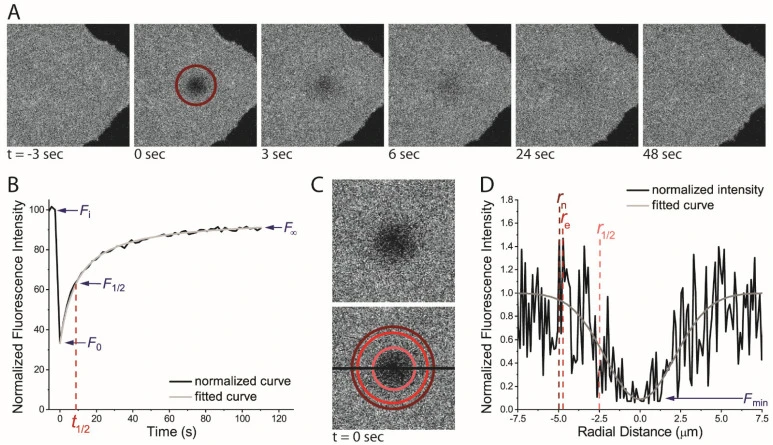
Figure 1. Overview of the FRAP technique applied to plasma membrane dynamics. (Day CA.; et al. 2023)
Reference
Day CA, Kang M. The Utility of Fluorescence Recovery after Photobleaching (FRAP) to Study the Plasma Membrane. Membranes (Basel). 2023 May 2;13(5):492.
Our technical team responds within 24 hours. All inquiries protected under NDA.