Protein Structure Determination by NMR
 Isotope Labeling & Expression
 Automated Backbone Assignment
 AI-Guided NOESY Refinement
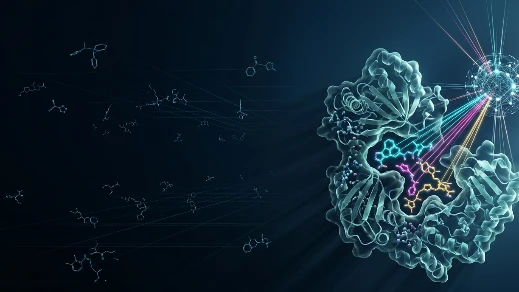
Crystallography gives one snapshot; NMR gives the movie. Our platform delivers complete solution structures — from Gene-to-Protein Production with 13C/15N labeling, through AI-accelerated NOESY assignment, to physically validated conformational ensembles ready for Molecular Dynamics (MD) Simulations and Molecular Docking Services.
Why Protein Structure Determination by NMR Is the Critical Foundation
A static crystal structure cannot explain why a drug loses efficacy at 37°C. Seed-stage biotechs need dynamic, solution-state models to guide Hit to Lead decisions; big-pharma teams pursuing intrinsically disordered regions or membrane proteins require the physiological context only NMR provides. Our AI-Enhanced NMR Spectroscopy Services platform integrates isotope-labeled expression, automated backbone assignment, and AI-guided NOESY refinement, delivering ensemble structures directly into Lead Optimization and Binding Free Energy Calculation (FEP/TI, MM/PBSA) workflows.
What Sets the Platform Apart
AI-Accelerated NOESY Assignment
Deep-learning models (RASP/FAAST-style) iteratively assign NOESY peaks and generate structure ensembles in hours rather than months, with >97% restraint recall.
Isotope Labeling & Expression Integration
In-house Gene-to-Protein Production with 13C/15N M9 minimal media and cryoprobe-optimized sample concentration eliminate external labeling delays.
Ensemble Dynamics & Validation
Structures are delivered as 20-conformer ensembles with order parameters (S2) and exchange rates, feeding directly into All-Atom Protein MD Simulation for druggability assessment.
Technology Suite
AI-Assisted Backbone Assignment & NOESY Analysis
Deep-Learning Backbone Assignment and AI-Guided NOESY Refinement

Key Features:
- Automated Backbone Assignment — Deep-learning algorithms (ARTINA-style ResNet peak picking + GNN chemical shift prediction) assign 1H, 13C, and 15N resonances from 2D/3D spectra with >90% accuracy for proteins up to 30 kDa.
- AI-Guided NOESY Refinement — Restraint-assisted structure prediction models iteratively assign ambiguous NOESY cross-peaks and subsample distance restraints, converging to high-quality ensembles in 2–5 iterations.
- AlphaFold-Guided Prior Restraints — AlphaFold Protein Structure Prediction models provide initial structural priors that accelerate convergence and resolve ambiguous long-range NOEs, particularly for multi-domain and few-MSA targets.
- CSP-Driven Binding Site Mapping — For ligand-bound structures, 1H-15N HSQC titrations map interaction surfaces at residue resolution, generating pharmacophore constraints for Drug Design & Library Analysis.
Ideal For: Virtual biotechs without in-house NMR expertise; targets that fail crystallization (membrane proteins, PPI complexes); programs requiring dynamic ensemble information for Hit Identification.
What We Offer: A fully outsourced NMR structure pipeline. You provide a sequence; we deliver isotope-labeled protein, assigned spectra, a validated ensemble, and a dynamics report. AI-guided assignment compresses traditional 6–12 month timelines into 4–8 weeks, while ensemble data captures conformational states invisible to AI-Assisted X-ray Crystallography Services.
Integrative Structure Refinement & Validation
CYANA/ARIA Structure Calculation, OpenMM Relaxation, and Cross-Method Validation
Key Features:
- Physical Ensemble Refinement — CYANA/ARIA structure calculations combined with OpenMM relaxation generate 20-conformer ensembles that satisfy experimental restraints and physical force fields.
- Cross-Method Validation — NMR ensembles are cross-validated against AI-Assisted X-ray Crystallography Services or AI-Enhanced Cryo-EM Services data when available, ensuring consistency across techniques.
- Dynamics Quantification — Relaxation dispersion (CPMG, R1ρ) and residual dipolar coupling (RDC) experiments quantify ms–µs motions and validate ensemble heterogeneity.
- Ligand-Bound Structure Determination — NMR titrations deliver structures of protein-ligand complexes at atomic resolution, including transient allosteric sites invisible in apo crystals.
Ideal For: Lead Optimization programs requiring ligand-bound ensemble structures; AI for Antibody & Biologics campaigns needing epitope-resolution complexes; Natural Product Research & Development requiring solution-state confirmation.
What We Offer: Every structure ships with a validation package: ensemble RMSD, restraint violation statistics, Ramachandran analysis, and All-Atom Protein MD Simulation-based stability assessment. Ensembles are formatted for Molecular Docking Services, Virtual Screening Services, and Pharmacophore Modeling & Screening.
Platform Instrumentation
| Instrument | Capability |
|---|---|
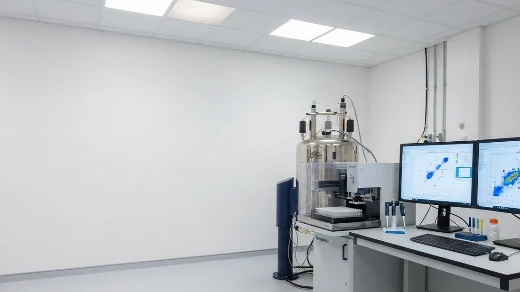
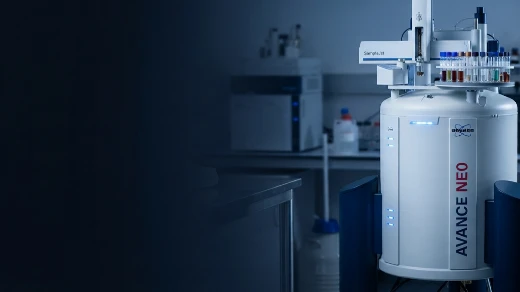
| Bruker AVANCE NEO 600 MHz | Triple-resonance backbone assignment and NOESY experiments |
| Bruker AVANCE NEO 800 MHz | High-resolution structure determination and relaxation dispersion |
| CryoProbe TCI (1H/13C/15N) | Triple-resonance cryoprobe for sensitivity-labeled protein detection |
| SampleJet Automated Changer | 96-tube automated screening with temperature control |
| Isotope Labeling Fermentation Suite | 13C/15N M9 minimal media expression for E. coli and yeast |
| Cytiva ÄKTA pure | Purification of labeled proteins to >95% homogeneity |
| NVIDIA DGX A100 | AI peak picking, assignment, and structure ensemble generation |
| NanoTemper Prometheus NT.48 | NanoDSF thermal stability validation of labeled protein samples |
Standardized Workflow
Project Workflow
A milestone-driven system from sequence to validated ensemble.


01 Target Review
- Sequence analysis and AlphaFold Protein Structure Prediction assessment
- Domain architecture and disorder prediction
- Labeling strategy selection (13C, 15N, 2H if needed)
- Deliverable: Feasibility report + labeling plan
02 Isotope Labeling & Expression
- 13C/15N M9 minimal media expression
- Crystal Grade Protein Preparation purification
- Deliverable: Labeled protein + purity report
03 Spectroscopy & Assignment
- 2D/3D backbone assignment (HSQC, HNCO, HNCACB)
- Automated resonance assignment with AI peak picking
- NOESY spectra collection and analysis
- Deliverable: Assigned chemical shifts + NOE list
04 Structure Calculation
- AI-guided NOESY peak assignment
- CYANA/ARIA structure calculation + OpenMM relaxation
- Ensemble generation (20 conformers)
- Deliverable: Structure ensemble (PDB) + statistics
05 Validation & Handoff
- Ensemble validation (RMSD, Ramachandran, violations)
- All-Atom Protein MD Simulation stability check
- Handoff to Molecular Docking Services or Binding Free Energy Calculation (FEP/TI, MM/PBSA)
- Deliverable: Final ensemble + dynamics report
Sample Requirements
- Target Sequence: Amino acid sequence (FASTA) or UniProt ID; domain boundaries and known disorder regions
- Expression System: E. coli (standard), yeast, or insect cells for Gene-to-Protein Production
- Isotope Labeling: 15N, 13C, or 2H labeling requirement; M9 minimal media compatibility
- Purity & Quantity: >95% pure by SEC; ≥300 µM concentration; ≥300 µL volume for 5-mm NMR tube
- Downstream Goal: Molecular Docking Services, Virtual Screening Services, Hit to Lead, or Lead Optimization
Standard Deliverables
- 20-conformer NMR ensemble (PDB format) with experimental restraints
- Assigned chemical shift list (BMRB-ready STAR format)
- NOESY peak assignment table and restraint statistics
- Ensemble validation report (RMSD, violations, Ramachandran, PROCHECK-NMR)
- Dynamics assessment (S2 order parameters, relaxation data if measured)
- Final technical report with SBDD recommendations
Frequently Asked Questions
Case Study
Case Study: AI-Assisted NMR Structure Determination with the RASP/FAAST Pipeline
Goal: Benchmark an AI-driven NMR analysis pipeline that integrates experimental distance restraints with deep-learning structure prediction to accelerate NOESY assignment and ensemble generation.
Key Findings:
- RASP model performance: The restraint-assisted structure predictor, derived from AlphaFold architecture, improved TM-scores for multi-domain and few-MSA proteins by directly incorporating sparse NMR restraints as edge biases.
- FAAST acceleration: The iterative Folding Assisted peak ASsignmenT pipeline assigned NOESY peaks and generated structure ensembles in hours, compared to months for traditional manual assignment.
- Restraint consistency: FAAST achieved >97% overall restraint recall and >96% long-range restraint recall across 57 benchmark NMR samples, with ensemble mutual RMSD averaging 1.53 Å.
- Raw peak list advantage: Processing raw NOESY peak lists (rather than deposited filtered lists) yielded more assigned restraints per residue (14.19 vs. 4.93) without compromising structure quality.
Industrial Translation: This independent study demonstrates that AI-guided NMR assignment is no longer experimental — it is production-ready. For biotechs and pharma teams, adopting RASP/FAAST-style pipelines compresses structure determination timelines from months to weeks, reduces reliance on scarce NMR specialists, and delivers ensemble dynamics data that static methods cannot capture. This directly supports our Protein Structure Determination by NMR platform's core value: rapid, AI-accelerated solution structures for structure-based drug discovery.
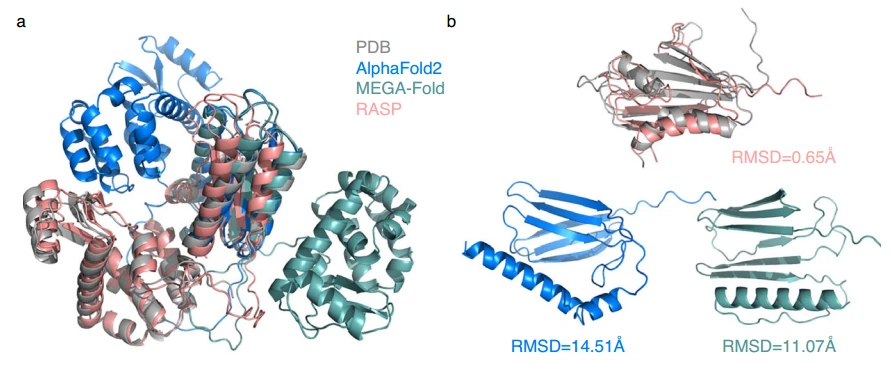
Figure 1. RASP-assisted NMR structure prediction for challenging targets. (a) Multi-domain protein 6XMV: RASP corrects inter-domain mispositioning (TM-score 0.79) where AF2 and MEGA-Fold fail (TM-score 0.51). (b) Few-MSA virus protein 7NBV: RASP achieves 0.65 Å RMSD with only 50 restraints, versus 14.51 Å and 11.07 Å for AF2 and MEGA-Fold.
Reference
Liu S, et al. Assisting and accelerating NMR assignment with restrained structure prediction. Commun Biol. 2025;8:1067.
Our technical team responds within 24 hours. All inquiries protected under NDA.