Single Particle Analysis (SPA)
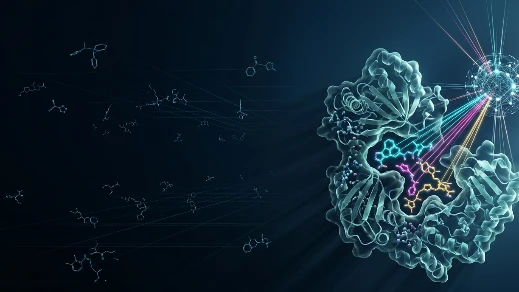
 Deep-Learning Particle Picking
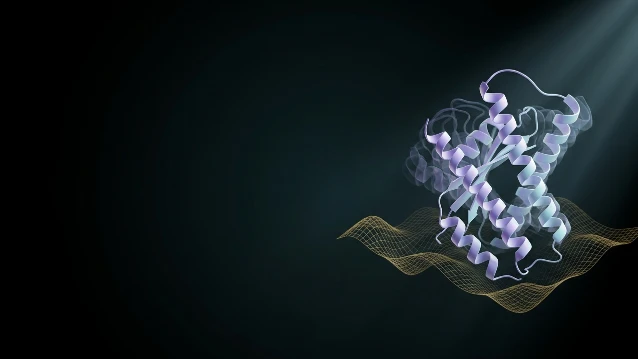
  AI 3D Reconstruction
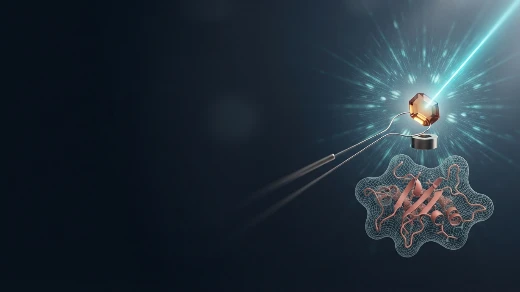
  Integrative Validation
 Millions of particles hide in noise. Our AI-enhanced SPA pipeline turns cryo-EM micrographs into atomic coordinates — using neural networks for particle detection, symmetry-aware deep learning for reconstruction, and AlphaFold-guided model building for rapid structure validation.
Why Single Particle Analysis Is the Critical Foundation
Cryo-EM without intelligent data processing is a snowstorm without a lens. Seed-stage biotechs cannot afford months of manual particle picking and 3D classification; big-pharma teams need heterogeneity-resolved structures of membrane proteins and large assemblies that X-ray crystallography cannot capture. Our platform integrates deep-learning particle detection, AI-driven ab initio reconstruction, and AlphaFold Protein Structure Prediction-guided model building, delivering validated atomic models directly into Molecular Dynamics (MD) Simulations and Molecular Docking Services workflows.
What Sets the Platform Apart
AI-Driven Particle Processing
Deep-learning pickers (crYOLO, Topaz, DeepPicker) trained on CryoPPP datasets detect particles 10× faster than manual methods, with cross-dataset generalization.
Heterogeneity-Resolved Reconstruction
CryoDRGN and 3DFlex neural networks resolve continuous conformational landscapes, capturing multiple functional states invisible to traditional 3D classification.
Integrative Validation
AlphaFold Protein Structure Prediction models guide de novo model building; All-Atom Protein MD Simulation validates map-model fit and dynamics.
Technology Suite
AI-Enhanced SPA Data Processing & 3D Reconstruction
AI-powered particle detection and deep-learning 3D reconstruction for near-atomic resolution maps.
Key Features:
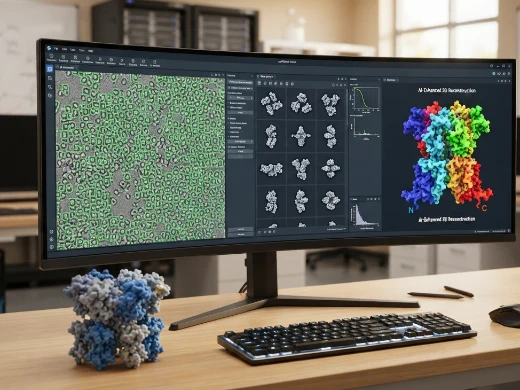
- Deep-Learning Particle Picking — crYOLO, Topaz, and DeepPicker CNNs trained on 10,000+ annotated micrographs detect particles across diverse sample types with >90% precision, eliminating the manual bottleneck.
- Symmetry-Aware AI Reconstruction — CryoEMNet-style group convolutions exploit molecular symmetry (C1 to I) for ab initio 3D reconstruction without external reference models, accelerating convergence.
- Heterogeneity Analysis — CryoDRGN variational autoencoders and 3DFlex neural networks resolve continuous and discrete conformational variability, delivering multiple 3D classes from a single dataset.
- Resolution Enhancement — DeepEMhancer and EMBuild deep-learning post-processing sharpen maps to near-atomic detail, facilitating accurate side-chain placement.
Ideal For: Virtual biotechs without cryo-EM expertise pursuing Membrane Protein & Lipid MD Simulation targets; large complexes (PPIs, ribosomes, viruses); programs requiring Hit Identification structural validation.
What We Offer: A fully computational SPA pipeline from raw movies to atomic models. You ship vitrified grids or raw data; we deliver particle counts, 2D class averages, 3D reconstructions, and fitted coordinates. AI-driven processing compresses months of manual work into weeks, while heterogeneity analysis captures functional states that single-model approaches miss.
Integrative Structure Determination & Validation
AlphaFold-guided model building with cross-method validation for regulatory-grade structural evidence.
Key Features:
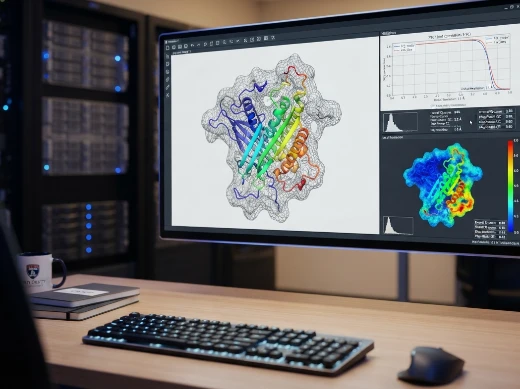
- AlphaFold-Guided Model Building — AlphaFold Protein Structure Prediction models are rigid-body fitted into density maps and refined with ISOLDE/Coot, accelerating initial model generation by 50–70%.
- Cross-Method Validation — SPA structures are cross-validated against AI-Assisted X-ray Crystallography Services data or AI-Enhanced NMR Spectroscopy Services restraints when available, ensuring consistency.
- Molecular Dynamics Map Validation — All-Atom Protein MD Simulation assesses model stability and identifies overfit regions, with trajectories compared against experimental density.
- FSC and Local Resolution Profiling — Gold-standard FSC curves and DeepRes local resolution maps quantify reconstruction quality per residue, guiding model confidence annotation.
Ideal For: Lead Optimization programs requiring IND-grade structural evidence; AI for Antibody & Biologics campaigns needing epitope-resolution complexes; Fragment-based Screening (FBS) hit validation.
What We Offer: Every structure ships with a validation package: FSC curves, local resolution maps, model-map correlation coefficients, and Molecular Dynamics (MD) Simulations-based stability assessment. Models are formatted for Molecular Docking Services, Virtual Screening Services, and Drug Design & Library Analysis campaigns.
Platform Instrumentation
Core Instruments
| Instrument | Capability |
|---|---|
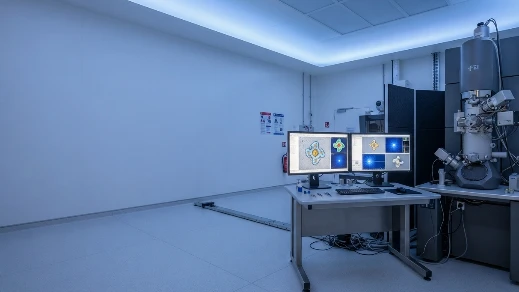
| Thermo Fisher Krios G4 | 300 kV cryo-EM with automated data collection for single particle analysis |
| Gatan K3-BioQuantum | Direct electron detector with energy filter for high-resolution imaging |
| Vitrobot Mark IV | Automated plunge-freezing with controlled humidity and blot parameters |
| NVIDIA DGX A100 | Deep-learning particle picking, 3D reconstruction, and map enhancement |
| NVIDIA RTX A6000 Cluster | Real-time 2D classification and heterogeneity analysis |
| cryoSPARC / RELION / CryoDRGN | Industry-standard SPA pipelines with AI plugin integration |
| DeepRes / DeepEMhancer | AI-based local resolution estimation and map sharpening |
| Bruker AVANCE NEO 600 MHz | NMR cross-validation of flexible regions and dynamics |
Standardized Workflow
Project Workflow
A milestone-driven system from raw movies to validated atomic model.


01 Data Ingestion
- Movie alignment and CTF estimation
- Micrograph screening and ice quality assessment
02 AI Processing
- Deep-learning particle picking (crYOLO/Topaz)
- 2D classification and particle curation
03 3D Reconstruction
- Ab initio 3D reconstruction (CryoEMNet/cryoSPARC)
- Heterogeneous refinement (CryoDRGN/3DFlex)
04 Model Building
- AlphaFold Protein Structure Prediction-guided model fitting
- ISOLDE/Coot refinement and side-chain placement
05 Validation & Handoff
- FSC and local resolution validation
- All-Atom Protein MD Simulation stability check
- Handoff to Molecular Docking Services or Binding Free Energy Calculation (FEP/TI, MM/PBSA)
Sample Requirements
- Vitrified Grids: Quantifoil or UltrAuFoil grids with applied sample; storage in liquid nitrogen
- Sample Concentration: 0.5–5 mg/mL; monodispersity verified by negative-stain EM or DLS prior to freezing
- Target Info: Molecular weight, oligomeric state, known symmetry, and buffer composition
- Prior Data: Negative-stain EM images, SEC chromatogram, or Crystal Grade Protein Preparation quality report
- Downstream Goal: Molecular Docking Services, Virtual Screening Services, Hit to Lead, or Lead Optimization
Standard Deliverables
- 3D cryo-EM density map(s) with global and local resolution estimates (EMDB-ready)
- Atomic model fitted and refined into the map (PDB format)
- FSC curves, angular distribution plots, and particle orientation statistics
- 2D class average gallery and particle picking validation images
- Heterogeneity analysis report (if multiple states identified)
- Final technical report with validation metrics and SBDD recommendations
Frequently Asked Questions
Case Study
Case Study: Particle Analysis of Recombinant AAV by Cryo-EM
Goal: Perform high-throughput particle analysis of a purified recombinant adeno-associated virus (AAV) sample to determine morphology, empty/full ratio, and structural integrity for gene therapy vector quality control.
Key Findings:
- Cryo-EM data collection: 44 images collected at 45k magnification; 2,703 particles identified and analyzed.
- Automated classification: Mempro image-processing software classified particles by radial electron density and circularity — 2,097 empty (77.6%), 482 full (17.8%), and 124 unclassified (4.6%).
- Structural integrity: All particles exhibited icosahedral symmetry; dodecahedral AAV nucleocapsid structure was clearly resolved at high magnification.
Industrial Translation: This internal case demonstrates our production-grade SPA capability for gene therapy vector QC. Empty/full particle ratio is a critical quality attribute for IND filings and process release. Our platform delivers automated particle counting and classification for AAVs, LNPs, liposomes, exosomes, and virus-like particles — providing the structural evidence biotechs and pharma need for regulatory submission and manufacturing validation.
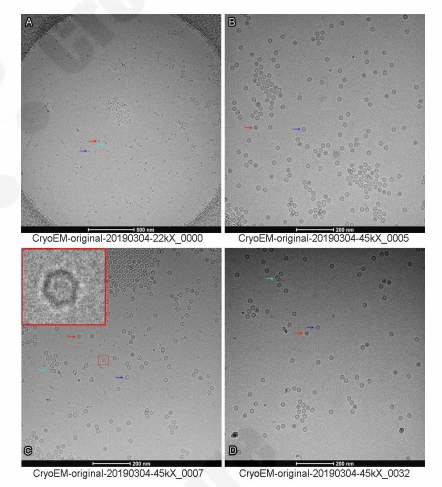
Figure 1. Cryo-EM characterization of recombinant AAV particles at 45k magnification.
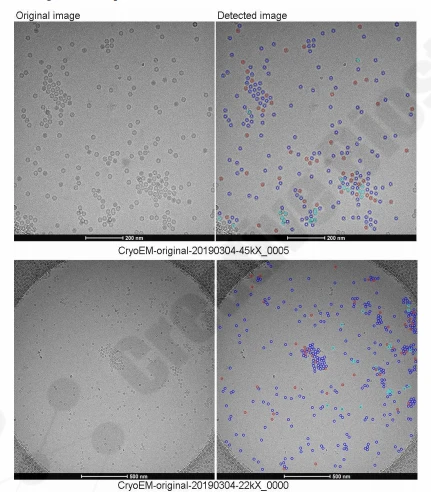
Figure 2. Automated particle classification by Mempro image-processing software.
Our technical team responds within 24 hours. All inquiries protected under NDA.