Antibody Affinity Maturation (AI-Assisted)
 AI Mutagenesis
  Binding Energy Ranking
  Functional Validation
 AI-guided saturation mutagenesis and FEP-ranked variant libraries deliver affinity-matured antibodies with improved potency and reduced dosing frequency.
Why Antibody Affinity Maturation Is the Critical Foundation
Lead antibodies often arrive with moderate affinity that drives high dosing costs and competitive vulnerability. Seed-stage biotechs cannot afford phage display campaigns for every candidate. Pharma teams need directed evolution alternatives that compress timelines from months to weeks. We deliver AI-predicted mutation libraries, FEP-ranked variant prioritization, and biophysical validation — transforming parental antibodies into picomolar therapeutics.
What Sets the Platform Apart
AI Saturation Mutagenesis
ML models trained on 100M+ antibody sequences predict beneficial mutations across CDR and framework regions, reducing library size by 90% vs. naive saturation.
FEP-Guided Ranking
FEP calculations rank variants by ΔΔG before synthesis, eliminating low-probability candidates and cutting experimental burden.
Expression-Optimized Variants
Each matured variant is scored for CHO expression titer, aggregation propensity, and thermal stability to ensure CMC viability alongside affinity gains.
Technology Suite
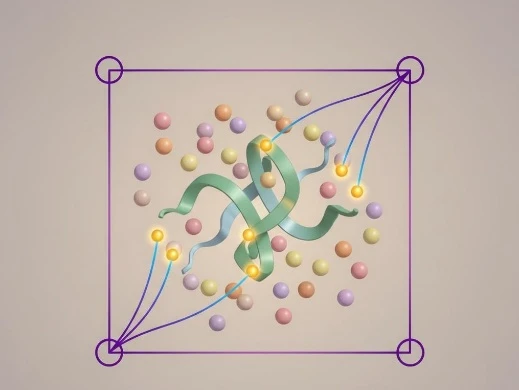
AI-Guided Mutagenesis & Library Design
AI-Powered Paratope Engineering for Maximum Affinity Gain
Key Features:
- Paratope Hotspot Mapping — Computational alanine scanning identifies CDR residues with highest binding energy contribution, guiding targeted saturation mutagenesis.
- Deep Learning Mutagenesis — AntiBERTy/ESM predicts mutation effects on affinity and stability from sequence context alone.
- Combinatorial Library Design — Smart combinatorial libraries that avoid epistatic clashes while maximizing diversity within synthesizable limits.
Ideal For: Hybridoma leads with micromolar affinity; bispecific antibodies requiring arm-specific affinity tuning; ADC payloads needing enhanced internalization potency.
What We Offer:
A focused mutation library of 20–100 variants (vs. thousands in naive approaches) with AI-predicted affinity gains. Seed-stage biotechs avoid phage display infrastructure. Pharma teams receive variants ready for high-throughput expression and screening.
In Silico Screening & Binding Energy Ranking
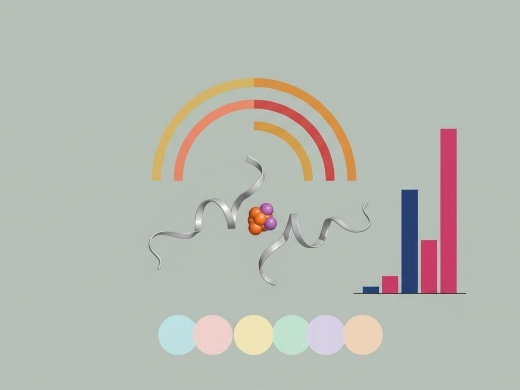
Computational Triage to Prioritize the Best Variants
Key Features:
- FEP ΔΔG Calculation — Alchemical free energy perturbation calculates affinity changes for each mutation relative to parental antibody with ~1 kcal/mol precision.
- MM/PBSA Rapid Triage — End-point thermodynamics screens 100+ variants per week to identify top candidates for FEP refinement.
- Cross-Reactivity Scanning — Homology models of off-target homologs screened to flag mutations that increase non-specific binding.
Ideal For: Affinity maturation with strict selectivity requirements; therapeutic antibodies against conserved epitopes; bispecific programs balancing affinity on two targets.
What We Offer:
A ranked variant list with predicted ΔΔG, selectivity indices, and structural rationale. For lead optimization, we prioritize mutations that improve affinity without compromising developability.
Developability & Expression Optimization
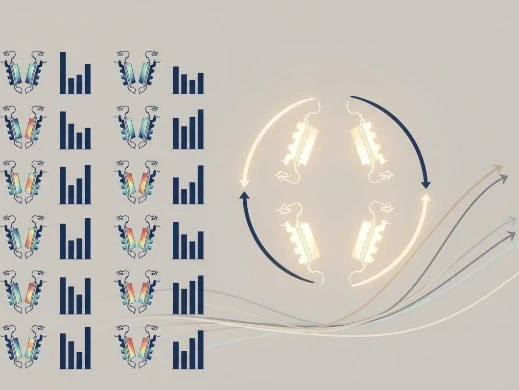
CMC-Ready Variants with Balanced Affinity and Stability
Key Features:
- CHO Expression Prediction — ML models trained on CHO cell expression data predict variant titers and glycosylation patterns.
- Aggregation & Viscosity Screening — DLS and SEC-MALS assessment of matured variants to flag formulation liabilities.
- Thermal Stability Engineering — DSC and thermal shift profiling to ensure affinity gains do not destabilize the Fv.
Ideal For: CMC-focused programs where expression titer and stability are as critical as affinity; subcutaneous formulations requiring low viscosity.
What We Offer:
Matured variants with balanced affinity, expression, and stability profiles. For IND-enabling programs, we deliver CMC-ready sequences with codon-optimized vectors and stable cell line recommendations.
Platform Instrumentation
Core Instruments
| Instrument | Capability |
|---|---|
| NVIDIA DGX H100 | AI mutagenesis model inference and FEP ensemble simulation |
| Schrödinger BioLuminate | Antibody variant modeling and FEP workflow automation |
| ForteBio Octet RH16 | High-throughput BLI for rapid affinity ranking of variant libraries |
| Malvern MicroCal PEAQ-ITC | Isothermal titration calorimetry for precise affinity and thermodynamics |
| Thermo Scientific Exactive Plus EMR | Native MS for mass validation of variant assembly and glycosylation |
| Agilent 1290 Infinity II | Analytical purity and charge variant profiling of matured antibodies |
| Bio-Rad CFX96 Touch | qPCR for expression titer quantification in CHO pools |
| Tecan Spark | Multimode plate reading for high-throughput binding assays |
| BD FACSymphony A5 | Flow cytometry for cellular binding and cross-reactivity validation |
Standardized Workflow
Project Workflow
A milestone-driven execution system from parental antibody to matured lead.


01 Target Review
- Parental antibody sequence and affinity assessment
- Target epitope and selectivity requirements
02 AI Library Design
- Paratope hotspot mapping and AI mutagenesis
- Combinatorial library design (20–100 variants)
03 In Silico Ranking
Deliverable: Ranked variant list + ΔΔG report04 Expression & Screening
- Transient expression of top 20 variants in CHO
- BLI primary screening for affinity gains
05 Validation
- SPR / ITC affinity confirmation
- Flow cytometry cross-reactivity check
Sample Requirements
- Parental antibody VH/VL sequences and known affinity (Kd/Kon/Koff)
- Antigen structure or epitope mapping data
- Selectivity targets (off-target homologs if any)
- Desired final affinity and format (IgG, scFv, bispecific)
Standard Deliverables
Frequently Asked Questions
Case Study
Case Study: Deep Learning-Guided Virtual Screening for Antibody Affinity Maturation
Goal: Benchmark a local-deployable, AI-assisted pipeline that integrates deep learning structure prediction and molecular docking to identify CDR3 mutants with enhanced antigen binding, reducing the experimental burden of in vitro affinity maturation.
Key Data:
- AI-accelerated structure prediction: The NanoNet deep learning model predicted mutant antibody frameworks rapidly on standard desktop hardware (8-core CPU, 16 GB RAM), eliminating the need for HPC clusters and cutting per-variant processing to ~20 minutes.
- High-throughput down-selection: From 949 CDR3 mutants, docking (ZDOCK/ZRANK) and Rosetta stability scoring filtered the pool to 14 candidates; sandwich ELISA confirmed 6 with improved affinity and 3 with comparable binding versus wild-type 2B4.
- Focused engineering hotspot: Validated high-affinity mutants shared mutations clustered in a narrow CDR3 segment (residues 104–112), shrinking the random search space nearly 3-fold and providing a actionable motif for rational antibody engineering.
Why it matters: This independent study demonstrates that an AI-assisted, docking-interpretable pipeline can compress the mutational search space and prioritize gain-of-affinity variants without exhaustive experimental screening. The integration of neural network structure prediction with physics-based scoring offers a scalable, low-resource strategy for therapeutic antibody optimization—directly supporting our AI-assisted affinity maturation capabilities.
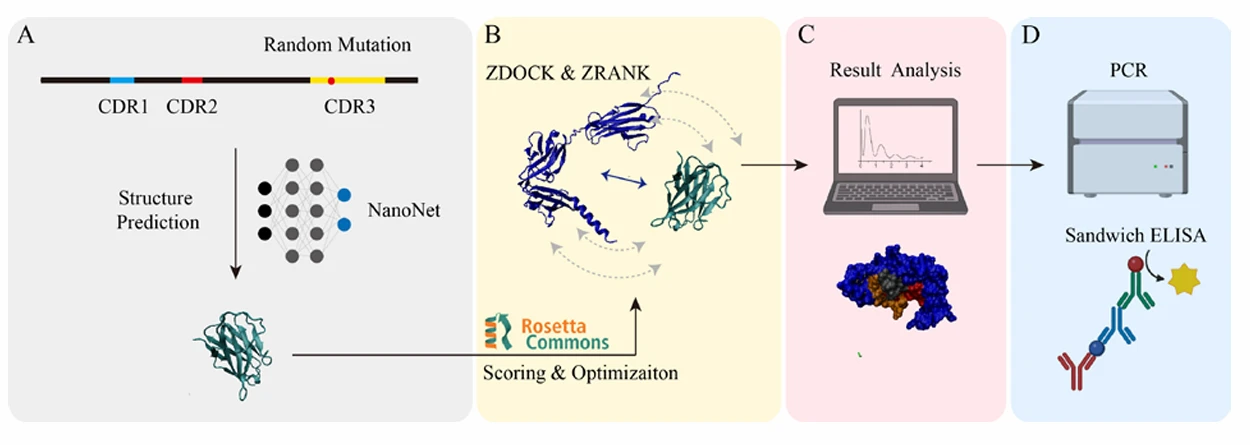
Figure 1. Workflow of the deep learning-guided virtual screening pipeline. (Gong C.; et al. 2025)
Reference
Gong C, Liu H. Deep learning guided high-throughput virtual screening for in vitro antibody maturation. BIO Web Conf. 2025;174:03017.
Our technical team responds within 24 hours. All inquiries protected under NDA.