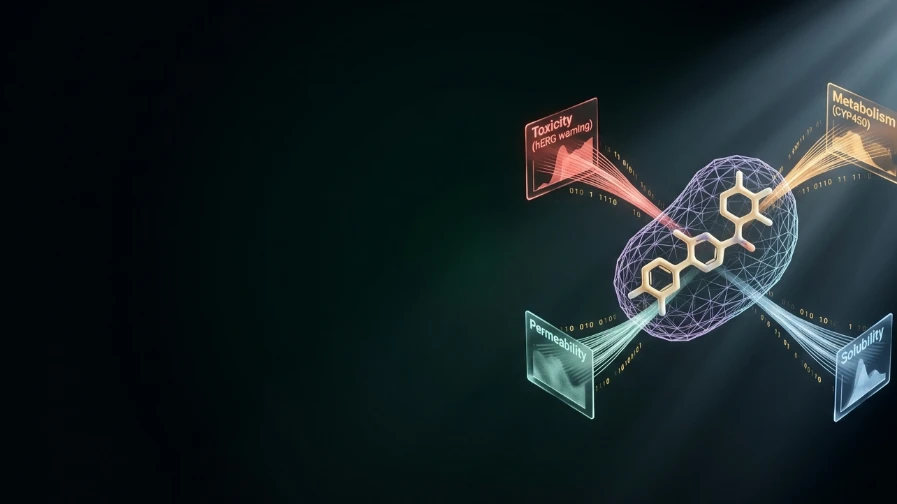
In Silico Antibody Humanization
 CDR Grafting
  Immunogenicity Prediction
  Affinity Retention
 AI-driven germline matching and T-cell epitope removal transform murine, rabbit, or camelid antibodies into low-risk humanized candidates without sacrificing target affinity.
Why In Silico Antibody Humanization Is the Critical Foundation
Seed-stage biotechs with hybridoma-derived leads face immunogenicity barriers that stall IND timelines. Pharma teams need humanized candidates with retained affinity and minimal anti-drug antibody (ADA) risk. We deliver CDR-grafted frameworks, vernier-optimized backbones, and immunogenicity-scored variants — validated by biophysical and cell-based assays before you commit to CMC.
What Sets the Platform Apart
AI Germline Matching
ML models match non-human V-genes to human germline repertoires with >95% framework identity, reducing immunogenicity risk before synthesis.
Immunogenicity Depletion
In silico MHC-II binding prediction and T-cell epitope removal minimize ADA responses, supported by in vitro immunogenicity assays.
Affinity-Preserving Grafts
CDR grafting with vernier region optimization retains picomolar affinity in >80% of candidates, avoiding costly affinity maturation rescue campaigns.
Technology Suite
Germline Matching & CDR Grafting
V-Gene Repertoire Mining and CDR Canonical Classification
Key Features:
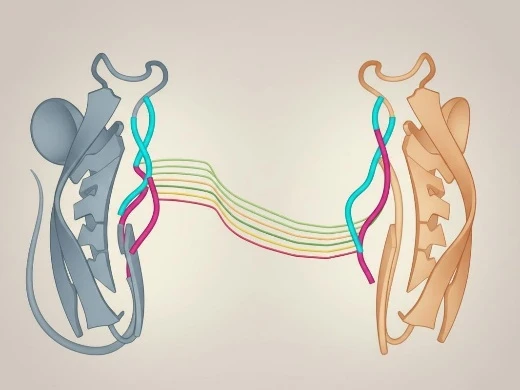
- V-Gene Repertoire Mining — Query against 1,000+ human germline V, D, and J genes to identify optimal acceptor frameworks with highest sequence identity and structural homology.
- CDR Canonical Classification — Automated classification of CDR loops into known canonical forms to preserve antigen-binding geometry during grafting.
- Back-Mutation Prediction — AI-guided identification of critical framework residues for back-mutation to restore affinity without reintroducing immunogenicity.
Ideal For: Murine hybridoma leads; rabbit monoclonals; camelid nanobody humanization; bispecific antibody engineering.
What We Offer:
Virtual biotechs receive 3–5 humanized variants with germline identity scores and CDR grafting rationale within weeks. Pharma teams get ranked candidates with SPR validated affinity retention before CMC investment.
Framework & Vernier Region Optimization
Structure-Guided Packing and Developability Filtering
Key Features:
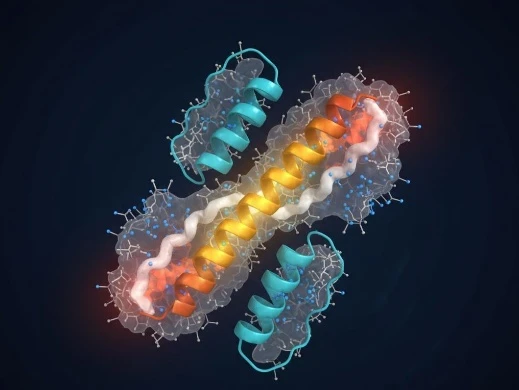
- Vernier Zone Mapping — Identification of framework residues that indirectly support CDR conformation (vernier region) for targeted optimization.
- Structure-Guided Packing — IgFold/DeepAb predictions of humanized Fv models to assess framework-CDR packing and side-chain clashes.
- Developability Filtering — Early screening for aggregation hotspots, charge asymmetry, and hydrophobic patches that emerge during humanization.
Ideal For: Humanized candidates with suboptimal expression; CDR grafts requiring framework shuffling; bispecific or ADC formats where stability is critical.
What We Offer:
Framework-optimized variants with improved expression titers and reduced aggregation risk. For ADC programs, we ensure humanized scaffolds tolerate conjugation chemistry without compromising target binding.
Immunogenicity Prediction & T-Cell Epitope Removal
MHC-II Binding Prediction and ADA Risk Scoring
Key Features:
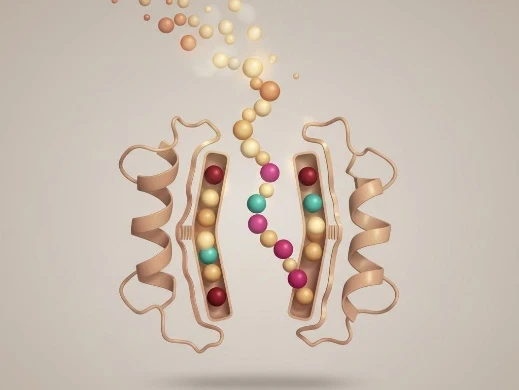
- MHC-II Binding Prediction — NetMHCIIpan and proprietary classifiers predict peptide-MHC-II binding across patient HLA haplotypes.
- T-Cell Epitope Excision — Conservative mutations that disrupt CD4+ T-cell epitopes while preserving protein structure and CDR geometry.
- ADA Risk Scoring — Composite immunogenicity score integrating MHC binding, peptide stability, and sequence similarity to human proteome.
Ideal For: First-in-human antibody programs; repeated-dosing therapeutics; biosimilar immunogenicity risk assessment.
What We Offer:
An immunogenicity risk report with per-variant ADA scores, epitope maps, and recommended de-risking mutations. For IND-enabling programs, we deliver documentation suitable for regulatory immunogenicity sections.
Platform Instrumentation
Core Instruments
| Instrument | Capability |
|---|---|
| NVIDIA DGX H100 | AI germline matching and immunogenicity model inference |
| Schrödinger BioLuminate | Antibody structure prediction and humanization workflow automation |
| Cytiva AKTA Avant 150 | Automated purification of humanized variants for biophysical characterization |
| Biacore 8K+ | High-throughput SPR affinity ranking of grafted candidates |
| NanoTemper Monolith NT.115 | Microscale thermophoresis for rapid affinity and stoichiometry validation |
| Malvern Zetasizer Ultra | DLS for aggregation propensity and colloidal stability screening |
| Wyatt Eclipse SEC-MALS | Separation and absolute molecular weight determination |
| Thermo Scientific Vanquish UHPLC | Analytical purity and charge variant profiling |
| IntelliCyt iQue3 | High-throughput cell-based immunogenicity screening (PBMC activation) |
Standardized Workflow
Project Workflow
A milestone-driven execution system from non-human sequence to humanized candidate.


01 Target Review
- Non-human sequence assessment and V-gene identification
- Target indication and dosing regimen (immunogenicity context)
02 AI Humanization
- Germline matching and CDR grafting design
- Framework and vernier optimization
03 Biophysical Ranking
Deliverable: Biophysical ranking report04 Immunogenicity Filter
- MHC-II binding and T-cell epitope prediction
- ADA risk scoring and epitope removal design
05 Validation
- Gene-to-protein production of lead variant
- Cell-based immunogenicity assay (PBMC)
Sample Requirements
- Non-human antibody sequences (VH/VL or VHH) in FASTA format
- Known antigen information (epitope, target structure if available)
- Desired humanization format (IgG1, IgG4, scFv, bispecific)
- Prior immunogenicity data (if any)
Standard Deliverables
- 3–5 humanized variant sequences with germline identity scores
- CDR grafting rationale and back-mutation predictions
- SPR / MST affinity comparison vs. parental
- Immunogenicity risk report (MHC-II binding, T-cell epitope map)
- Developability assessment (aggregation, charge, hydrophobicity)
- Final technical report with CMC recommendations
Frequently Asked Questions
Case Study
Case Study: Purely Computational Antibody Humanization via Systematic Energy Ranking
Goal: Benchmark CUMAb, a fully computational antibody humanization platform that replaces homology-driven grafting with Rosetta all-atom energy scoring across >20,000 human frameworks.
Key Data:
- Systematic scale: Automated screening of >20,000 human germline frameworks (all V/J combinations) via Rosetta energy ranking, expanding far beyond the few dozen homologous templates used conventionally.
- Affinity retention: Five independent antibodies humanized without back mutation exhibited affinities comparable to parental animal antibodies (e.g., anti-QSOX1 Ki ~0.7–1.2 nM).
- Atomic precision: Crystal structure of a CUMAb design superimposed on the parental antibody at 0.7 Å Cα RMSD despite 51 framework mutations, confirming structural fidelity.
Why it matters: This independent study demonstrates that energy-based computational humanization outperforms homology-driven approaches by identifying nonhomologous frameworks that preserve—or improve—binding and stability. The one-shot, back-mutation-free workflow validates Rosetta energy scoring for therapeutic antibody engineering, directly supporting our computational protein design capabilities.
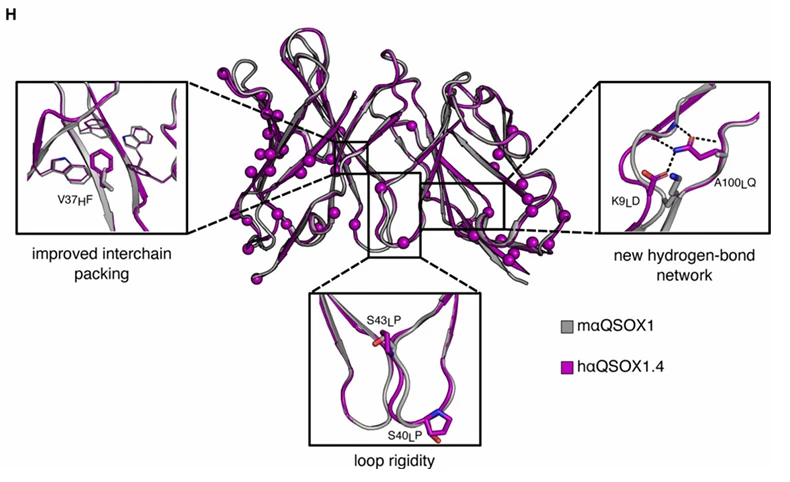
Figure 1. Structural alignment of the CUMAb-humanized antibody hαQSOX1.4 (magenta; PDB 8AON) with the parental mouse antibody (gray; PDB 4IJ3), showing a Cα RMSD of 0.7 Å despite 51 framework mutations. (Tennenhouse A.; et al. 2024)
Reference
Tennenhouse A, et al. Computational optimization of antibody humanness and stability by systematic energy-based ranking. Nat Biomed Eng. 2024 Jan;8(1):30-44.
Our technical team responds within 24 hours. All inquiries protected under NDA.