Natural Product Production & Extraction
 Metabolic Engineering
  Heterologous Fermentation
  AI Pathway Optimization
  GMP-Aligned Scale-Up
Natural products provide privileged scaffolds for first-in-class therapeutics, but ecological supply constraints—seasonal harvests, low native abundance, and batch-to-batch variability—kill development programs before they reach IND. The Creative Biostructure platform replaces unreliable plant extraction with engineered microbial cell factories: computational pathway design, CRISPR strain optimization, and fed-batch fermentation deliver gram-per-liter titers of complex molecules once considered impossible to manufacture. Whether you are a seed-stage biotech securing supply chain continuity or a pharma team de-risking procurement for a rare lead, we transform identified isolates into industrial-grade, audit-ready production streams.
Why Natural Product Production Is the Critical Bridge Between Isolation and IND?
A structurally characterized natural product is not a drug candidate until it is reproducibly supplyable. Seed-stage biotechs watch promising Hit-to-Lead programs stall because a rare plant alkaloid cannot be resynthesized or resourced. Pharma teams pursuing membrane-protein modulators or PPI disruptors face procurement volatility: agricultural commodity pricing, climate-driven harvest failures, and geopolitical sourcing restrictions convert a development asset into a supply-chain liability.
The Creative Biostructure platform eliminates that dependency. We integrate in silico biosynthetic gene cluster (BGC) mining, computational flux balance analysis, and industrial fermentation scale-up into a single execution system. Engineered S. cerevisiae or E. coli strains replace seasonal plant harvesting; AI-driven enzyme evolution and pathway rebalancing maximize titers; GMP-aligned downstream extraction delivers batch-to-batch consistent material—creating a closed loop between structural identification and IND-enabling development.
Our Core Advantages
Computation-First Pathway Design
AI-driven BGC mining identifies silent biosynthetic clusters from metagenomic data; codon optimization and host selection are performed in silico before a single PCR reaction. Flux balance analysis predicts yield bottlenecks, directing CRISPR edits to rate-limiting enzymes and competing pathways.
Strain Engineering Depth, Not Just Gene Insertion
Iterative Design-Build-Test-Learn (DBTL) cycles combine genome-scale metabolic modeling with directed evolution. Precursor pathway upregulation, competing pathway knockouts, and enzyme fusion engineering achieve >10–100× titer improvements over native expression.
Single-Vendor Scale-Up Accountability
From 50 mL shaker-flask screening to 5–50 L bioreactor pilot runs, one project team manages upstream fermentation, downstream extraction, and analytical QC. No handoff delays between a synthetic biology shop and a CMO. Your material arrives with full strain lineage documentation, CoA, and impurity profiles ready for preclinical ADMET.
Natural Product Production Technology Suite
Heterologous Pathway Construction
From Genome Mining to Functional Biosynthesis
Key Features:
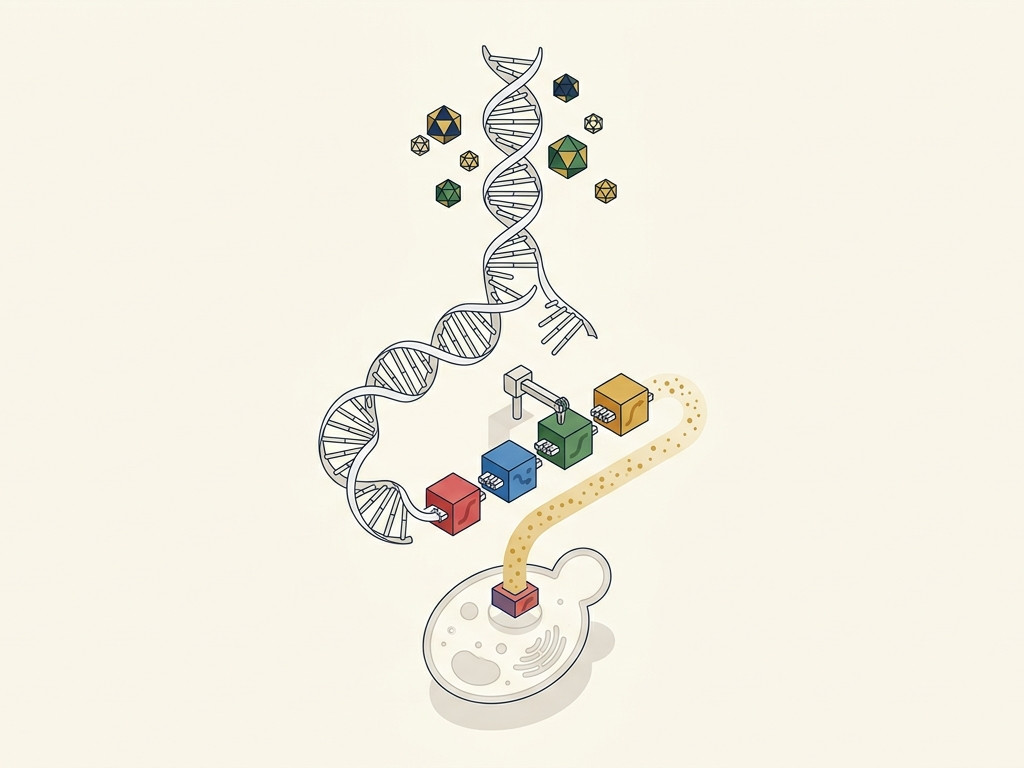
- Computational BGC mining: AI-based structure prediction and co-evolutionary analysis identify silent biosynthetic gene clusters encoding novel secondary metabolites from unculturable microorganisms or plant transcriptomes.
- Codon-optimized heterologous assembly: BGC refactoring via Golden Gate, Gibson, or yeast TAR cloning into S. cerevisiae or E. coli chassis selected by in silico precursor compatibility modeling.
- Host selection intelligence: Molecular docking and ADMET prediction guide chassis choice based on precursor pool availability, P450 compatibility, and post-translational modification requirements.
Ideal For: Complex terpenes, alkaloids, polyketides, and non-ribosomal peptides from unculturable or endangered source organisms; novel BGCs identified via genome mining but never heterologously expressed.
What We Offer:
For seed-stage biotechs, this means accessing synthetic biology capabilities without building a strain engineering team or maintaining BSL-2 fermentation infrastructure. For pharma teams, our platform unlocks the "dark matter" of microbial natural products—BGCs from unculturable soil bacteria or rare marine fungi—delivering patentable, engineered strains with full genotype documentation.
Strain Engineering & Optimization
DBTL Cycles Powered by Computational Metabolism
Key Features:
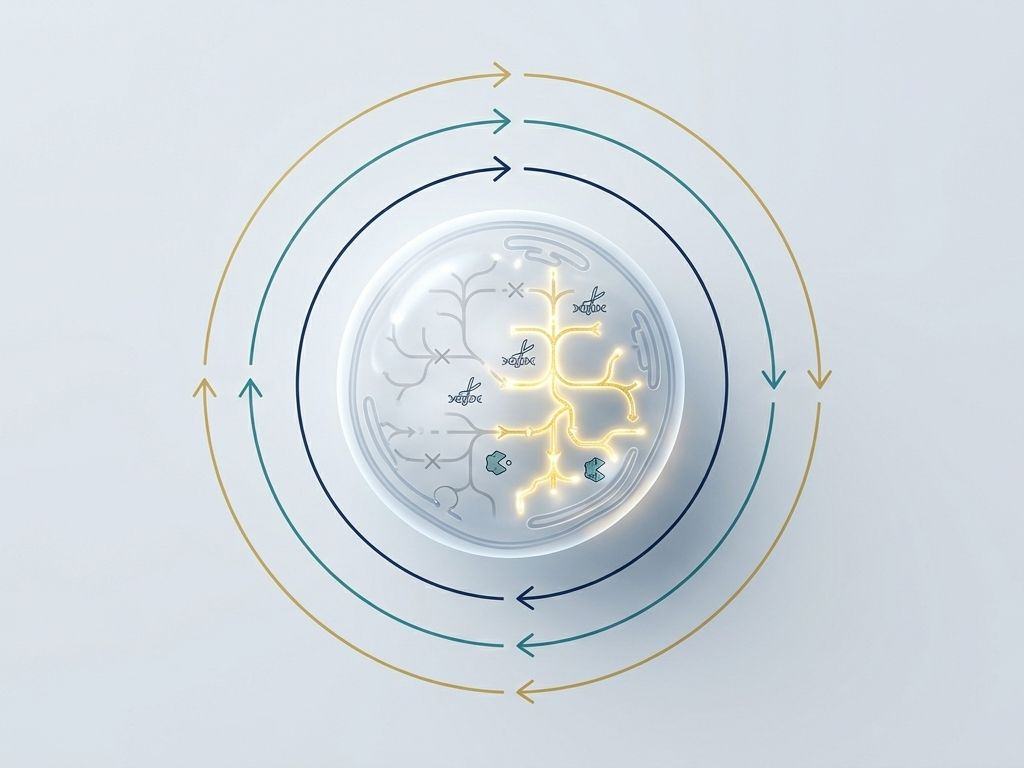
- Genome-scale metabolic modeling (GEM): Flux balance analysis (FBA) and molecular dynamics simulations of enzyme-substrate complexes predict pathway bottlenecks before experimental intervention.
- Combinatorial enzyme screening: ML-guided directed evolution optimizes rate-limiting enzyme kinetics; CRISPR-mediated competing pathway knockouts redirect carbon flux toward target production.
- Enzyme fusion engineering: Protein-linker optimization via computational structural modeling reduces intermediate diffusion loss, boosting metabolic flux—validated pre-experimentally by protein-protein docking.
Ideal For: Titer improvement from milligram-per-liter to gram-per-liter scale; rescue of low-yield heterologous pathways; optimization of complex multi-step PKS/NRPS assembly lines.
What We Offer:
Traditional strain engineering relies on random mutagenesis and high-throughput screening. Our computation-first approach uses FEP-derived binding affinity predictions and flux modeling to prioritize the highest-impact genetic edits, reducing DBTL cycle count by 30–40%. For biotechs, this conserves runway; for pharma, it delivers audit-ready strain lineages with every edit traced to a computational hypothesis.
Fermentation Scale-Up & Extraction
From Shake Flask to Pilot Bioreactor
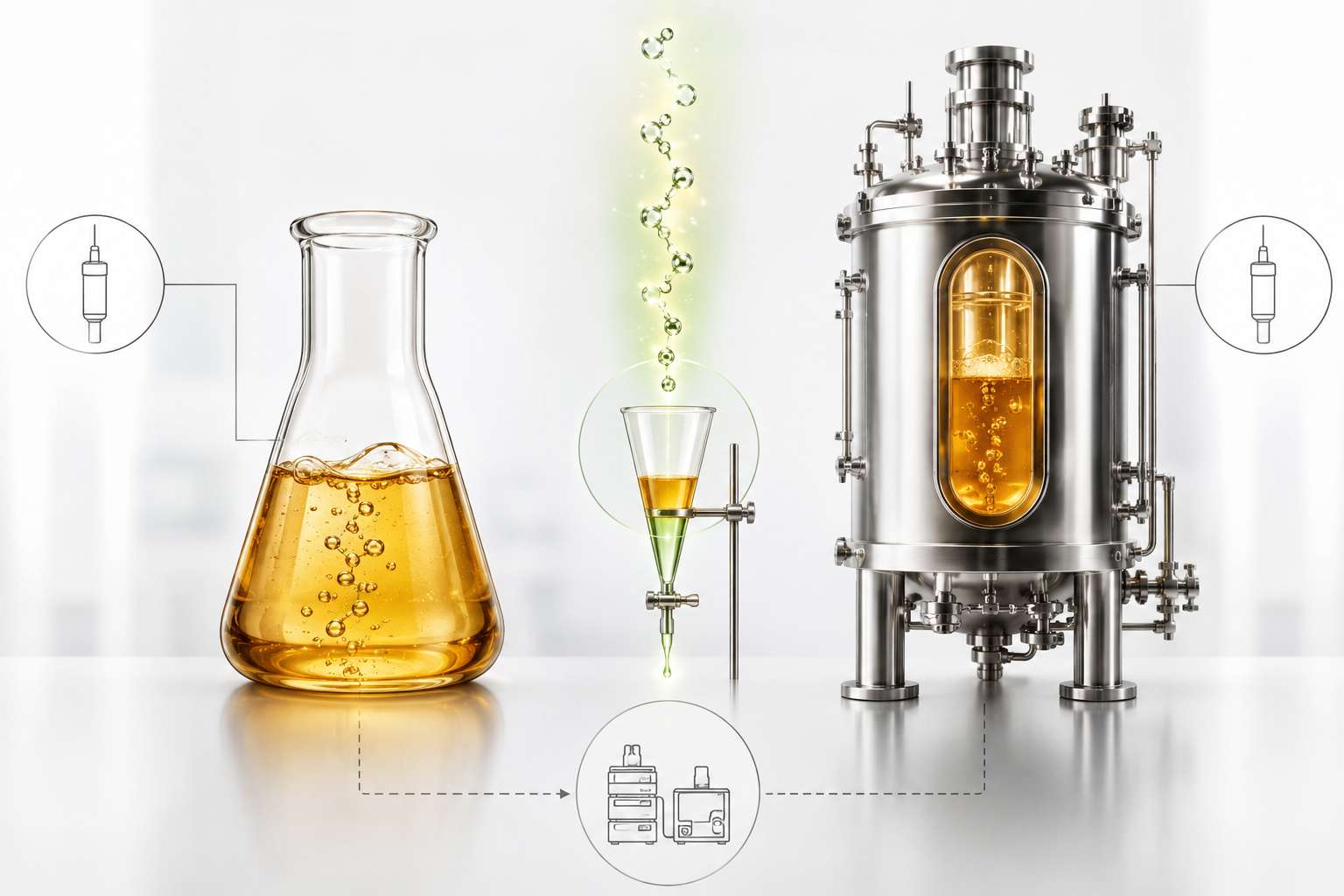
Key Features:
- Predictive scale-up modeling: Computational fluid dynamics (CFD) and AI-driven process analytics optimize dissolved oxygen, pH, and feeding strategies before bioreactor deployment.
- Real-time process analytical technology (PAT): Inline LC-MS and spectroscopic monitoring tracks titer, purity, and impurity profiles throughout the fermentation run.
- Green downstream extraction: Response Surface Methodology (RSM) and ultrasound-assisted extraction (UAE) optimize solvent composition and recovery yield; flash chromatography and prep-HPLC deliver >95% purity product.
Ideal For: Multi-hundred-milligram to multi-gram production for IND-enabling studies; process chemistry documentation for CMO tech-transfer; batch-to-batch consistency validation.
What We Offer:
For biotechs advancing to preclinical development, our 5–50 L pilot fermentation delivers sufficient API for zebrafish toxicity screening and in vitro ADMET profiling without committing to commercial CMO minimum orders. For pharma, GMP-aligned protocols and full batch records de-risk regulatory review and supply chain qualification.
Platform Instrumentation
| Instrument | Throughput / Sensitivity |
|---|---|
| Sartorius Biostat B-Plus 5L | Fed-batch and continuous culture; BioPAT® module for real-time pH/DO/biomass monitoring |
| Eppendorf BioFlo 120 | 5L pilot fermentation with advanced process control for scale-up validation |
| Waters AutoPurification System | Prep-HPLC for downstream purification; mass-triggered fraction collection |
| Bruker AVANCE NEO 600 MHz | Process analytical NMR for real-time fermentation metabolite quantification |
| Waters Xevo G2-XS QTof | LC-MS/MS for titer monitoring, impurity profiling, and identity confirmation |
| Sanger Sequencing / NGS Platform | Strain genotype verification and BGC assembly confirmation |
Platform specifications are subject to continuous upgrade. Contact our team for instrument availability and project-specific capability assessment.
Standardized Workflow
Project Workflow
A standardized, milestone-driven execution system. From biosynthetic pathway analysis to purified product delivery—managed by a single project team, tracked in real time.


01 Pathway Design & BGC Mining
- In silico BGC mining from metagenomic or source organism transcriptomic data
- Codon optimization and chassis selection via precursor compatibility modeling
- Construct design and cloning strategy with synthetic accessibility scoring
Deliverable: Pathway design report + BGC construct map + host selection rationale
02 Heterologous Assembly & Transformation
- BGC assembly via Golden Gate / Gibson / TAR cloning
- Transformation into optimized S. cerevisiae or E. coli chassis
- Primary clone screening by LC-MS; highest-producing clone identification
Deliverable: Validated heterologous strain with genotype documentation + primary titer data
03 Strain Engineering & Optimization
- Genome-scale metabolic modeling and flux balance analysis for bottleneck prediction
- CRISPR-mediated competing pathway knockout and precursor upregulation
- AI-guided enzyme engineering via directed evolution and fusion optimization
Deliverable: Optimized production strain with engineered lineage report + improved titer data
04 Fermentation Scale-Up & Extraction
- Shaker-flask to 5L bioreactor scale-up with CFD-optimized feeding and aeration protocols
- Real-time PAT monitoring (pH, dissolved oxygen, biomass, titer)
- Downstream extraction (liquid-liquid, flash chromatography, prep-HPLC) and purification
Deliverable: Scaled product batch + extraction protocol + process analytics report
05 QC, Documentation & Delivery
- HPLC/LC-MS purity and identity confirmation (≥95%)
- Certificate of Analysis and impurity profiling
- Strain lineage documentation and regulatory-formatted batch records
- Hit-to-Lead / Lead Optimization / ADMET-Tox transition plan
Deliverable: Final product + CoA + regulatory data package
Sample Requirements
| Requirement | Specification |
|---|---|
| Source Organism | Genus/species, tissue type, or genomic/transcriptomic data; metagenomic sequences for unculturable sources |
| Target Compound | Structure, CAS, or reference literature preferred; biological activity data acceptable for BGC-guided prioritization |
| Production Scale | Milligram, gram, or multi-gram (defined per project scope) |
| Prior Data | Biosynthesis reports, enzyme sequences, or structural data helpful for BGC identification |
Standard Deliverables
- Heterologous production strain(s) with full genotype documentation
- Fermentation optimization report with titer trajectory data (mg/L to g/L)
- Analytical QC data: HPLC/LC-MS purity, identity confirmation, and impurity profiling
- Purified product (quantity per project agreement)
- Process development report: upstream fermentation and downstream extraction protocols
- Certificate of Analysis and regulatory-formatted batch records
Frequently Asked Questions
Case Study
Case Study: Precision Extraction Optimization for Bioactive Anthocyanins: A QbD Template for Natural Product Supply Chains
Goal: Replace empirical solvent extraction with a predictive, optimized protocol for recovering high-value anthocyanins and polyphenols from agricultural biomass, establishing a "Quality by Design" (QbD) benchmark for scalable natural product extraction.
Key Data:
- Predictive modeling: Response Surface Methodology (RSM) with Central Composite Design mapped the interaction effects of ethanol-to-methanol ratio, water-to-alcohol ratio, and citric acid concentration on extraction yield.
- Process intensification: Ultrasound-Assisted Extraction (UAE) achieved in 20 minutes what traditional maceration requires hours to accomplish, with superior antioxidant recovery.
- Optimized solvent matrix: Identified a specific water-alcohol-acid balance achieving statistically significant increase in total anthocyanin recovery with minimal solvent waste.
- Robust validation: High correlation between predicted and experimental values (R² > 0.95) confirmed process readiness for pilot-scale tech transfer.
Why it matters:
For drug developers, this peer-reviewed case demonstrates that natural product extraction is no longer an empirical art. By applying RSM and acoustic cavitation, R&D teams can generate standardized, reproducible extraction SOPs that guarantee maximum potency, minimal waste, and a faster path from raw biomass to purified active ingredient—critical for IND-enabling batches where batch-to-batch consistency is non-negotiable.
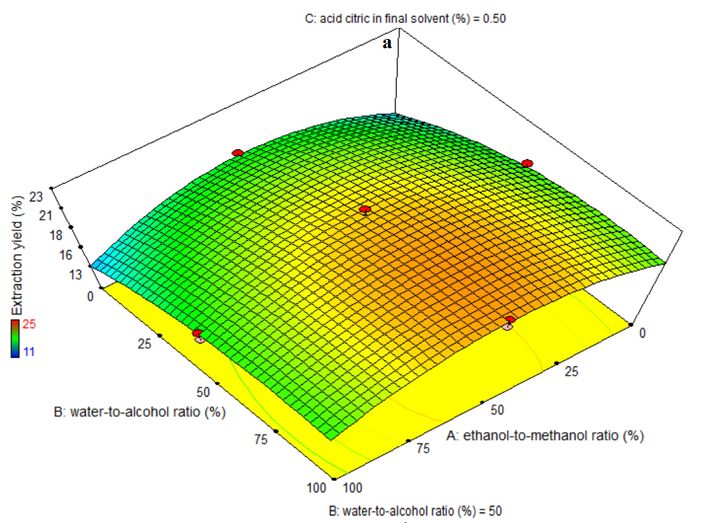
Figure 1. Response surface plot showing interaction effects of ethanol-to-methanol ratio (factor A) and water-to-alcohol ratio (factor B) on eggplant peel extraction yield at intermediate citric acid level (factor C). (Shahabi Mohammadabadi S, et al., 2022)
Reference:
- Shahabi Mohammadabadi S, Goli M, Naji Tabasi S. Optimization of Bioactive Compound Extraction from Eggplant Peel by Response Surface Methodology: Ultrasound-Assisted Solvent Qualitative and Quantitative Effect. Foods. 2022 Oct 19;11(20):3263.
Our technical team responds within 24 hours. All inquiries protected under NDA.