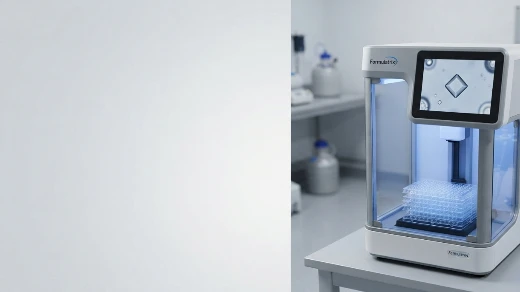
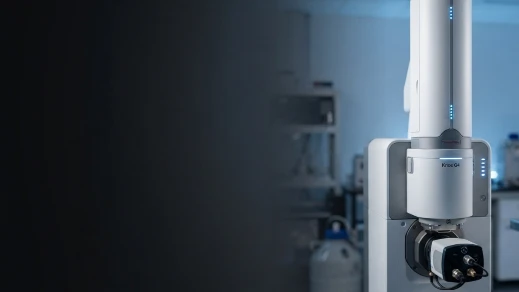
Micro-ED Services
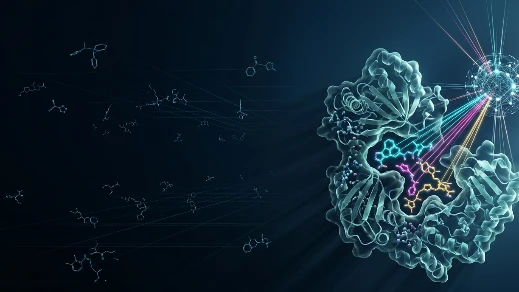
 Continuous-Rotation MicroED
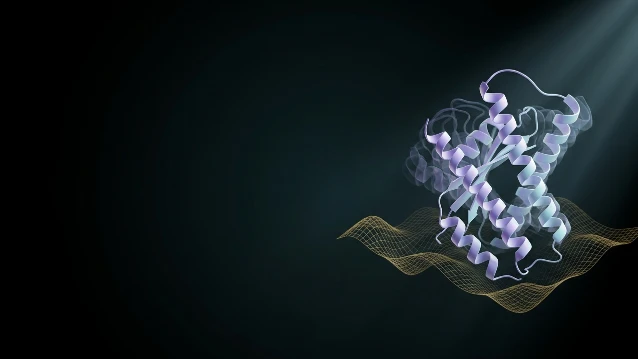
  Event-Based Electron Counting
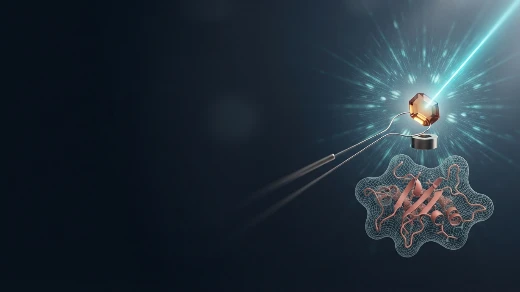
  Polymorph & Absolute Configuration
 Single crystals larger than 50 µm are a luxury most drug targets cannot afford. We determine atomic structures from nanocrystals (<200 nm) and microcrystalline powders using continuous-rotation electron diffraction, event-based direct detection, and AI-assisted indexing — bypassing the crystallization bottleneck that kills AI-Assisted X-ray Crystallography Services pipelines.
Why Micro-ED Is the Critical Foundation
Structure determination without a crystal is a map without coordinates. Seed-stage biotechs synthesizing novel scaffolds rarely produce milligram-scale single crystals; big-pharma teams battling polymorph landscapes need rapid salt-form and co-crystal identification from powder batches. Our platform integrates continuous-rotation Micro-ED with event-based electron counting and AI-driven indexing, delivering atomic-resolution structures directly into Molecular Docking Services and Drug Design & Library Analysis workflows.
What Sets the Platform Apart
No Single-Crystal Required
Structures are determined from nanocrystals (>100 nm) or microcrystalline powders that fail conventional AI-Assisted X-ray Crystallography Services, eliminating months of crystallization optimization.
Sub-Ångström Resolution
Electron-crystal interaction is 10,000× stronger than X-rays, enabling atomic resolution (0.7–1.0 Å) from vanishingly small crystals for unambiguous stereochemistry and hydrogen-atom visualization.
Rapid Turnaround
AI-assisted crystal screening and automated data collection compress structure determination from weeks to 1–3 days, accelerating Lead Optimization cycles.
Technology Suite
AI-Enhanced Microcrystal Screening & Data Collection
Continuous-Rotation MicroED with Event-Based Electron Counting and AI Crystal Localization
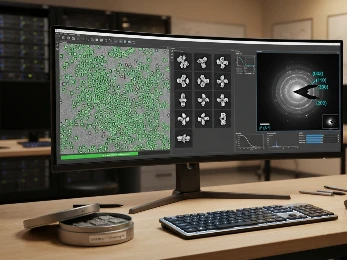
Key Features:
- Continuous-Rotation MicroED — Crystals are rotated through a full tilt series (±70°) while diffraction patterns are collected at <10 e⁻/Ų total dose, preserving radiation-sensitive samples.
- Event-Based Electron Counting — Apollo direct electron detectors in counting mode capture individual electron events, boosting signal-to-noise by >300% over analog detectors and enabling sub-minute data collection.
- AI Crystal Localization — Deep-learning models trained on crystallographic databases automatically locate optimal nanocrystals in imaging mode and predict diffraction quality, reducing manual screening time by 80%.
- FIB-Milling for Proteins — Focused ion-beam thinning of vitrified protein microcrystals produces ideal lamellae (100–200 nm) for high-resolution data collection when native nanocrystals are unavailable.
Ideal For: Virtual biotechs with milligram-scale synthetic yields; difficult small molecules that resist Crystal Grade Protein Preparation; rapid polymorph screening for Hit to Lead validation.
What We Offer: A fully outsourced Micro-ED pipeline. You ship powder or suspension; we deliver indexed diffraction data, solved structures, and crystallographic information files (CIF). AI-assisted screening ensures no crystal is overlooked, while event-based counting maximizes resolution from minimal sample.
Structure Determination & Polymorph Analysis
Small-Molecule Structure Solution, Absolute Configuration, and Polymorph Identification
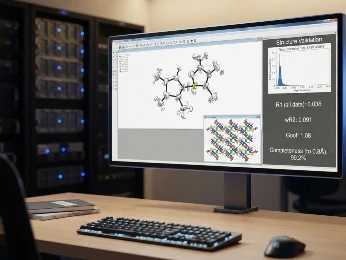
Key Features:
- Small-Molecule Structure Solution — Direct methods and dual-space recycling solve organic-molecule, natural-product, and API structures from MicroED data with accuracy equivalent to single-crystal XRD.
- Absolute Configuration Determination — Anomalous scattering and dynamical diffraction effects in MicroED enable unambiguous assignment of chiral centers, critical for Lead Optimization stereochemistry validation.
- Polymorph & Salt-Form ID — Powder batches are screened for multiple crystal forms; co-crystals are distinguished from salts by locating hydrogen atoms at sub-Ångström resolution.
- Mixture Deconvolution — MicroED can index and solve structures from mixed crystalline samples, identifying impurities and polymorphic contaminants at the nanocrystal level.
Ideal For: Pharmaceutical CMC and quality control; Fragment-based Screening (FBS) fragment structure confirmation; Natural Product Research & Development structural elucidation.
What We Offer: Every structure ships with a validation report: R1/Rfree, bond-length RMSZ, Flack parameter (for absolute configuration), and comparison against AI-Assisted X-ray Crystallography Services when available. Data packages are formatted for patent filings, IND submissions, and Molecular Dynamics (MD) Simulations input.
Platform Instrumentation
| Instrument | Capability |
|---|---|
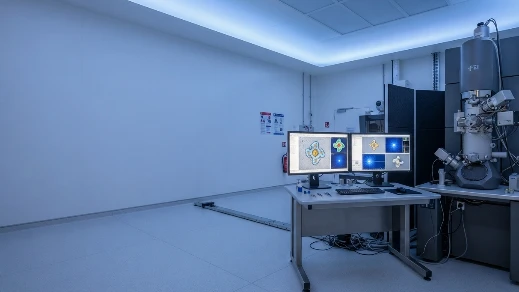
| Thermo Fisher Talos F200C / Krios G4 | 200–300 kV cryo-TEM with stable ±70° rotation stages for continuous-rotation MicroED |
| Apollo / Falcon 4 Direct Electron Detector | Event-based electron counting at >500 fps for high-SNR diffraction data collection |
| Vitrobot Mark IV | Automated plunge-freezing with humidity control for protein microcrystal vitrification |
| FIB-SEM (Thermo Fisher Helios) | Focused ion-beam milling of vitrified crystals to ideal 100–200 nm lamellae |
| NVIDIA DGX A100 | AI crystal localization, diffraction indexing, and structure solution acceleration |
| Polarized Light Microscope (PLM) | Pre-screening of powder samples for birefringence and crystal habit |
| Bruker D8 ADVANCE XRPD | Complementary X-ray powder diffraction for bulk phase identification |
| Crystallography Software Suite | XDS, DIALS, SHELX, and Olex2 for data processing and structure refinement |
Standardized Workflow
Project Workflow
A milestone-driven system from powder to atomic coordinates.


01 Sample Assessment
- PLM/XRPD pre-screening for crystallinity
- Sample requirement review (powder, suspension, or crystal slurry)
- Deliverable: Feasibility assessment + screening strategy
02 Crystal Screening & Prep
- AI-assisted microcrystal localization on grid
- FIB-milling (if needed) for protein lamellae
- Deliverable: Grid quality report + crystal map
03 Data Collection
- Continuous-rotation MicroED at low dose (<10 e⁻/Ų)
- Event-based detector data collection (~50 s per crystal set)
- Deliverable: Indexed diffraction dataset + data quality statistics
04 Structure Solution
- Indexing and integration (XDS/DIALS)
- Direct methods / dual-space recycling
- Deliverable: Solved structure + refinement report
05 Validation & Delivery
- Structure validation (R1, Flack parameter)
- CIF and PDB deposition-ready files
- Deliverable: Final structure + validation package + downstream handoff to Molecular Docking Services
Sample Requirements
- Sample Form: Crystalline powder, microcrystal slurry, or suspension; >1 mg preferred for small molecules
- Target Type: Small organic molecules, peptides, natural products, proteins, or MOFs
- Prior Data: XRPD pattern, PLM images, or known unit cell parameters (if available)
- Stability: Room-temperature stable (small molecules) or cryo-compatible (proteins)
- Downstream Goal: Lead Optimization, polymorph screening, absolute configuration confirmation, or Fragment-based Screening (FBS) hit validation
Standard Deliverables
- Solved crystal structure in CIF/PDB format with atomic coordinates and thermal parameters
- Crystallographic statistics (R1, wR2, GOF, Flack parameter, completeness, resolution)
- Indexed diffraction images and data processing log files
- Absolute configuration report (for chiral compounds)
- Polymorph identification summary (if multiple forms detected)
- Final technical report with structural interpretation and SBDD recommendations
Frequently Asked Questions
Case Study
Case Study: Fast Event-Based Electron Counting for Small-Molecule Structure Determination by MicroED
Goal: Evaluate an event-based direct electron detection strategy for MicroED that accelerates small-molecule data collection while maintaining sub-Ångström resolution.
Key Findings:
- Detector performance: The Apollo direct electron detector in counting mode delivered >300% signal-to-noise improvement over conventional scintillator-based systems, enabling structure determination from smaller and more radiation-sensitive crystals.
- Resolution validation: Test compounds were solved to sub-Ångström resolution with structural accuracy equivalent to single-crystal X-ray diffraction, confirming the technique's reliability for pharmaceutical applications.
- Workflow acceleration: The reduced acquisition time and enhanced detector sensitivity compress the total structure-determination pipeline from days to hours.
Industrial Translation: This independent study demonstrates that event-based electron counting has transformed MicroED from a specialized technique into a high-throughput structural tool. For biotechs and pharma teams, this means faster turnaround on API characterization, polymorph screening, and absolute configuration confirmation — directly supporting our Micro-ED Services platform's core value of rapid, atomic-resolution structure determination from minimal sample.
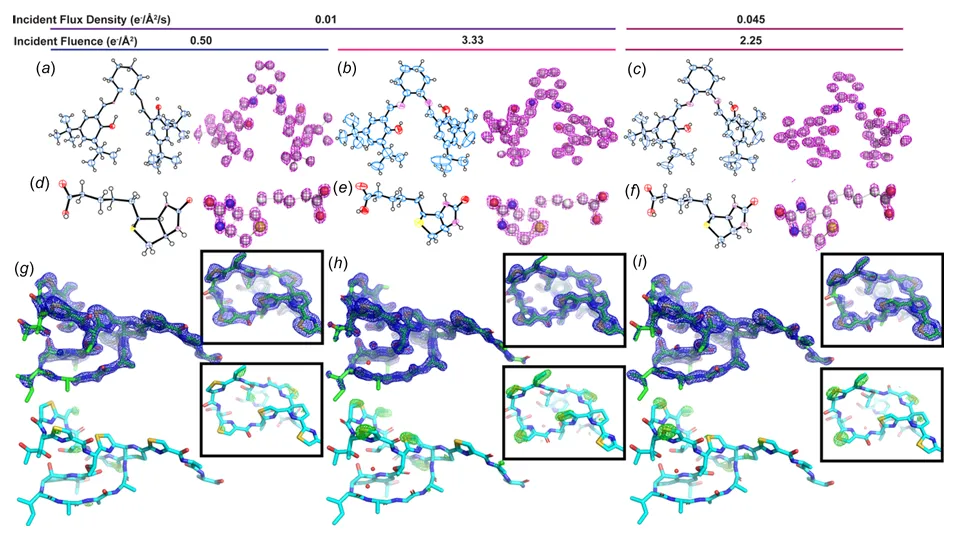
Figure 1. Small-molecule and thiopeptide structures determined from nanocrystal MicroED data using event-based electron counting.
Reference
Vlahakis N, et al. Fast event-based electron counting for small-molecule structure determination by MicroED. Acta Cryst C Struct Chem. 2025;81(Pt 3):116–130.
Our technical team responds within 24 hours. All inquiries protected under NDA.