HTS/DEL Library Screening Results Analysis
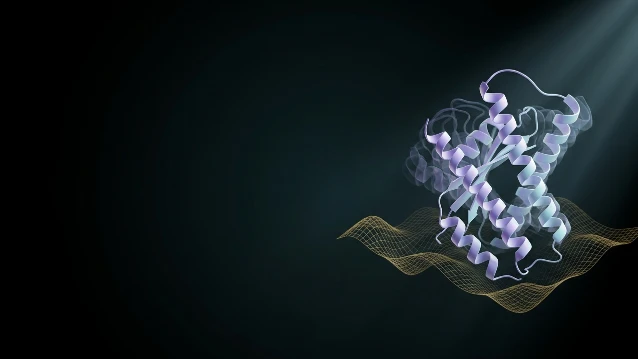
 ML-Trained Hit Scoring
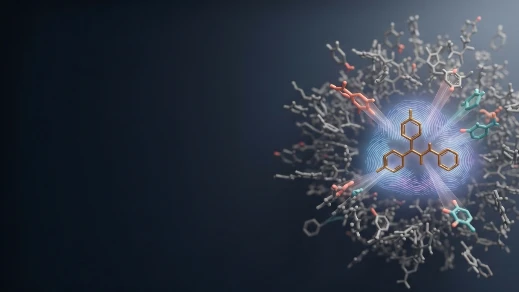
  DEL Deconvolution
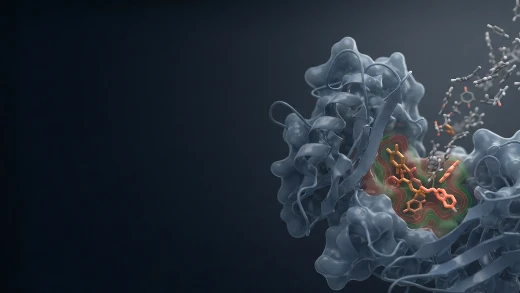
  Wet-Lab Validation
 Raw HTS/DEL data is a goldmine that most teams cannot refine. MagHelix™ deploys AI-trained triaging and chemoinformatics clustering to convert screening output into experimentally validated hit series.
Why HTS/DEL Data Analysis Is the Critical Bridge Between Screening and Synthesis?
A seed-stage biotech runs one DEL screen but lacks the informatics to decode DNA barcodes into structures or filter PAINS. A pharma team generates 1 billion data points but cannot connect sequencing reads to medicinal chemistry decisions. The MagHelix™ platform closes this gap: we decode DEL barcodes, triage HTS hits with ML models calibrated on our internal SPR/BLI/ITC database, and hand off prioritized series to Hit to Lead with full structural rationale.
What Sets the Analysis Platform Apart
AI-Trained Hit Triaging
ML models trained on internal biophysical data (R² > 0.75) classify true binders vs. PAINS, aggregators, and fluorescent artifacts. ADMET Prediction & Modeling flags liabilities before prioritization.
DEL-Specific Deconvolution
Proprietary pipelines decode split-and-pool DNA barcodes, calculate enrichment scores with confidence intervals, and map Structure-Enrichment Relationships (SER).
Wet-Lab Validation Loop
Ranked hits proceed directly to Hit Biophysical Characterization, Molecular Docking Services, or Co-crystallization.
The HTS/DEL Analysis Suite
HTS Data Analysis & Hit Triaging
From Raw Plate Reads to Prioritized Hit Lists
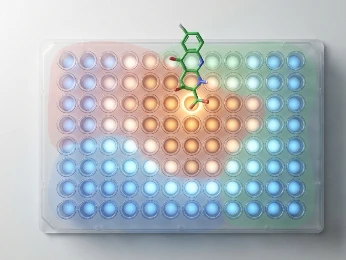
- Data QC & Normalization — Z'-factor calculation, signal-to-noise assessment, and plate-edge correction across multi-million-compound campaigns.
- ML False-Positive Filtering — Random Forest and graph neural network classifiers trained on confirmed binders vs. PAINS/aggregators.
- Multi-Parameter Optimization — Consensus scoring integrating activity, selectivity, ADMET flags, and synthetic accessibility.
For virtual biotechs without cheminformatics teams, our triaging delivers a Tier-1 hit list within 48 hours. For pharma, protocols integrate with Pharmacophore Modeling & Screening and Structure-Based Virtual Screening (SBVS).
DEL Deconvolution & SER Mapping
DNA Barcode Decoding to Chemical Intelligence
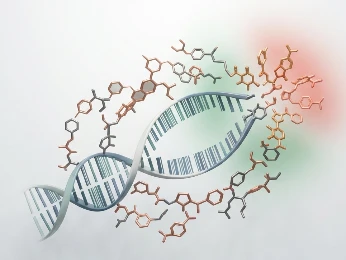
- Sequencing Data Processing — FASTQ parsing, barcode error correction, and copy-number normalization for Illumina output.
- Enrichment Scoring — Z-score, effect-size, and Poisson-based calculations with FDR control per building-block combination.
- SER Mapping — Identification of privileged scaffolds and synergistic building-block pairs driving target affinity.
Most DEL providers return raw sequencing files. Our pipeline translates DNA counts into enrichment maps, enabling direct comparison with Ligand-Based Virtual Screening (LBVS) and QSAR Analysis.
SAR Analysis & AI Hit Expansion
Chemical Intelligence for Medicinal Chemistry
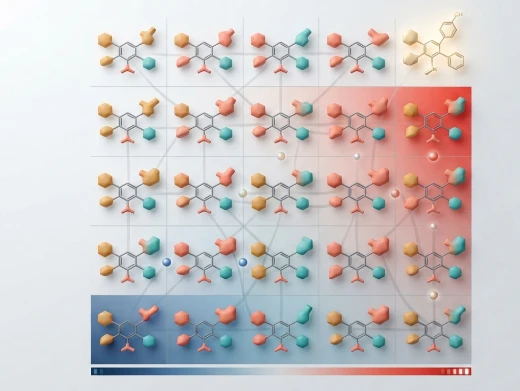
- R-Group Decomposition — Automated fragmentation to identify potency-driving functional groups.
- Activity Cliff Detection — Structural alerts where minor modifications cause large affinity shifts.
- AI Generative Expansion — VAE and GAN models propose novel analogs in underexplored chemical space.
For Fragment-to-Lead programs, SAR mapping reveals which fragments merit scale-up. AI-expanded analogs feed directly into De Novo Drug Design on the MagHelix™ AI-Based Drug Discovery (AIDD) Platform.
Platform Instrumentation
| Software / System | Core Capability |
|---|---|
| KNIME / Pipeline Pilot | Automated HTS/DEL data workflows, plate-map integration, and multi-source data fusion. |
| RDKit / OpenEye | Chemical informatics, fingerprint generation, and molecular property calculation. |
| Scikit-learn / XGBoost / ChemProp | ML model training: Random Forest, SVM, MLP, and graph neural networks for hit classification. |
| Biacore 8K / S200 | High-throughput SPR binding confirmation and kinetics for AI-prioritized hits. |
| Octet RED96e | Label-free BLI screening for rapid hit validation and affinity ranking. |
| GROMACS 2023 / AMBER 22 | All-atom MD validation of AI-predicted hit poses and stability assessment. |
| CDD Vault / Dotmatics | ELN-integrated data management and handoff to Hit Biophysical Characterization. |
Standardized Workflow
Project Workflow
A standardized, milestone-driven execution system. From raw screening data to validated lead series—managed by a single computational project team, tracked in real time.


01 Data Ingestion & QC
- Receive HTS plate data or DEL FASTQ files.
- Structure curation and QC metrics.
- Z'-factor calculation, signal-to-noise assessment.
Deliverable: Curated dataset + QC report.
02 Hit Triaging & Clustering
- Activity thresholding.
- ML false-positive filtering.
- Chemical clustering.
Deliverable: Ranked hit list with ML confidence scores.
03 SAR Analysis & AI Expansion
- SAR matrix construction.
- SER mapping.
- AI generative expansion.
Deliverable: SAR deck + AI-expanded proposals.
04 Prioritization & Validation
- Multi-parameter ranking.
- Docking pose prediction.
- Wet-lab validation plan.
Deliverable: Validation set with poses and experimental plan.
05 Report & Handoff
- Tiered hit list, data package.
- Handoff to Hit to Lead.
- Transition plan.
Deliverable: Final report + data package + transition plan.
Sample Requirements
| Requirement | Details |
|---|---|
| HTS data | Plate-level activity values; compound structures (SDF/SMILES); assay protocol. |
| DEL data | Raw FASTQ/BAM or provider tables; library encoding scheme; synthesis chemistry. |
| Reference compounds | Known actives for ML calibration and retrospective benchmarking. |
| Project scope | Hit Identification, Fragment-to-Lead, or scaffold-hopping; target class and affinity range. |
| Prior data | Any SPR/BLI/ITC or ADMET flags for constraint design. |
Standard Deliverables
- Curated, QC-filtered dataset with full traceability
- Tiered hit list (Tier 1/2/3) with ML confidence scores
- SAR matrix with R-group decomposition and activity-cliff mapping
- Scaffold diversity analysis and chemical-space visualization
- AI-generated hit expansion proposals with synthetic scores (if contracted)
- Electronic data package for CDD Vault or MagHelix™ CADD Platform
- Direct handoff to Hit Biophysical Characterization, Molecular Docking Services, or Co-crystallization
Frequently Asked Questions
Case Study
Case Study: Cross-DEL and Cross-ML Assessment for CK1α/δ Hit Discovery
Published Evidence:
Iqbal S, et al. Evaluation of DNA encoded library and machine learning model combinations for hit discovery. Nat Commun. 2025;16:3434.
Key Findings:
- Three DNA-encoded libraries (MS10M, HG1B, DD11M) were screened against CK1α/δ. Chemical diversity, not library size, drove ML generalizability.
- Five ML models were trained per DEL and tested on 140,000 blind compounds. ChemProp achieved 16% confirmed hit rate; HG1B-trained models delivered the best out-of-library predictions.
- SPR validation of 808 compounds yielded 80 confirmed binders (10% hit rate) and 94% true-negative confirmation. Two nanomolar binders were discovered.
Industrial Translation:
The Broad Institute study demonstrates that DEL + ML extends hit discovery beyond the original library chemical space. For seed-stage biotechs, this eliminates costly off-DNA resynthesis by using ML-trained models to screen commercially available collections. For pharma teams, the cross-DEL ensemble approach maximizes hit diversity while minimizing false positives. Our MagHelix™ platform operationalizes this peer-reviewed paradigm within an audit-ready pipeline, pairing DEL deconvolution with ADMET Prediction & Modeling and Hit Biophysical Characterization to deliver chemistry-ready hit series.
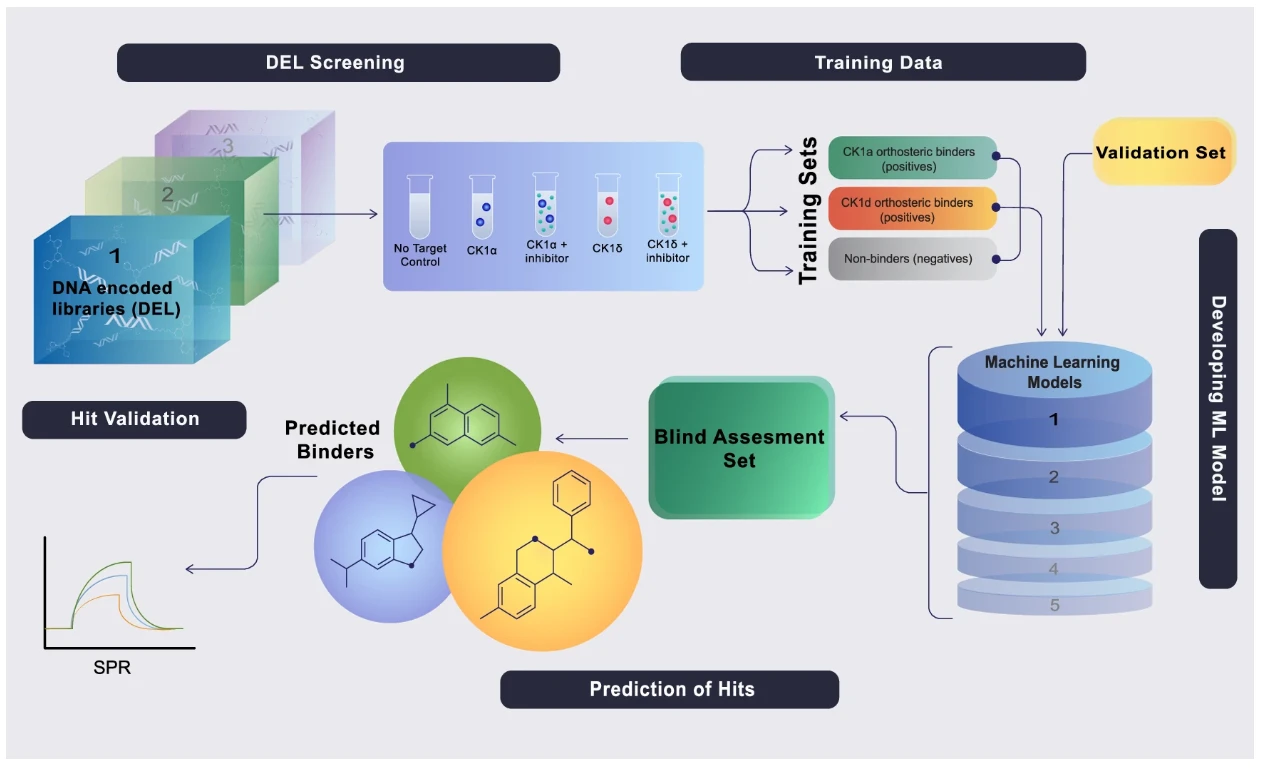
Figure 1. Schematic of the DEL + ML workflow for hit identification. (Iqbal S, et al. 2025)
Reference
- Iqbal S, et al. Evaluation of DNA encoded library and machine learning model combinations for hit discovery. Nat Commun. 2025;16:3434.
Need AI-enhanced HTS/DEL data analysis to transform your screening campaign into validated leads? Our team can design a customized pipeline tailored to your library type, target class, and milestones. Contact our scientific team today.