Drug-related Database Query & Data Integration
 NLP-Driven Literature Mining
  Knowledge Graph Neural Networks
  Wet-Lab Validation
 MagHelix™ unifies siloed drug data from ChEMBL, PubChem, and PDB into AI-built knowledge graphs, delivering wet-lab validated hypotheses.
Why Drug-related Database Query Is the Critical Bridge Between Data and Discovery?
Public databases hold millions of bioactivity points, yet they remain siloed. ChEMBL has small-molecule data; PDB has structural snapshots; LINCS has transcriptomic signatures. For virtual biotechs without a data science team, even a simple target lookup becomes a week-long manual exercise. For pharma teams, internal ELN data never meets external intelligence. The MagHelix™ platform closes this gap: we construct queryable knowledge graphs from heterogeneous sources, apply graph neural networks and NLP to predict novel drug-target-disease associations, and hand off ranked hypotheses to Molecular Docking Services and Hit Biophysical Characterization for orthogonal validation.
What Sets the Platform Apart
AI-Driven Knowledge Graphs
Graph neural networks and NLP models extract drug-target-disease relationships from ChEMBL, DrugBank, and biomedical literature, building queryable knowledge graphs.
Multi-Omics Integration
Transcriptomic, genomic, and proteomic datasets are harmonized with chemical structure databases to reveal polypharmacology and off-target liabilities.
Wet-Lab Validation Loop
Database-derived hypotheses proceed directly to SPR/BLI validation and Molecular Docking Services.
The Database Query & Integration Suite
Multi-Database Query & Knowledge Graph Construction
Unify ChEMBL, PubChem, DrugBank, and PDB into Queryable Intelligence
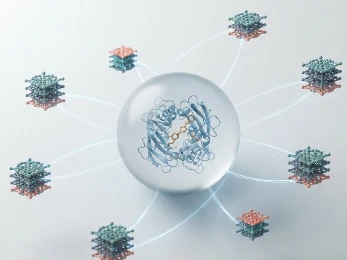
- Structured & Unstructured Data Mining — Automated querying of ChEMBL, PubChem, DrugBank, PDB, BindingDB, and patent databases via APIs and web services.
- Knowledge Graph Construction — Neo4j-based graph databases linking drugs, targets, diseases, and pathways with semantic relationships.
- Ideal For — Target identification, drug repurposing, competitive landscape analysis, and De Novo Drug Design seeding.
For biotechs without database infrastructure, we deliver a queryable knowledge graph within one week. For pharma, graphs integrate with internal ELN and CDD Vault via automated pipelines.
Bioinformatics Data Integration & Pipeline Orchestration
Harmonize Genomics, Transcriptomics, and Proteomics with Chemical Data
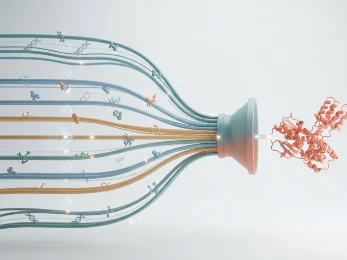
- Multi-Omics Harmonization — Integration of genomics, transcriptomics (CMap/LINCS), proteomics, and metabolomics with chemical bioactivity data.
- Pipeline Automation — KNIME-based workflows connecting public databases to internal ELN and MagHelix™ CADD Platform.
- Ideal For — Mechanism-of-action studies, biomarker discovery, and patient stratification for precision oncology.
When combined with ADMET Prediction & Modeling, multi-omics integration flags off-target liabilities before synthesis commitment.
AI-Enhanced Data Mining & Predictive Analytics
Predict Drug-Disease Associations from Integrated Knowledge Graphs
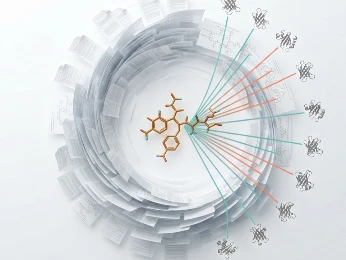
- NLP Literature Mining — Large language models extract drug-target interactions, adverse events, and repurposing signals from PubMed and clinical trial registries.
- Graph Neural Network Prediction — GNN models predict novel drug-disease associations and off-target profiles from integrated knowledge graphs.
- Ideal For — ADMET liability flagging, polypharmacology profiling, and Hit Identification prioritization.
AI-predicted hypotheses feed directly into Structure-Based Virtual Screening (SBVS) and Ligand-Based Virtual Screening (LBVS) for consensus ranking.
Platform Instrumentation
| Software / System | Core Capability |
|---|---|
| Neo4j / Amazon Neptune | Knowledge graph construction and graph database query for drug-target-disease networks. |
| RDKit / ChEMBL Web Services | Chemical structure standardization and bioactivity data extraction from public repositories. |
| KNIME / Pipeline Pilot | Automated multi-source data integration workflows and ELN connectivity. |
| Biacore 8K / S200 | High-throughput SPR binding confirmation for database-derived drug-target hypotheses. |
| Octet RED96e | Label-free BLI screening for rapid validation of predicted protein-ligand interactions. |
| NVIDIA DGX / A100 Cluster | Large-scale graph neural network and NLP model training on integrated datasets. |
| CDD Vault / Dotmatics | Internal data management and seamless handoff to Hit Biophysical Characterization. |
Standardized Workflow
Project Workflow
A standardized, milestone-driven execution system. From database audit to validated hypotheses—managed by a single computational project team, tracked in real time.


01 Database Audit & Query Design
- Define data sources: ChEMBL, PubChem, PDB, internal ELN.
- Assess coverage gaps and data quality.
- Design query strategy across structured and unstructured databases.
Deliverable: Data source audit + query strategy.
02 Data Harmonization & Integration
- Extract and standardize bioactivity, structural, and omics data.
- Resolve chemical ambiguities and ID mapping.
- Harmonize multi-source datasets into unified schema.
Deliverable: Harmonized multi-source dataset.
03 Knowledge Graph Construction
- Build knowledge graph with drug-target-disease-pathway nodes.
- Validate topology against known benchmarks.
- Establish semantic relationships and queryable endpoints.
Deliverable: Queryable knowledge graph + topology report.
04 AI Mining & Hypothesis Generation
- Deploy NLP and GNN models for repurposing and liability prediction.
- Rank hypotheses by confidence scores.
- Cross-validate predictions against literature and known data.
Deliverable: Ranked hypothesis list with AI confidence scores.
05 Validation & Handoff
- Handoff to Molecular Docking Services, SBVS, or Hit Biophysical Characterization.
- Prepare validation plan and transition to wet-lab.
- Final report with all supporting data and provenance.
Deliverable: Final report + validation plan + transition to wet-lab.
Sample Requirements
| Requirement | Details |
|---|---|
| Target or disease | Target name, UniProt ID, disease indication, or pathway of interest |
| Data scope | Public databases only, or integration with internal ELN/HTS/DEL data |
| Prior data | Internal bioactivity, ADMET, or omics datasets for graph enrichment |
| Project scope | Target identification, drug repurposing, liability assessment, or competitive analysis |
| Output preference | Knowledge graph file, API endpoint, or integrated dashboard |
Standard Deliverables
- Queryable knowledge graph (Neo4j format or API) with full provenance
- Harmonized multi-source dataset with chemical structure standardization
- AI-predicted drug-target-disease association list with confidence scores
- Literature mining report with extracted mechanisms and adverse events
- Electronic data package for MagHelix™ CADD Platform integration
- Direct handoff to Molecular Docking Services, SBVS, or Hit Biophysical Characterization
Frequently Asked Questions
Case Study
Case Study: Knowledge Graph and Graph Regularized Integration for Drug Repositioning
Published Evidence:
Luo H, et al. KGRDR: a deep learning model based on knowledge graph and graph regularized integration for drug repositioning. Front Pharmacol. 2025;16:1525029.
Key Findings:
- Graph-regularized multi-similarity integration eliminated noise from heterogeneous drug and disease data sources.
- Biomedical knowledge graph construction captured topological relationships between drugs, diseases, and biological entities.
- Attention-based feature fusion combined similarity and topological features for robust drug-disease interaction prediction.
Industrial Translation:
The Frontiers in Pharmacology research team demonstrates that knowledge graph-based integration of multi-source drug and disease databases significantly improves repositioning accuracy. For seed-stage biotechs, this eliminates manual literature mining across disconnected repositories. For pharma teams, the graph-regularized approach reduces noise in heterogeneous data, yielding higher-confidence repurposing hypotheses. Our MagHelix™ platform operationalizes this peer-reviewed paradigm by pairing knowledge graph construction with ADMET Prediction & Modeling and Hit Biophysical Characterization, delivering validated hypotheses rather than raw data.
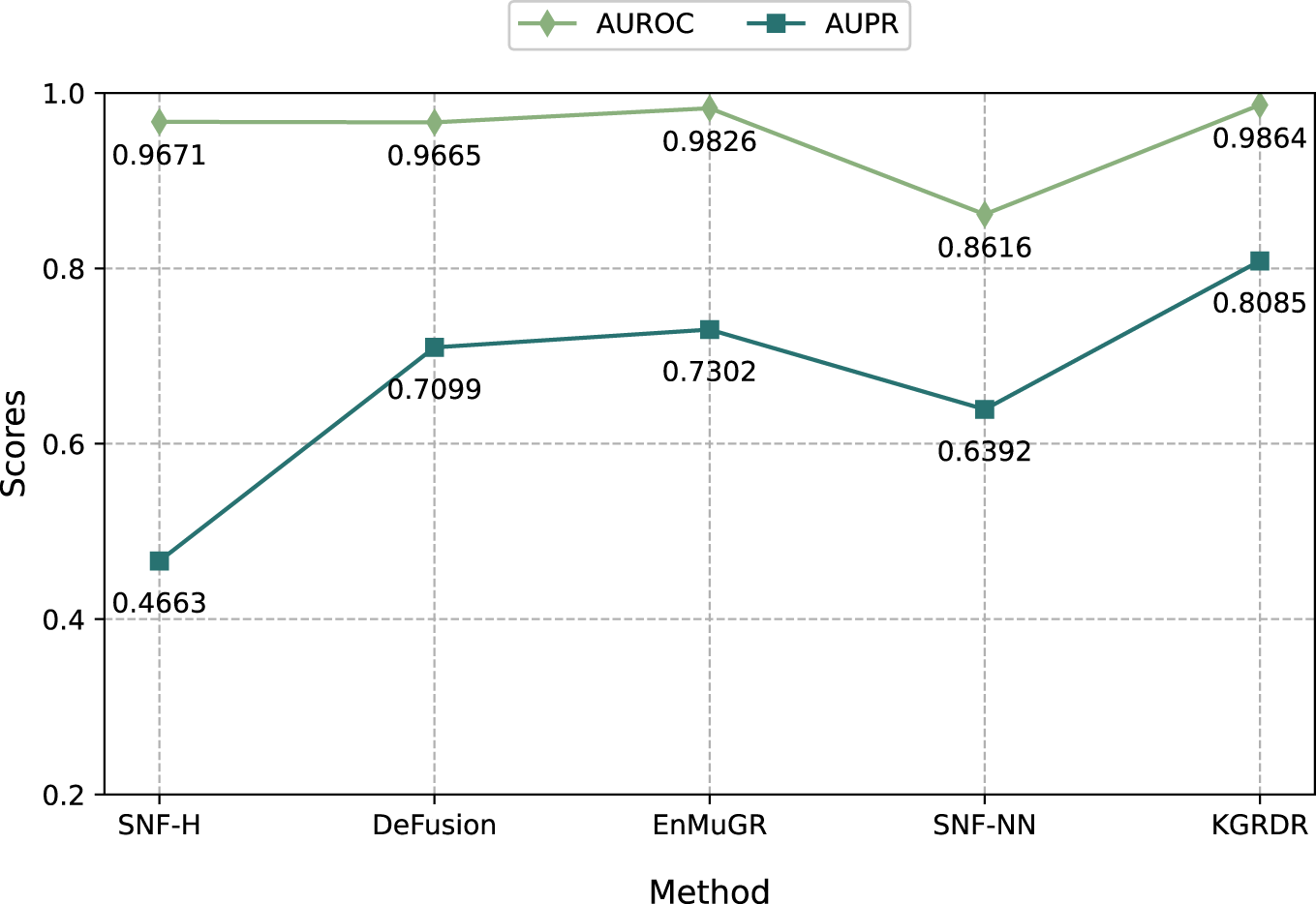
Figure 1. Comparison of multiple similarity network fusion methods. (Luo H, et al. 2025)
Reference
- Luo H, et al. KGRDR: a deep learning model based on knowledge graph and graph regularized integration for drug repositioning. Front Pharmacol. 2025;16:1525029.
Need AI-enhanced database query and data integration to accelerate your target identification or repurposing pipeline? Our team can design a customized knowledge graph and mining strategy tailored to your target class, data assets, and milestones. Contact our scientific team today.