Zebrafish Efficacy and Toxicity Studies: Designing Interpretable Experiments
Zebrafish efficacy and toxicity studies can help distinguish a useful whole-organism response from a misleading phenotype before a program expands its preclinical work. The key is to select a model with a relevant measurable feature, establish exposure conditions, and interpret the desired response alongside tolerability. This guide focuses on study selection, controls, ambiguous outcomes, and the information needed to commission a decision-focused zebrafish project.
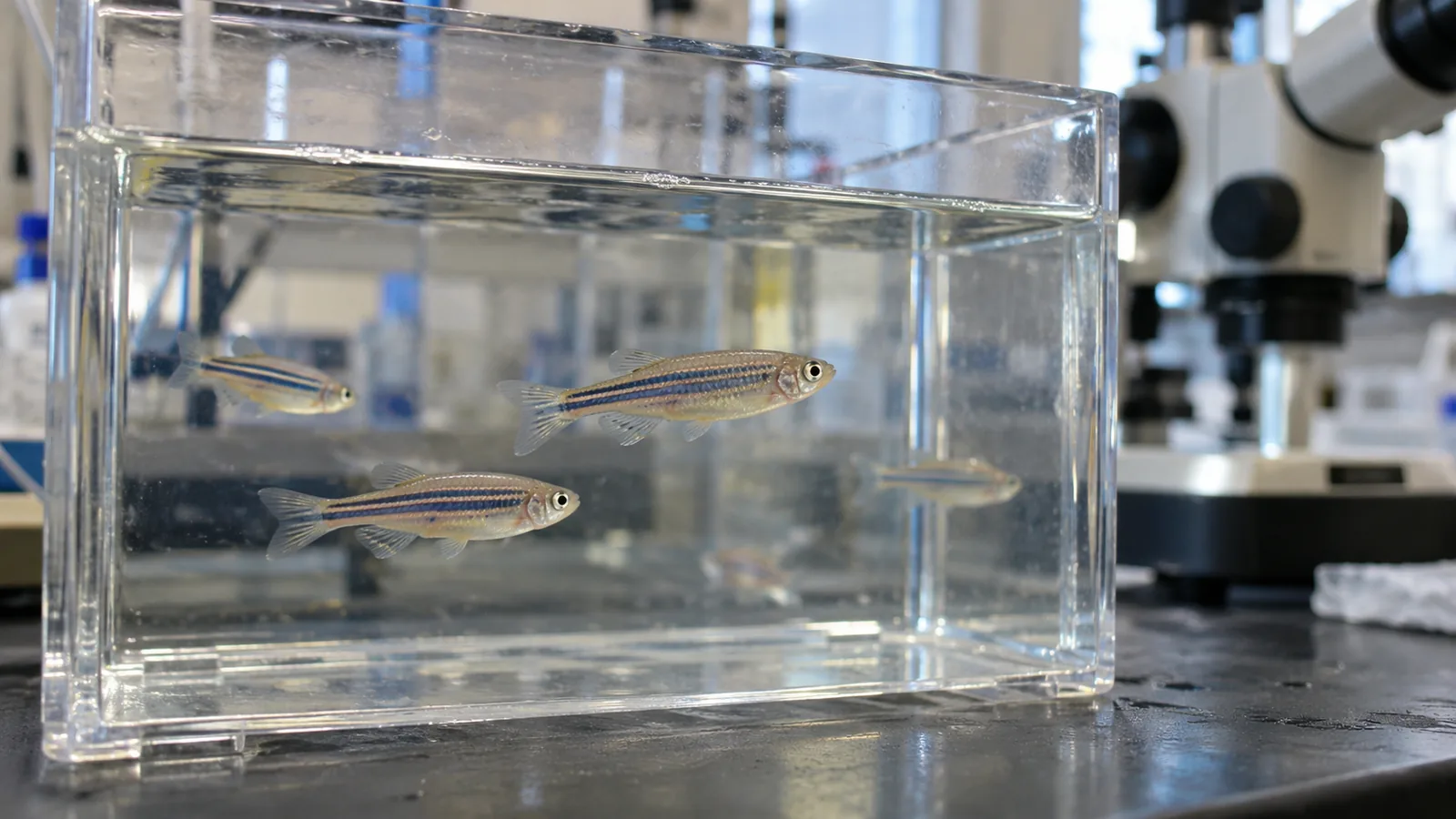
01 Scope and Rationale
When does a zebrafish study answer the next question?
A zebrafish study is most useful when the proposed model expresses a feature that can test a specific research hypothesis. That feature might be a disease-associated morphology, a vascular phenotype, or a measurable behavioral or organ-related response. The fact that zebrafish are vertebrates does not make every human disease or pharmacological question suitable. Start by identifying the biological link between the model, the endpoint, and the compound effect you want to investigate.
Creative Biostructure's zebrafish services encompass disease modeling, toxicity assessment, and efficacy-oriented studies. These are related capabilities with different purposes. A toxicity screen asks whether an exposure produces an adverse observation under defined conditions. An efficacy study asks whether an intervention changes a relevant phenotype. A disease-model project asks whether the model itself can support the intended comparison before compounds are screened.
The strongest starting brief describes an unresolved observation rather than merely requesting an in vivo assay. For example, a compound may be active in cells but require a whole-organism phenotypic comparison, or a series may need investigation of a suspected organ-related effect. Explain why zebrafish can discriminate between the competing explanations. If the desired endpoint depends on biology not adequately represented at the selected stage, another model may be more appropriate.
A change in phenotype is not automatically beneficial
Reduced movement can reflect a desired effect in one experimental context but nonspecific sedation, motor impairment, or developmental disturbance in another. Reduced fluorescence can indicate a change in the labeled population, reporter behavior, image acquisition, or compound-related interference. A smaller anatomical feature may represent a disease-relevant response or generalized growth suppression. Interpret the endpoint together with the controls and the animal's overall condition.
Consider a hypothetical angiogenesis study in which an exposed group shows reduced vessel development. The observation is not sufficient to attribute selective antiangiogenic activity if body development and viability are also compromised. A useful design separates concentrations producing an interpretable vascular response from those dominated by broader injury. The same logic applies to other phenotypes: the desired readout must remain interpretable in the context of concurrent effects.
Automated imaging and tracking can make measurement more consistent, but they do not eliminate bias by themselves. Segmentation rules, illumination, animal orientation, and exclusion criteria can influence the result. Keep image-analysis settings and quality checks linked to the study design. A machine-generated measurement still requires a biological interpretation and a record of cases in which the algorithm could not quantify the specimen reliably.
What the study can and cannot establish
Zebrafish results can support compound prioritization, investigation of a phenotype, and planning of additional experiments. They do not independently establish human efficacy, a clinical safety margin, or the absence of mammalian-specific liabilities. Nominal concentration in exposure medium is also not a direct measurement of concentration in the relevant tissue. Keep these boundaries explicit when using the results to select the next development step.
Whole-organism screening is particularly informative when it adds a distinct observation to the existing evidence. Repeating an already resolved cellular question in another model without a defined purpose can add complexity without changing a decision. Conversely, a carefully chosen zebrafish endpoint may reveal a response that deserves focused mechanistic testing. The value lies in the biological question and controlled comparison, not simply the label of an animal experiment.
| Observed pattern | What it may support | What to investigate next |
|---|---|---|
| Desired phenotype changes without evident general impairment | A response worth confirming within the tested exposure window. | Reproducibility, endpoint specificity, and whether the effect persists in a relevant follow-up assay. |
| Desired readout changes only with marked toxicity | An observation confounded by broader injury. | A lower exposure range, different endpoint, or revised model before claiming selective efficacy. |
| No phenotype change despite positive control performance | No detectable response under the tested conditions. | Compound stability, exposure, model relevance, and endpoint sensitivity before concluding target inactivity. |
| Readout changes with abnormal imaging or reporter behavior | A potentially technical or reporter-related signal. | Raw images, detection controls, and an independent measurement where feasible. |
| Large differences across experimental batches | Possible biological or procedural variation. | Age, stage, husbandry, compound preparation, allocation, and the consistency of control responses. |
02 Designing a Zebrafish Study That Separates Response from Confounding
Use these stages to establish whether the model and exposure conditions can answer the question before expanding the compound panel. A disease phenotype, a reporter signal, and a mechanism claim should each have their own evidence requirements.
-
1
Establish biological relevance and model availability
Describe the pathway, phenotype, and existing evidence behind the proposed study. Check whether the target or relevant biological process is represented in the model and developmental stage. For genetic models, consider paralogs, genotype interpretation, and how the observed phenotype relates to the intended research question. Genetic similarity alone is not sufficient to demonstrate that a particular endpoint will predict compound behavior in humans.
Discuss zebrafish disease model generation if an appropriate model is not already available. Model establishment and compound testing should be treated as separate milestones. Confirm what evidence will demonstrate a reproducible phenotype before a screening campaign starts. An induced or engineered change may require validation and characterization rather than being assumed equivalent to the desired disease state.
-
2
Choose a primary endpoint and supporting observations
Specify the primary endpoint, its direction of change, and the comparison that will address the hypothesis. Supporting observations should help identify confounding effects, such as general morphology, survival, or motor impairment where relevant. Avoid collecting many readouts without a plan for distinguishing an exploratory association from the main result. Define the analysis before inspecting treatment effects whenever practical.
For imaging, establish acquisition settings and how specimens will be positioned or selected. For behavior, record the relevant stimulus, timing, acclimation, and environmental conditions. Determine how failed measurements and atypical specimens will be handled. A study is easier to interpret when the team can distinguish a biological absence of response from a readout that was never technically valid.
-
3
Confirm compound handling and exposure feasibility
Provide compound identity, purity information, stock solvent, available quantity, and known stability or solubility limitations. Review the planned exposure route and duration with the model team. In immersion studies, material in the medium may not reach the intended internal concentration; uptake, binding, degradation, and other factors can influence exposure. Do not interpret the nominal concentration as a measured tissue dose.
Use a pilot to identify workable handling and an interpretable range where justified. Maintain matched vehicle conditions and check whether the vehicle itself alters the endpoint. If analytical confirmation of exposure is necessary to answer the question, specify it as an additional component and confirm feasibility. An efficacy study should not quietly imply that internal exposure was measured when only the dosing solution was prepared.
-
4
Define the tolerability context before interpreting efficacy
Discuss selected zebrafish toxicity and safety assays when adverse observations could confound the intended response. The relevant endpoints depend on the model and developmental stage. A survival-only assessment may miss effects that make an efficacy readout difficult to interpret, while a broad organ panel may be unnecessary if a narrower question can resolve the uncertainty.
Report effects across the tested range rather than focusing exclusively on the concentration with the largest desired change. Note the timing of adverse observations relative to the primary phenotype. A response occurring only after generalized impairment has a different interpretation from a reproducible response under better-tolerated conditions. This distinction should guide progression rather than be buried in a separate appendix.
-
5
Build controls, allocation, and replication into the design
Select a reference intervention or other positive control that demonstrates the endpoint can respond under the planned conditions, when an appropriate control exists. Include vehicle and model controls suited to the design. Explain any unavailable control and the resulting limitation. Randomized allocation and blinded assessment can reduce avoidable bias, but their practical implementation should be documented rather than implied by the use of automated equipment.
Define the experimental unit and account for the design when analyzing the data. Repeated images or multiple measurements from the same animal are not automatically independent biological replicates. Batch or clutch structure can also matter. Determine sample size and replication from the objective, variability, and analysis plan, with animal use and welfare considerations addressed through the applicable institutional process.
-
6
Run the efficacy comparison and inspect the underlying data
Creative Biostructure's zebrafish efficacy testing can be discussed once the model and exposure conditions are suitable. Evaluate the primary comparison together with controls, missing measurements, and concurrent observations. Inspect representative raw data and atypical cases instead of relying only on a summary chart. Where curves are incomplete, describe the observed range without forcing a precise potency estimate.
Separate confirmation from exploratory analysis. An unexpected behavioral or imaging feature can generate a useful new hypothesis, but it should not silently replace the original endpoint after the results are known. Report the finding with its context and propose a targeted follow-up if it could change compound selection. This preserves the value of unexpected observations without overstating their evidential strength.
-
7
Decide whether to confirm, investigate exposure, or change the model
Classify the outcome according to what the experiment established. A reproducible phenotype may justify independent confirmation or a mechanistic comparison. An absent response with uncertain exposure may require a handling or uptake investigation. A response inseparable from broad toxicity may suggest another concentration range, endpoint, or chemistry series. Each path answers a different remaining question.
Do not automatically expand an inconclusive study to more compounds. First identify why the initial comparison failed to discriminate between explanations. A different model may be more suitable if the relevant biology is not represented or the endpoint cannot be measured reliably. A clear recommendation to stop or redesign can protect the program from investing in a larger dataset that retains the same interpretive limitation.
03 Common Pitfalls and How to Avoid Them
-
Equating nominal concentration with internal exposure
The concentration prepared in medium is not the same as a measured concentration in the organism or target tissue. Compound properties and exposure conditions can influence uptake and persistence. Keep the administered condition separate from any analytical exposure result. If a negative phenotype result is central to the decision, consider whether insufficient exposure remains a plausible explanation before concluding that the compound lacks relevant activity.
-
Calling general impairment a disease-specific response
An apparently favorable change can arise because the animal is broadly impaired. Review morphology, behavior, and other relevant tolerability observations alongside the primary endpoint. Avoid selecting a concentration merely because it produces the largest numerical effect. The useful comparison is one in which the endpoint remains interpretable and the controls allow a meaningful distinction between the proposed activity and nonspecific injury.
-
Treating automated analysis as automatically unbiased
Image and tracking systems can make systematic mistakes, especially when treatment changes contrast, posture, movement, or reporter intensity. Define quality checks and review problematic cases without selectively removing unfavorable observations. Record analysis settings and any manual intervention. Reproducibility requires a transparent measurement process, including its failures, rather than a statement that a software pipeline generated the final values.
-
Extending a screening result beyond its tested context
A larval phenotype does not by itself establish adult effects, mammalian pharmacology, or clinical benefit. Report the stage, model, exposure, and endpoint with the conclusion. When additional evidence is needed for a broader claim, identify it explicitly. Keeping the boundary clear makes a positive result more useful because the next team can see exactly what should be confirmed rather than inherit an inflated interpretation.
Keep efficacy, tolerability, and exposure observations aligned by concentration and time point. Separate summaries can hide whether a desired response occurs only where the assay is already compromised by general impairment.
04 Deliverables
Specify the evidence package before the study begins. Model development, exposure assessment, phenotypic testing, and mechanistic follow-up are distinct activities and should be identifiable in both the quotation and the final report.
-
Model and study-design record
Include the model identity, genotype or induction details where relevant, developmental stage, allocation, controls, exposure schedule, and experimental unit. State the primary endpoint and any exploratory analyses. These details allow the receiving team to understand what population and conditions the result represents. If model development was included, keep its validation evidence separate from the compound-response data.
-
Phenotypic data with measurement context
Agree on the images, videos, quantitative tables, or other records needed for reuse. Document acquisition and analysis settings, quality checks, exclusions, and missing measurements. A summary should distinguish no observed effect from an uninterpretable measurement. Representative images can help communicate the result, but the selection should not conceal variability or substitute for the full quantitative comparison.
-
Response and tolerability comparison
Present the intended phenotype alongside relevant adverse observations over the tested conditions. Include uncertainty and the behavior of controls. Where exposure was not measured, state that limitation; where it was measured, connect the analytical result to the corresponding condition. The package should make it possible to judge whether an apparent response supports further study or remains confounded.
-
Recommendation tied to the unresolved question
Explain whether the result supports confirmation, a different exposure investigation, another endpoint, or a change of model. Identify the observation that would justify the next investment. Avoid a generic recommendation to repeat everything in a larger study. A useful next step should reduce a specific uncertainty revealed by the data and preserve the distinction between phenotypic evidence and a proven mechanism.
An interpretable zebrafish result describes a response in a defined model and exposure window. Its significance depends on biological relevance, controls, and the absence or characterization of important confounders. Use it to guide further research rather than to assign human efficacy or comprehensive safety.
05 Select a Zebrafish Project That Fits Your Research Decision
Existing-model testing and new-model development have different scopes
For an established model, the first discussion can focus on endpoint suitability, compound handling, and the comparative study. For a new genetic or induced model, the initial work may instead center on reproducible phenotype establishment. Creative Biostructure can review these starting points within its zebrafish portfolio. Confirm the particular model, stage, and assay rather than assuming that availability in one disease area establishes suitability for every target.
Provide the scientific rationale, existing cellular or biochemical results, proposed compound set, and any reference intervention. Explain whether the immediate objective is ranking, confirmation, or investigation of an unexpected effect. This information helps distinguish a focused efficacy comparison from a toxicity-oriented study or a broader model-development project, each of which needs a different deliverable and progression criterion.
Compare what will be measured, not just the number of animals
An informative quotation identifies the conditions, controls, replication, endpoints, imaging or tracking requirements, and analysis package. Clarify whether pilot exposure work, model validation, and additional analytical measurements are included. The amount of compound required depends on the design and handling, so it should be estimated from the actual study rather than a universal minimum.
Ask how unexpected mortality, poor control performance, and unreadable images will be reported and handled. Agree on a review point before expanding the study if the pilot is uninformative. Scheduling will differ between an available assay and a new model requiring establishment. A credible project scope makes those dependencies visible and avoids guaranteeing a particular efficacy result or a direct replacement for later mammalian work.
06 Frequently Asked Questions
Can zebrafish replace all rodent studies?
No. Zebrafish can answer selected discovery questions and inform prioritization, but they do not represent every mammalian biological process or exposure context. The appropriate model depends on the claim and stage of research. Use the result to decide which additional experiments are justified, with its limitations documented, rather than assuming that one zebrafish study replaces all subsequent preclinical characterization.
How do you distinguish efficacy from toxicity?
The study should measure the desired response alongside relevant tolerability observations and suitable controls. Examine whether the response appears under conditions where the endpoint remains interpretable. A change seen only with marked impairment requires further investigation. The distinction is established through the design and evidence, not by assigning the experiment an efficacy label before the compound is tested.
What does a negative zebrafish result mean?
It means no relevant response was detected under the tested conditions, provided the assay and controls were interpretable. Insufficient exposure, compound instability, model mismatch, or limited endpoint sensitivity may remain explanations. Review those possibilities before concluding that the target or compound is unsuitable. The final report should distinguish a supported negative finding from an inconclusive experiment.
Do all projects require a genetically modified line?
No. The appropriate model may use an existing line, an induced phenotype, or another suitable experimental context. New model generation is warranted only when it addresses the biological question and the necessary validation can be planned. Clarify availability and characterization before scheduling compound testing. Creating a genotype is not the same as demonstrating a useful and reproducible assay phenotype.
What should I send before requesting a study proposal?
Provide the disease or pathway question, existing evidence, compound identities, available quantities, stock conditions, and proposed endpoints. Include reference compounds, known liabilities, and practical constraints. State whether a model already exists or must be developed. A clear brief allows the proposal to distinguish feasibility, model work, exposure planning, and the main comparison instead of combining them into an undefined screening service.
Can raw images and analysis settings be included?
They can be discussed as part of the agreed data package. Define the files, annotations, analysis settings, and storage or transfer requirements before the study. Access to underlying measurements helps investigate unusual observations and supports later comparison. Not every file produced during acquisition is automatically part of a standard handoff, so the required level of reuse should be explicit in the project scope.
07 References
-
1.
MacRae CA, Peterson RT. Zebrafish as tools for drug discovery . Nature Reviews Drug Discovery . 2015.
-
2.
Cassar S, Adatto I, Freeman JL, et al. Use of Zebrafish in Drug Discovery Toxicology . Chemical Research in Toxicology . 2020.
-
3.
Percie du Sert N, Hurst V, Ahluwalia A, et al. The ARRIVE guidelines 2.0: Updated guidelines for reporting animal research . PLOS Biology . 2020.
Test a Defined Phenotype with an Interpretable Exposure Plan
Share your model question, compound information, and existing activity data. Discuss a zebrafish feasibility or testing scope that separates the desired response from toxicity and measurement artifacts.
Discuss Zebrafish Study Design