Compound Toxicity Prediction (Mutagenicity, Carcinogenicity)
 Graph Transformer Scoring
  Active Learning
  ICH M7 Compliance
 Genotoxicity failures terminate more drug programs than any other safety endpoint. A single mutagenic compound in a lead series can invalidate months of chemistry investment. Our platform deploys graph transformer neural networks trained on the largest curated Ames datasets, combined with active learning-driven uncertainty quantification, to flag mutagenic and carcinogenic liabilities at the design stage—fully aligned with ICH M7(R2) regulatory expectations.
Why Genotoxicity Prediction Is the Non-Negotiable Gate for Drug Safety?
A virtual biotech advancing a novel scaffold cannot afford an Ames-positive surprise during IND-enabling studies. A pharma team optimizing a series for a pediatric indication faces zero tolerance for carcinogenic risk. Traditional rule-based alerts (e.g., Derek Nexus) catch known toxicophores but miss novel structural classes. Our AI models learn directly from molecular topology, identifying mutagenic patterns invisible to static rule sets—delivering ICH M7-compliant predictions with quantified uncertainty before any compound reaches the bench.
What Sets the Genotoxicity Platform Apart
Graph Transformer Architecture
AmesFormer-derived graph transformers process molecular graphs without fixed descriptors, achieving state-of-the-art AUC-ROC >0.93 on benchmark datasets.
Active Learning Uncertainty
Active learning selects the most informative compounds for oracle annotation, reducing labeling costs by 57% while maximizing model performance.
Regulatory-Ready Output
Predictions include ICH M7-compliant structural alerts, applicability domain assessment, and expert-reviewed rationale for regulatory submission.
The Genotoxicity Prediction Suite
Mutagenicity Prediction (Ames Test)
Graph-Level Learning for Bacterial Reverse Mutation Liability
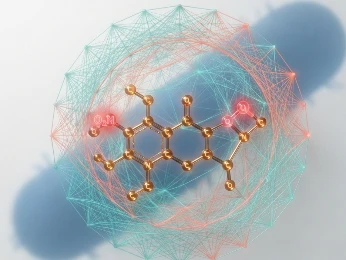
- Graph Transformer Scoring — AmesFormer architecture processes molecular graphs with self-attention mechanisms, capturing long-range toxicophore interactions beyond fingerprint limitations.
- Toxicophore Attention Mapping — Atom-level attention weights identify nitroaromatics, epoxides, aziridines, and other DNA-reactive structural alerts with spatial context.
- Ideal For — Early-stage triage, impurity assessment under ICH M7, and ADMET Prediction & Modeling integration.
For seed-stage biotechs, mutagenicity prediction eliminates costly Ames testing of obvious liabilities. For pharma, attention maps guide medicinal chemistry toward safe analogs while preserving target affinity.
Carcinogenicity Prediction
Rodent Carcinogenicity Forecasting from Structure
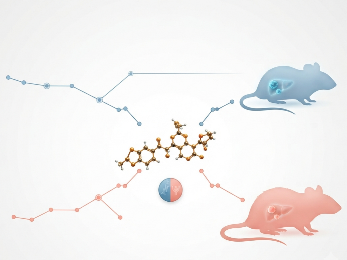
- Multi-Species Modeling — Separate models for mouse and rat carcinogenicity trained on NTP and FDA databases, capturing species-specific metabolic activation pathways.
- Mechanistic Pathway Scoring — Classification of genotoxic vs. non-genotoxic carcinogenicity mechanisms, distinguishing DNA-reactive from epigenetic modes.
- Ideal For — Pre-IND risk assessment, pediatric program safety evaluation, and Lead Optimization stage compound selection.
When combined with Metabolism & Stability Prediction, carcinogenicity models account for metabolic activation of procarcinogens—critical for compounds requiring bioactivation.
Active Learning & Uncertainty Quantification
Intelligent Sample Selection for Maximum Information Gain

- Uncertainty-Based Query Strategy — Deep active learning (muTOX-AL framework) selects molecules near classification boundaries, maximizing model improvement per annotation dollar.
- Structural Discriminability — Preference for structurally diverse samples and activity cliffs, preventing overfitting to simple chemical rules.
- Ideal For — Custom model building on proprietary datasets, iterative improvement of project-specific predictions, and QSAR Analysis model refinement.
Active learning transforms genotoxicity prediction from a static filter into an evolving safety intelligence system that improves with each validated compound.
Platform Instrumentation
| Software / System | Core Capability |
|---|---|
| PyTorch Geometric / DGL | Graph transformer and GNN training for molecular property prediction. |
| AmesFormer / GeoScatt-GNN | State-of-the-art graph transformer and geometric scattering architectures for mutagenicity prediction. |
| muTOX-AL Framework | Deep active learning pipeline with uncertainty estimation and intelligent sample selection. |
| Derek Nexus / Sarah | Expert rule-based toxicophore alert systems for ICH M7 structural alert compliance. |
| Ames II Assay | High-throughput bacterial reverse mutation testing for AI prediction validation. |
| In Vitro Micronucleus | Mammalian cell chromosomal damage assessment for genotoxicity confirmation. |
| CDD Vault / Dotmatics | ELN-integrated data management and handoff to ADMET Prediction & Modeling. |
Standardized Workflow
Project Workflow
A standardized, milestone-driven execution system. From compound structure ingestion to regulatory-ready genotoxicity assessment—managed by a single computational project team, tracked in real time.


01 Data Ingestion & Curation
- Receive compound structures (SMILES/SDF).
- Standardize, deduplicate, and assign labels from Ames/carcinogenicity databases or internal data.
Deliverable: Curated dataset + quality report.
02 Model Training & Validation
- Train graph transformer ensemble on curated dataset.
- Validate against Hansen benchmark and external test sets.
Deliverable: Validated model with AUC-ROC >0.93.
03 Active Learning Optimization
- Deploy active learning to select informative samples for oracle annotation.
- Iterate model improvement.
Deliverable: Optimized model with uncertainty quantification.
04 Regulatory Packaging
- Generate ICH M7-compliant reports with structural alerts, applicability domain, and expert rationale.
Deliverable: Regulatory submission package with ICH M7 compliance documentation.
05 Experimental Validation & Handoff
- Validate predictions via Ames II or micronucleus assay.
- Handoff to Lead Optimization or ADMET Prediction & Modeling.
Deliverable: Validation report + transition plan.
Sample Requirements
| Requirement | Details |
|---|---|
| Compound structures | SMILES or SDF format; 1–10,000+ compounds accepted |
| Known genotoxicity data | Internal Ames or carcinogenicity values for model calibration (optional) |
| Regulatory context | ICH M7 impurity assessment, IND-enabling, or pediatric program |
| Project scope | Early triage, lead optimization support, or regulatory submission |
| Prior data | Any metabolic stability or ADMET flags for bioactivation assessment |
Standard Deliverables
- Mutagenicity probability scores with graph transformer confidence intervals
- Carcinogenicity predictions for mouse and rat with mechanistic pathway classification
- ICH M7-compliant structural alert report with expert-reviewed rationale
- Applicability domain assessment and uncertainty quantification
- Active learning-optimized custom model (if proprietary data provided)
- Electronic data package for regulatory submission or ADMET Prediction & Modeling integration
- Direct handoff to Ames II Validation, In Vitro Micronucleus, or Lead Optimization
Frequently Asked Questions
Case Study
Case Study: Deep Active Learning for Molecular Mutagenicity Prediction
Published Evidence:
Xu H, et al. Deep active learning with high structural discriminability for molecular mutagenicity prediction. Commun Biol. 2024;7:1071.
Key Findings:
- muTOX-AL active learning reduced required training samples by 57% compared to random sampling, achieving 95% of full supervised learning accuracy with only 24% of labeled data.
- The model demonstrated high structural discriminability, selecting both diverse samples and structurally similar molecules with opposite labels—critical for capturing activity cliffs.
- On the TOXRIC benchmark dataset (7,495 compounds), muTOX-AL outperformed margin-based, entropy-based, and core-set active learning strategies across all evaluation metrics.
Industrial Translation:
The Academy of Military Medical Sciences and Shanghai University team demonstrates that active learning transforms mutagenicity prediction from a data-hungry exercise into a cost-efficient, iterative process. For seed-stage biotechs, this means building project-specific safety models without investing in thousands of Ames tests upfront. For pharma teams, the structural discriminability of muTOX-AL ensures that edge cases—similar structures with opposite toxicity—are captured early, reducing late-stage surprises. Our platform operationalizes this peer-reviewed framework by integrating muTOX-AL with graph transformer ensembles and ICH M7-compliant reporting, delivering regulatory-ready genotoxicity assessments from design to submission.
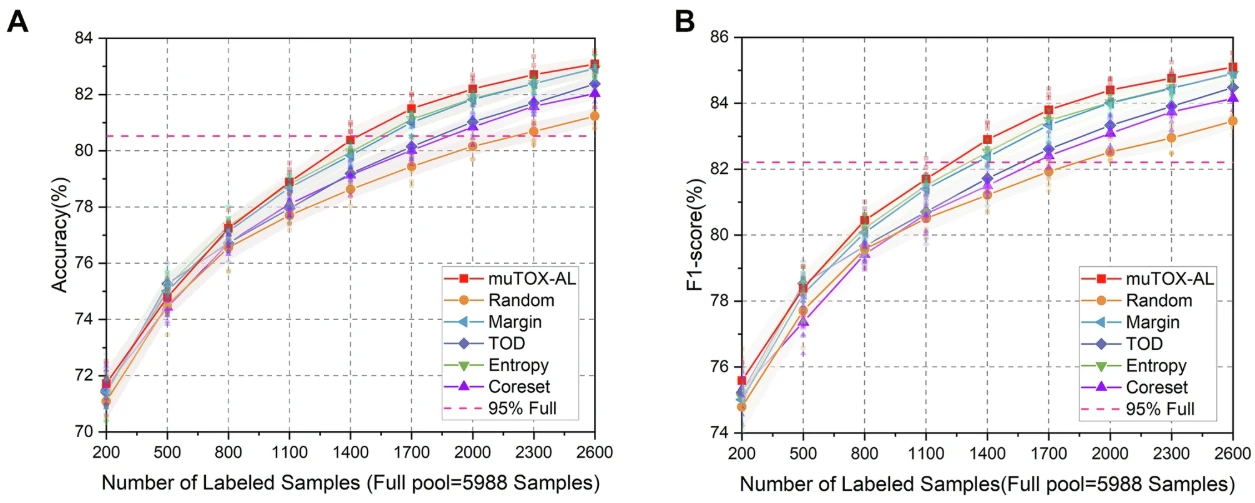
Figure 1. Active learning results of mutagenicity classification of muTOX-AL and five active learning baselines. (Xu H, et al. 2024)
Reference
- Xu H, et al. Deep active learning with high structural discriminability for molecular mutagenicity prediction. Commun Biol. 2024;7:1071.
Need AI-enhanced genotoxicity prediction to de-risk your lead series? Our team can design a customized mutagenicity and carcinogenicity assessment pipeline tailored to your regulatory pathway, chemical series, and milestones. Contact our scientific team today.